

A Pro's Guide to Bulk Discount Steel Doors
Let's clear something up: bulk pricing doesn't mean you're stuck with a pile of identical, basic products. You don't have to sacrifice variety to get a great deal. Need standard entry doors for a multi-family unit? Custom-sized doors for a tricky build? Or specific fire-rated doors to meet code? You can get them all. Securing a bulk discount steel doors opens up a world of options, letting you source exactly what your project requires while staying on budget. This guide will show you the wide range of doors available and how to get them at a professional price.
Key Takeaways
- Formalize Your Partnership with a Trade Account: This is the most direct path to unlocking consistent, pre-negotiated discounts. It establishes you as a serious, repeat buyer and often provides access to dedicated support beyond just better pricing.
- Focus on Total Value, Not Just the Lowest Price: The cheapest door isn't always the best deal. True savings come from high-quality materials that prevent costly callbacks, meet local building codes, and are backed by a reliable supplier who delivers on time.
- Use Strategic Planning to Increase Your Buying Power: Consolidate your material needs across multiple projects into a single, larger order. This helps you meet minimum order quantities and gives you significant leverage to negotiate better pricing and terms.
What Are Bulk Discounts and How Do They Actually Work?
As a contractor or builder, managing your bottom line is just as important as managing your job site. One of the most effective strategies for controlling material costs is taking advantage of bulk discounts. Think of it as a volume discount—the more you buy, the less you pay per item. Suppliers offer this pricing structure because it helps them move inventory and build reliable partnerships with trade professionals. For you, it means significant savings that can make your bids more competitive and your projects more profitable. This approach is especially valuable for essential materials you use frequently, like high-quality steel doors and windows.
Breaking Down How Bulk Pricing Works
The concept behind bulk pricing is straightforward: suppliers reward larger orders with a lower per-unit cost. Instead of buying one or two doors at a standard retail price, you commit to purchasing a larger quantity for a multi-unit residential project or to stock your own inventory. In return, the supplier gives you a discounted rate. This is a common practice in the construction industry because it benefits both parties. As industry experts note, purchasing materials in bulk is one of the most effective ways to reduce project costs. It’s a simple negotiation that allows you to get the same premium products for less, freeing up your budget for other project needs.
Why Bulk Discounts Are a Game-Changer for Your Business
Securing bulk discounts is about more than just saving money on a single order; it’s a strategic move for your business. Consistent bulk purchasing helps you build a strong, long-term relationship with your supplier. When you become a valuable and regular customer, you often gain access to better pricing, priority service, and first-dibs on new inventory. We offer trade-specific pricing for this very reason—to create lasting partnerships with builders and remodelers. These savings allow you to bid more competitively on jobs, protect your profit margins, and deliver exceptional value to your clients without compromising on the quality of materials.
How to Find the Best Bulk Discounts on Steel Doors
Finding the best deals on steel doors isn't about luck—it's about knowing where to look. For contractors and builders, securing bulk discounts is a direct path to managing project budgets and protecting your profit margins. The key is to partner with a supplier who values your business and offers a structured way to save. Here’s how you can find the best pricing for your projects.
Start with a Professional Trade Program
The most direct way to access consistent savings is by joining a supplier’s trade program. Many suppliers, including us, offer these programs to build long-term relationships with builders, designers, and remodelers. Instead of negotiating on a per-project basis, a trade account gives you access to exclusive, pre-negotiated pricing. It streamlines purchasing and ensures you get competitive rates every time. Our Trade Program is designed to be straightforward, providing the discounts you need to win bids and deliver value to your clients. Applying is the first step toward a partnership that helps your business grow.
What Makes a Great Supplier Program?
Not all trade programs are created equal. When evaluating a supplier, look beyond the discount percentage. A great program offers more than savings—it provides real value. Does the supplier offer dedicated support for trade members? Can you get quick quotes and expert advice? A trusted supplier will have a proven track record of reliability and excellent service. Also, consider the product range. Partnering with a one-stop shop simplifies procurement, saving you time and administrative headaches. Look for a partner who invests in your success, not just a one-time sale.
Explore Outlet and Clearance Pricing
Beyond formal trade programs, keep an eye out for outlet and clearance opportunities. Many suppliers and specialty retailers offer high-quality products at a reduced price to make room for new inventory. This is a fantastic way to find durable, budget-friendly options for your projects. Don't mistake "outlet" for "low quality"—these are often the same strong and secure steel doors you’d find in the main catalog. While hunting for clearance deals can be less predictable than using a trade account, it’s a smart strategy for one-off projects or when you have flexibility in your design specifications. It’s all about finding the right opportunity at the right time to maximize your budget.
How to Compare Discount Terms Like a Pro
Once you’ve identified potential suppliers, it’s time to compare their terms. The headline discount is important, but the details matter more. Ask about minimum order quantities (MOQs)—do you need to buy 10 doors or 50 to qualify? Clarify shipping costs, as high fees can erode your savings. It’s also smart to understand pricing tiers; your discount might increase with your order volume. Don’t be afraid to negotiate, especially for high-volume projects. A good supplier will work with you to find a mutually beneficial arrangement. Create a simple comparison chart to weigh the pros and cons of each offer.
What Kinds of Steel Doors Can You Buy in Bulk?
When you think about buying in bulk, your mind might go to a warehouse filled with identical, basic products. But when it comes to steel doors, that’s far from the truth. As a contractor, you know that no two projects are exactly alike. You need a variety of options to meet different client demands and architectural specs, and your supplier should be able to deliver. Modern bulk purchasing programs are designed to cover a wide range of door types, from standard entry doors for a housing development to custom, high-end options for a boutique commercial space.
The key is finding a supplier who understands that volume doesn't mean sacrificing variety. You should have access to different sizes, styles, and functionalities, all while benefiting from trade pricing. Whether your project calls for enhanced security, specific safety ratings, or a show-stopping aesthetic, you can find the right doors to order in quantity. This flexibility allows you to streamline your purchasing process for an entire project, sourcing everything from simple utility doors to grand main entrances from a single, trusted partner. It simplifies logistics and ensures a consistent level of quality and style across the board. Let’s look at the most common categories available for bulk orders.
Why Choose Steel Over Other Materials?
Choosing the right entry door involves balancing aesthetics, security, and long-term performance. While materials like wood, fiberglass, and iron each have their appeal, steel consistently stands out as a top performer for residential and commercial projects. It offers an unmatched combination of strength, energy efficiency, and low maintenance that other materials struggle to replicate. Modern steel doors also come in a huge variety of styles and finishes, proving you don’t have to compromise on design to get superior durability. Let’s break down how steel compares to the other common door materials on the market.
Comparing Steel vs. Wood Doors
A classic wood door has a timeless charm, but when it comes to performance, steel takes the lead. Steel doors are significantly more durable and secure, resisting warping, cracking, and forced entry far better than wood. They are also more energy-efficient, thanks to an insulated core that helps maintain indoor temperatures and lower utility bills. While many assume wood requires less upkeep, the opposite is often true; wood doors need regular staining or painting to protect them from the elements. Steel, on the other hand, requires minimal maintenance, making it a practical choice for busy contractors and homeowners who want a door that looks great for years without constant work.
Comparing Steel vs. Fiberglass Doors
Fiberglass doors are often marketed as a low-maintenance alternative to wood, but they can't compete with the sheer strength and longevity of steel. Steel doors are built to withstand harsh weather and heavy use, making them a superior choice for security and durability. Over time, fiberglass can become brittle and crack, especially with direct sun exposure or in extreme temperatures. The insulated core of a steel door also provides better thermal resistance than most fiberglass options, contributing to a more energy-efficient home or building. For an entryway that delivers true peace of mind, the robust construction of steel is the clear winner.
Comparing Steel vs. Iron Doors
Iron doors make a bold, dramatic statement, but that aesthetic often comes with a higher price tag and more demanding maintenance. Iron is susceptible to rust and requires regular upkeep to prevent corrosion, especially in humid or coastal climates. In contrast, modern steel doors are treated with galvanized coatings that provide excellent protection against rust, ensuring they remain functional and attractive with very little effort. Steel also offers a sleek, contemporary look that complements a wide range of architectural styles. When you need a door that combines sophisticated design with practical, long-lasting performance, steel provides a more cost-effective and reliable solution.
From Standard Entry to Custom Designs
Most large-scale residential and commercial projects rely on standard door sizes. Sourcing common dimensions like 36x80 single doors or 60x96 double doors in bulk is one of the easiest ways to save time and money. These doors are typically in stock and ready to ship, keeping your project on schedule.
But what about projects that require a unique touch? Many suppliers, including us, offer custom solutions as part of their trade programs. You aren’t limited to what’s on the shelf. You can often specify custom dimensions, finishes, and hardware to match your architectural plans perfectly. This means you can deliver a bespoke look for your clients without giving up the cost benefits of a bulk order, ensuring every entryway makes the right statement.
Matching Doors to Architectural Styles
A common myth about bulk ordering is that you’re limited to a single, generic style. That’s simply not the case. Your supplier should offer a diverse catalog that caters to various architectural designs, from sleek and modern to classic and traditional. High-quality steel doors are incredibly versatile; they can be designed with clean, minimalist lines for a contemporary build or feature decorative glass panels for a more ornate entryway. This variety ensures you can maintain a cohesive aesthetic across an entire project, whether it’s a multi-family housing unit or a commercial building, without sacrificing the financial benefits of buying in bulk. You can select the right look for every opening.
Understanding Common Door Sizes
Efficiency is key in any construction project, and standardizing materials where possible is a smart move. Most suppliers offer a range of common door sizes that are consistently in stock and ready for large orders. You’ll frequently find single doors in dimensions like 36x80 inches and double doors in sizes such as 60x80 or 60x96 inches. Sourcing these standard sizes is a practical way to streamline installation and keep your project on schedule. These dimensions are widely used in both residential and commercial construction, making them a reliable choice for everything from apartment complexes to office buildings. Planning your project around these common sizes simplifies procurement and helps you get the most value from your bulk purchase.
Stay Compliant with Fire-Rated Doors
Safety is non-negotiable, especially in commercial and multi-family construction. Fire-rated doors are a critical component for meeting building codes and ensuring occupant safety. These doors are engineered to contain a fire and stop it from spreading for a set period, usually between 20 minutes and three hours. They are essential for stairwells, corridors, and entryways between garages and living spaces.
As a contractor, you can and should source these specialized doors through bulk purchasing programs. This ensures every unit in your project is compliant without inflating your material costs. When ordering, always confirm that the doors come with the proper certification and meet the specific fire-resistance rating required by your local building codes. A reliable supplier will provide all the necessary documentation to make your inspections go smoothly.
Add Style with Glass and Sidelights
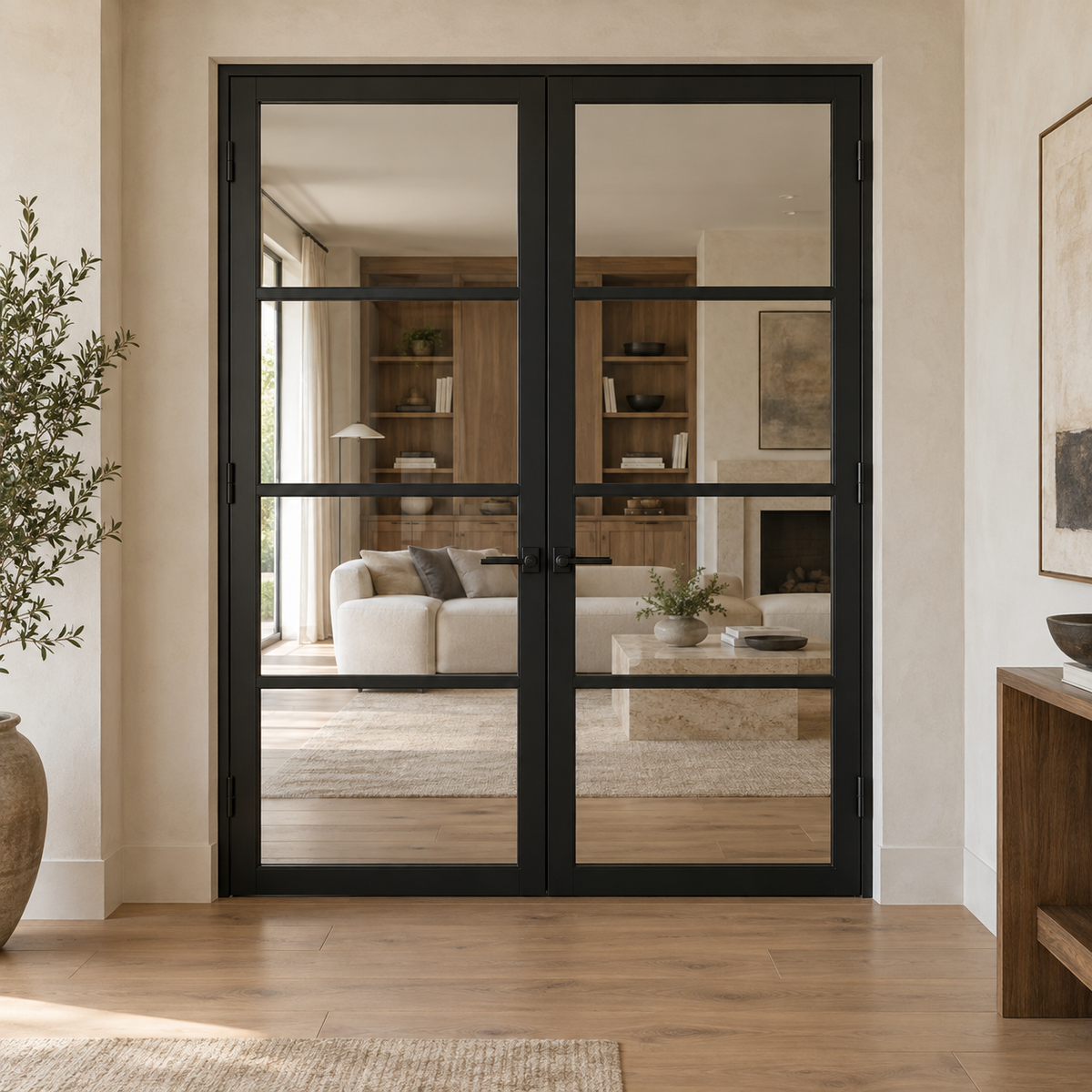
Steel doors have come a long way from their purely utilitarian roots. Today’s designs prove that you don’t have to choose between strength and style. Many modern steel doors feature integrated glass panels, sidelights, and transoms that create bright, welcoming entryways while maintaining security. These options are perfect for projects where natural light and curb appeal are top priorities.
You can absolutely get these more decorative doors with your bulk discount. Imagine outfitting an entire row of townhomes with elegant steel doors featuring full-length glass panels, or creating a stunning commercial entrance with a double door and matching steel windows. Ordering these designs in bulk allows you to create a cohesive, high-end look across a project while staying on budget.
Exploring Different Glass Styles
The glass you choose for your steel doors plays a huge role in both the look and function of an entryway. For areas where you want an unobstructed view and maximum natural light, like a back patio entrance, clear glass is a classic choice. If privacy is a priority for a front entrance, frosted or textured glass is the perfect solution. It diffuses light beautifully, brightening up a foyer without exposing the interior to passersby. For projects focused on energy efficiency, look for doors with Low-E (low-emissivity) glass. This type of glass has a special coating that reflects heat, helping to keep homes cooler in the summer and warmer in the winter—a major selling point for clients. You can mix and match these options across a single bulk order to suit different needs within the same project.
Key Terminology and Measurements for Your Order
Ordering the right door seems simple until you’re faced with terms like "slab," "prehung," and "handing." Getting these details right from the start is the difference between a smooth installation and a frustrating, costly delay. A small measurement error or a misunderstanding of the terminology can lead to ordering a door that simply won’t fit or function correctly in your space. This guide will walk you through the essential terms and measurements you need to know. Mastering this vocabulary will help you communicate clearly with your supplier and ensure you get exactly what you need for your project, whether you're a seasoned contractor or a homeowner tackling a renovation.
Slab vs. Prehung: What's the Difference?
When you're shopping for a door, you'll see two main options: slab and prehung. A slab door is just the door itself—no frame, no hinges, no hardware. This is a great choice if you're simply replacing an old door and your existing frame is in perfect condition. A prehung door, on the other hand, is a complete package. It comes already mounted in its frame with hinges attached, making it a much faster installation for new construction or when you're replacing a damaged frame. As one guide notes, a prehung unit ensures a perfect fit between the door and frame, which is crucial for proper sealing and security. For most exterior applications, a prehung door is the recommended choice for a quicker, more reliable installation.
How to Measure for a New Door
Accurate measurements are the foundation of a successful door installation. Before you place an order, you need to measure carefully. If you're buying a slab door, measure the width, height, and thickness of your old door. Don't measure the door frame itself. For a prehung unit, you'll need to measure the "rough opening"—the space in the wall where the entire door and frame will sit. Measure the width from stud to stud and the height from the subfloor to the top header. Take each measurement in three places (top, middle, bottom for width; left, middle, right for height) and use the smallest number. This precision ensures your new steel door will fit perfectly without any last-minute adjustments on site.
Getting the Door Handing Right (Left vs. Right Swing)
"Door handing" refers to the direction the door swings open and is one of the most common points of confusion when ordering. Getting it wrong means your door might open into a hallway, block a light switch, or just feel awkward. Here’s the easiest way to figure it out: stand on the exterior side of the door, facing it. If the hinges are on your left and the door swings in, it's a left-hand inswing. If the hinges are on your right, it's a right-hand inswing. Always specify both the handing (left or right) and the swing direction (inswing or outswing) when you order. Understanding door handing is crucial for proper installation and ensuring your hardware is correctly placed.
How Do You Qualify for Bulk Discounts
Getting access to bulk pricing isn't some secret club—it's a straightforward process designed to reward trade professionals for their repeat business. Suppliers want to build long-term relationships with contractors, and offering discounts is one of the best ways to do that. Qualifying usually comes down to demonstrating that you're a professional who regularly purchases building materials. Think of it as a partnership: you bring consistent business, and your supplier provides better pricing that helps protect your project margins. The key is to understand the different paths to qualification so you can choose the one that best fits your business model, whether you’re working on a large multi-family development or several custom home projects throughout the year. Most suppliers have clear requirements, and meeting them is often easier than you think.
Understanding Minimum Order Quantities
The most direct way to get a discount is by meeting a Minimum Order Quantity, or MOQ. This is simply the smallest number of items you need to purchase in a single transaction to unlock better pricing. For a product like steel doors, an MOQ might apply to an order for a new housing development or a commercial building that requires dozens of identical doors. Don't worry if a single project doesn't meet the threshold. Many contractors bundle their needs across several smaller jobs into one large purchase order to hit the required quantity. Planning ahead is crucial here. By forecasting your door needs for the next few months, you can place a single, strategic order that meets the MOQ and saves you significant money.
Applying for Your Trade Account
If you’re a contractor, builder, or designer, one of the first things you should do with a new supplier is apply for a trade account. This is your official entry into their professional program and the key to unlocking consistent, long-term savings. A trade account formalizes your relationship and signals to the supplier that you're a serious, repeat buyer. These programs often provide more than just discounts; you might also get a dedicated account representative, priority support, and early access to new products. It’s a simple step that solidifies your professional status and ensures you get the best possible pricing on every order, not just the large ones. You can fill out our trade application to get started.
How Pricing Tiers Affect Your Final Cost
Bulk discounts are rarely a one-size-fits-all deal. Most suppliers structure their pricing in tiers based on your annual spending volume. The more you buy over the course of a year, the higher the discount you receive. For example, spending up to $50,000 might get you one level of discount, while spending over $100,000 could move you into a higher tier with even better pricing. It’s always a good idea to ask a potential supplier for their pricing schedule upfront. Understanding these tiers helps you plan your purchasing strategy for the entire year. You might realize you’re close to the next discount level, making it worthwhile to consolidate purchases with one trusted supplier to maximize your savings.
Ready to Negotiate Better Bulk Pricing?
Once you’ve qualified for a trade account, the conversation doesn’t have to end there. While program pricing offers a great starting point, smart negotiation can help you secure even better terms on large projects. Think of it as a partnership where both sides benefit. With the right approach, you can maximize your savings without compromising on quality. Here are a few proven strategies to help you get the best possible price on your bulk steel door orders.
Build a Strong Relationship with Your Supplier
The best deals are often built on trust, not just transactions. When you build a strong partnership with your supplier, you’re more likely to get better pricing, flexible terms, and priority service when you need it most. Communicate your project pipeline clearly, provide feedback, and pay your invoices on time. A supplier who sees you as a reliable partner will be more invested in your success. The first step is often formalizing the relationship, so be sure to complete a trade application to get the process started. This opens the door to dedicated support and a more collaborative purchasing experience.
Let Your Purchase Volume Do the Talking
Volume is your greatest asset in any negotiation. Instead of placing several small orders for individual projects, try to consolidate your needs into a single, larger purchase. By planning ahead and forecasting your door requirements for multiple upcoming jobs, you can present a high-volume order that gives you significant negotiating power. Suppliers are almost always willing to offer better pricing for larger orders because it helps them with inventory management and production planning. Browse the full collection of steel doors to see how you can bundle different styles and sizes to meet your minimums and increase your savings.
When Is the Best Time to Buy?
If your project timeline has some flexibility, timing can make a big difference in your final cost. The construction industry has its own seasons, and demand for materials often dips during the colder, slower months. By purchasing your steel doors during this off-season—typically late fall or winter—you may find that suppliers are more open to negotiation. They’re looking to keep their teams busy and move inventory, which can translate into better pricing for you. Ask your supplier if they offer seasonal promotions or if there’s a better time of year to place a large order.
Always Ask for a Detailed Cost Breakdown
A single, lump-sum quote can hide unnecessary costs. To ensure you’re getting a fair price, always ask for an itemized breakdown. This detailed list should separate the cost of each door, any hardware, custom finishes, and shipping fees. This transparency allows you to see exactly where your money is going and compare the quote accurately against others. It also helps you spot potential areas for savings. For example, you might find it’s more cost-effective to arrange your own freight. A supplier who readily provides this information is confident in their pricing and is a good partner to have.
How Much Can You Actually Save?
Understanding the numbers is key to seeing just how much you can save with bulk discounts. It’s not just about a lower price per door; it’s about how those savings multiply across an entire project, improving your bottom line. When you start looking at materials for a multi-unit building or a large commercial space, the difference between retail and trade pricing becomes significant. By planning your purchases, you can turn a major expense into a smart investment that frees up your budget for other project needs.
A Quick Look at Standard Steel Door Prices
Before you can appreciate the savings, you need a baseline. A standard, no-frills steel entry door typically costs between $150 and $400. This price is for a basic model without custom finishes, glass inserts, or special hardware. As you add features or select larger sizes, like a 60x80 Double Steel Door, the price will naturally go up. Think of this range as your starting point. Knowing the standard retail cost helps you clearly see the value a bulk discount provides on every unit you order.
Typical Price Ranges for Steel Doors
Let's break down those numbers a bit more. For a simple, standard-sized single steel door, you can expect to pay between $200 and $500. This gets you a solid, reliable door that's perfect for side entries, utility rooms, or projects where functionality is the top priority. As you move into the mid-range, from about $500 to just under $1,000, you start seeing more design-focused features. This could include doors with small glass inserts to let in light, more sophisticated panel designs, or factory-applied paint finishes in popular colors. This price bracket covers a wide variety of styles, making it a popular choice for many residential projects where curb appeal starts to become a factor.
When you get into custom sizes, decorative glass, and grand double-door configurations, the price can climb above $1,000. This is where you find the statement pieces—doors with intricate glass patterns, sidelights, and transoms that create a stunning entryway. For example, a large double steel door designed for a dramatic entrance will naturally command a higher price due to the increased material and manufacturing complexity. While these doors are more of an investment, they offer significant architectural impact. The great news for contractors is that even these premium designs are often available through trade programs, allowing you to deliver a high-end look for your clients while still benefiting from bulk pricing.
A Simple Formula to Calculate Your Savings
Calculating your savings is straightforward. First, determine the total cost of your order at the standard, per-unit price. Then, apply your trade discount. For instance, if you’re ordering 20 doors that cost $350 each, your initial total is $7,000. If your trade program gives you a 15% discount, you save $52.50 per door. Across 20 doors, that’s a total savings of $1,050. This is why joining a supplier’s trade program is so important—it gives you direct access to pricing tiers designed for professionals.
Don't Forget to Factor in Installation
While your bulk discount applies to materials, the savings have a ripple effect on your total project cost. The money you save on the steel doors themselves can be reallocated to cover labor, which typically ranges from $260 to $500 per door for installation. This allows you to offer more competitive quotes to your clients without sacrificing your profit margin. Furthermore, sourcing high-quality doors from a reliable supplier means fewer issues on-site. Well-made doors that are true to size and free from defects are faster to install, saving you valuable time and preventing costly delays.
Tips for Finding a Qualified Installer
Sourcing high-quality doors at a great price is only half the battle; a flawless installation is what brings the project home. Finding the right installer ensures your investment is protected and your clients are happy. Start by looking for professionals with specific experience installing steel doors, as they require different techniques than wood or fiberglass. Always verify that any potential installer is licensed and fully insured—this is a non-negotiable step that protects you, your client, and your business from liability. Beyond credentials, take time to read customer reviews on trusted platforms to get a feel for their reliability and craftsmanship. Look for an installer who communicates clearly and acts as a partner in your project. Just as you build a strong relationship with your supplier, finding an installer you can trust for the long term will make every job run more smoothly.
How to Choose the Right Supplier
Finding the right supplier is about more than just securing a good price. It’s about building a partnership that supports your business and helps you deliver high-quality work on time, every time. A great supplier acts as an extension of your team, providing reliable products, logistical support, and expert advice. When you’re vetting potential partners for your steel door needs, here are four key areas to focus on to ensure you’re making a choice that will benefit your projects and your bottom line.
Prioritize Quality and Proper Certifications
Your reputation is built on the quality of your work, and that includes the materials you use. When it comes to steel doors, you need products that deliver on their promises of security, durability, and energy efficiency. Don't just take a supplier's word for it—ask for documentation. Look for industry certifications and quality assurances that prove the doors meet rigorous standards. This is your guarantee that the doors will perform correctly for years to come, preventing costly callbacks and protecting your professional standing. A supplier committed to quality is a supplier committed to your success.
Confirm Shipping and Delivery Details Upfront
A project can be completely derailed by a late or incorrect delivery. Before committing to a supplier, get a clear understanding of their shipping and delivery process. Do they offer nationwide shipping? What are their typical lead times? A reliable supplier will provide accurate delivery windows and clear communication, ensuring your materials arrive on schedule and in perfect condition. This logistical support is invaluable, as it keeps your project moving forward without unexpected delays. It’s a critical piece of the puzzle for maintaining your timeline and budget.
Does Your Supplier Offer Dedicated Support?
As a contractor, your time is money. You don't have hours to spend navigating automated phone systems or explaining your project to a new person every time you call. That’s why dedicated trade support is a game-changer. Look for a supplier that offers a single point of contact or a specialized team for professionals. Having an account manager who understands your business needs can streamline everything from ordering to troubleshooting. When you find a supplier that invests in this kind of support, you can apply for their trade program with confidence, knowing you have a real partner.
What Are Your Customization Options?
Not every project fits standard dimensions. Whether you're working on a historic renovation or a modern custom build, you'll eventually need a door that isn't off-the-shelf. A top-tier supplier will offer customization options to meet unique project requirements. Ask if they can produce custom sizes, finishes, or configurations, such as doors with sidelights or unique glass inserts. This flexibility is essential for meeting your clients' specific visions and overcoming architectural challenges. A supplier who can provide tailored solutions is an indispensable asset for any contractor.
Common Mistakes to Avoid When Buying Steel Doors in Bulk
Buying steel doors in bulk is one of the smartest moves you can make for your business, but it’s easy to get tripped up by a few common mistakes. Securing a great price is only part of the equation. Avoiding these pitfalls will help you protect your profit margins, keep your projects on schedule, and build a reputation for quality work. Let’s walk through what to watch out for.
Forgetting That Relationships Matter
Think of your supplier as a partner, not just a place to buy materials. Building a strong, long-term relationship can unlock benefits that go far beyond a single discount. When you’re a loyal customer, suppliers are more likely to offer you their best pricing, give you a heads-up on new inventory, and work with you on custom solutions. A good supplier relationship is built on clear communication and mutual respect. A great first step is to formalize this partnership by joining a trade program, which shows you’re serious about doing business together.
Overlooking the Fine Print in Your Agreement
The per-unit price is exciting, but the details in the terms and conditions are what really impact your bottom line. Before you commit to a large order, make sure you understand the full picture. What are the lead times? Are there hidden shipping or freight charges? What is the return policy for bulk orders, and who covers the cost if a door arrives damaged? It’s also important to consider your own logistics. While a larger order might get you a better discount, think about your project timeline and storage capacity. Overstocking can lead to damaged materials or tie up cash you need elsewhere.
Ignoring Local Building Code Requirements
This mistake can be a project-killer. A fantastic deal on a truckload of steel doors means nothing if they don’t meet local building codes and fail inspection. Requirements for things like fire ratings, energy efficiency, and impact resistance can vary significantly from one city or state to the next. Always verify the specific codes for your project area before placing an order. A reliable supplier should be able to provide documentation and certifications for their steel doors, ensuring you get products that are not only high-quality but also fully compliant. This simple check saves you from costly delays and rework.
Why the Lowest Price Isn't Always the Best Deal
It’s tempting to let the lowest price guide your decision, but the cheapest option is rarely the best value. True savings come from looking at the total cost over the life of the project, not just the initial price tag. Low-quality doors can lead to installation issues, customer complaints, and expensive callbacks that eat into your profits and damage your reputation. Instead, focus on the overall value a supplier provides. This includes the quality of the materials, the durability of the doors, and the level of customer support you receive. Happy clients and positive reviews are worth far more than saving a few dollars upfront.
Ready to Start Saving on Your Next Project?
Finding the right supplier is about more than just price—it's about finding a partner who understands your business. When you work with a team that values quality and clear communication, you can secure better materials and better deals. If you're ready to move forward with high-quality steel doors and lock in the best possible pricing for your build, here are three simple steps you can take right now.
Get a Custom Quote for Your Build
Every project has unique specifications, which is why a one-size-fits-all price list doesn't always cut it. The best way to understand your costs and potential savings is with a personalized quote. This is your chance to lay out your project's scope, from the number of steel doors you need to specific design requirements. We'll work with your budget to find a solution that delivers on both quality and affordability. Don't hesitate to ask about special contractor pricing or financing options for larger orders—we're here to make it work for you.
Join Our Professional Trade Program
If you're a builder, contractor, or remodeler, our trade program is designed specifically for you. It’s more than just a discount; it’s the start of a long-term partnership. By joining, you get access to exclusive, trade-specific pricing and bulk discounts that aren't available to the public. We believe in supporting the professionals who build our communities, and this program is our way of investing in your success. You can apply for our trade program today to start receiving dedicated project support and better pricing on all your orders.
Talk to Our In-House Project Specialists
Sometimes you need more than just a product list—you need a second set of eyes. Our project specialists are here to help you from the initial planning stages all the way through to delivery. We can review your blueprints, help you select the right doors and matching steel windows, and ensure every detail aligns with your vision and local building codes. Think of us as an extension of your team, dedicated to making sure your project runs smoothly and successfully from start to finish.
Related Articles
- The Contractor's Guide to Affordable Steel Doors
- Black Steel Doors Interior: The Ultimate Guide
- Buyer's Guide: Metal Exterior Doors for Sale