Fluted Wall Panels Behind a Bed: How to Design a Luxury Headboard Wall
A beautifully designed bedroom should feel inviting, comfortable, and visually balanced. One of the most effective ways to introduce architectural character without overwhelming the space is to create a textured feature wall behind the bed. Fluted wall panels are particularly attractive for this application.
Their repeated vertical grooves create depth, shadow, and a clean architectural rhythm. Warm wood-inspired finishes can complement upholstered headboards, natural stone, modern bedside lighting, and neutral bedroom furniture. But a successful fluted headboard wall requires planning the width, alignment, electrical outlets, lighting, installation method, and finished edges before ordering.
Quick Answer: Can You Install Fluted Wall Panels Behind a Bed?
Yes. Suitable interior fluted WPC panels can create a decorative feature wall behind a bed when installed according to the selected product’s instructions. They can cover an entire wall, a centered feature, or a partial-height area. However, decorative WPC panels should not automatically support a bed frame, headboard, wall-mounted cabinet, or heavy fixture; those need appropriate independent structural attachment.
1. Decide How Much of the Bedroom Wall to Cover
Full-Width, Floor-to-Ceiling Wall
Covering the entire wall from the base to the ceiling creates a continuous architectural backdrop. This can visually unify the bed, nightstands, and lighting in a large primary suite. Plan transitions at baseboards, casing, ceiling, outlets, and mounted furnishings before starting.
Centered Feature Behind the Bed
A limited panel section may extend beyond the headboard while leaving painted wall visible on both sides. It can be effective in smaller rooms and should be centered relative to the actual furniture arrangement.
Partial-Height Fluted Feature
A lower-height decorative section creates a defined headboard area with painted wall above. Its exposed upper edge needs a compatible finishing detail. Choose the layout according to the room proportions and intended appearance.
2. Center the Panel Layout Around the Bed
Do not begin the pattern automatically at one wall corner. Locate the intended bed centerline, allowing for doors, windows, and other constraints. Mark nightstands and bedside fixtures. Determine actual effective coverage of each panel and distribute the groove pattern so visible edges appear balanced, avoiding narrow awkward strips. A simple scaled wall elevation is valuable before cutting.
3. Should the Fluted Wall Be Wider Than the Headboard?
Often a feature extending beyond the headboard creates a more intentional composition. For reference, a standard king mattress is about 76 inches wide, but the decorative feature need not match that width. It may align to the bed, extend partly behind nightstands, or span the entire wall. Select its final dimensions from the room and furniture rather than a universal design rule.
4. WPC Fluted Panels vs. Acoustic Wood Slat Panels
Wood-plastic composite (WPC) fluted panels are primarily decorative products featuring manufactured wood-look profiles. They should not be assigned acoustic, fire, or insulation properties without product-specific documentation. Acoustic wood slat systems may use specialized sound-absorbing backing, but performance depends on the tested assembly. Sound absorption is not the same as sound isolation. Compare documented performance if room acoustics is a primary objective. Read our WPC versus acoustic wood slat panel comparison.
5. Choose a Finish That Complements the Bedroom
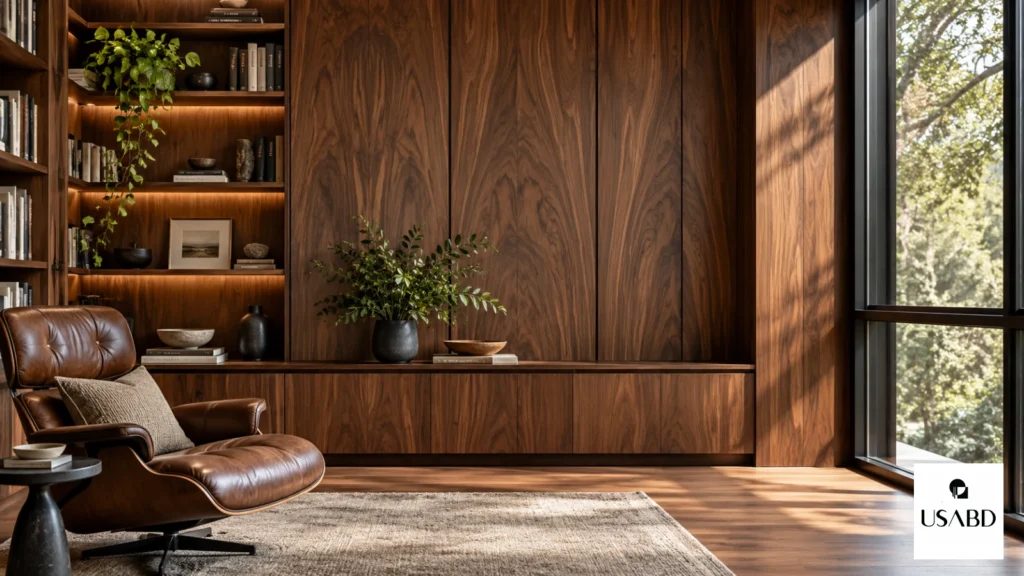
Natural Walnut
Natural Walnut brings warmth and contrast to cream upholstery, pale stone, neutral bedding, and bronze or black fixtures. Explore Natural Walnut WPC panels.
Teak
Teak offers a lighter warm-wood appearance suitable for beige interiors, linen upholstery, and minimalist furniture. Explore Teak WPC panels.
Ebony
Ebony creates a dramatic feature wall, especially alongside lighter bedding and restrained warm lighting. Explore Ebony WPC panels.
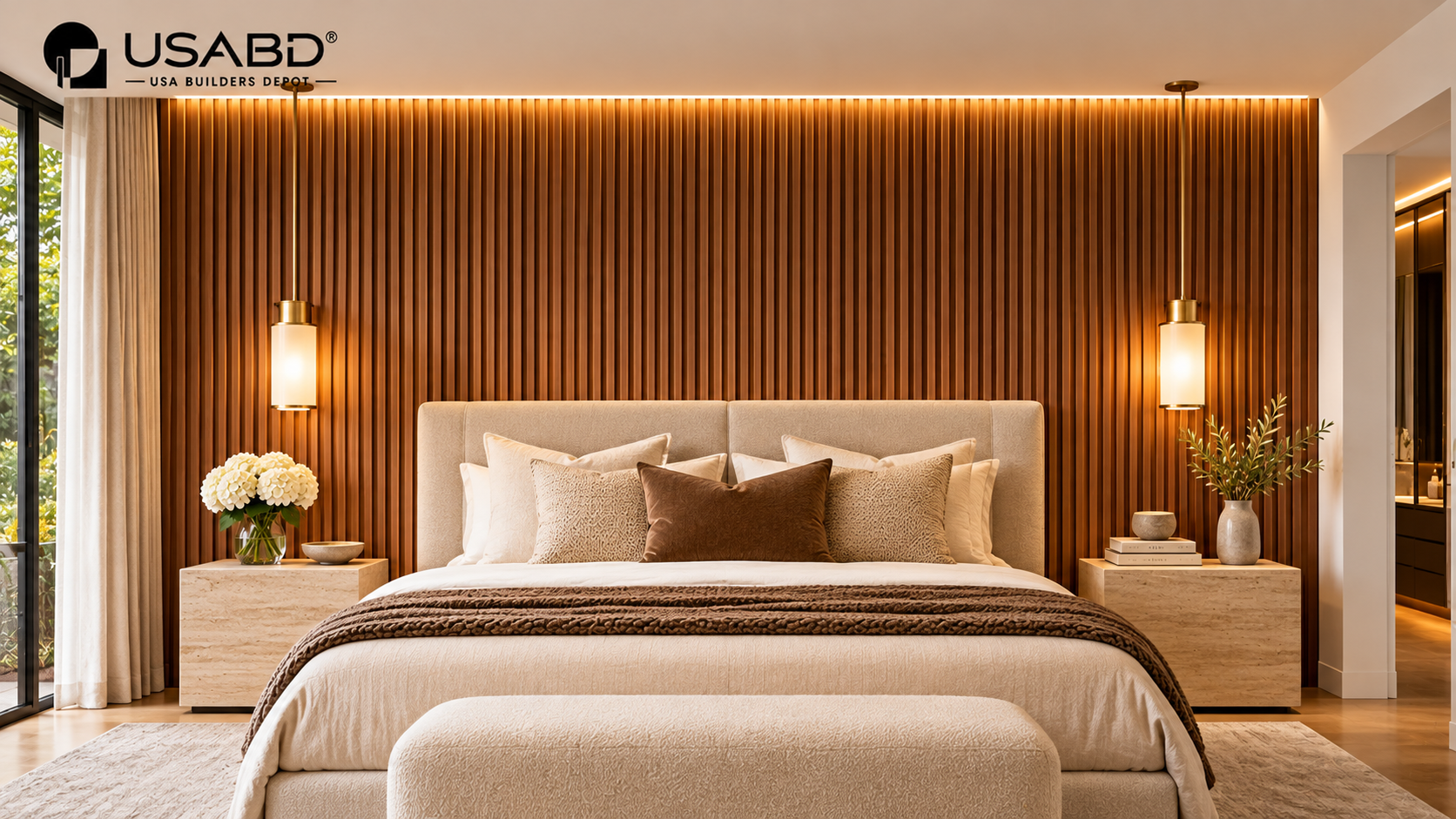
A cream upholstered headboard can contrast elegantly with a dark walnut wall; the bed need not match the cladding finish. Review actual product samples under room lighting because photographed colors can vary.
6. Should the Bed Have a Separate Upholstered Headboard?
A separate upholstered headboard introduces comfort and softness against the textured wall. Some headboards attach to bed frames, while others mount independently to the wall. A wall-mounted headboard must connect to suitable structural support, not merely decorative WPC and adhesive. If the occupant will sit directly against the feature wall, consider whether the panel grooves are comfortable and practical to clean.
7. Plan Electrical Outlets and Bedside Lighting Before Installation
Mark the bed and nightstand positions before locating outlets, charging points, switches, and lighting. Panel thickness may affect electrical box position or the finishing arrangement. Wall sconces need a suitable approved electrical box and mounting support; decorative WPC should not carry fixture loads by default. Pendant lights require appropriate ceiling support and wiring. Do not cover required electrical access. Engage a qualified electrician for electrical modifications and consult our guide to outlets and switches around WPC panels.
8. Can You Add LED Lighting to a Fluted Bedroom Wall?
Yes, with an appropriate compatible lighting system. Ceiling perimeter lighting can wash warm light down the grooves; a designed reveal or independently supported headboard detail may provide gentle indirect lighting. Do not assume a generic LED strip can be inserted safely into every groove. Plan channels, wiring, electrical access, heat and installation compatibility. Warm-white lighting around 2700K–3000K can be a useful design starting point, but evaluate samples to avoid glare.
9. Prepare the Existing Bedroom Wall
Assess drywall, concrete, masonry, or the existing finish before installing decorative panels. Follow the selected manufacturer’s substrate, attachment, moisture, and surface preparation requirements. Old wallpaper, failing paint, damp walls, or uneven surfaces may prevent reliable installation. Correct unsuitable conditions before fitting cladding rather than forcing the panels into position.
10. Understand Panel Thickness and Installation Method
Selected USA Builders Depot interior WPC fluted profiles are approximately 114 inches long, 8 inches wide, and 1 inch thick. Product listings may permit clips or compatible adhesive and show 10-piece packaging; confirm the exact SKU, usable coverage, installation instructions, and current minimum order. Thickness affects electrical outlets, trim, baseboards, and fixtures. Use only manufacturer-compatible clips or adhesives with approved substrates and follow product-specific expansion allowances.
11. How Many Fluted Panels Do You Need Behind a Bed?
For a hypothetical feature wall 12 feet wide and 9 feet high, the width is 144 inches, the height is 108 inches, and the area is 108 square feet. Using a nominal 8-inch panel width gives 144 ÷ 8 = 18 preliminary full-height panel positions. A 114-inch nominal stock length may provide one 108-inch-high section, subject to trim and clearance rules. If the selected product is sold in 10-piece boxes, two boxes supply 20 panels.
This is a preliminary example, not a final takeoff. Overall width can differ from effective installed coverage, and seams, edge cuts, damage allowance, waste, movement, and trim may change the count. Prepare an actual panel layout and confirm current packaging and order requirements before purchasing.
12. How Should You Finish the Edges?
A full-width feature may end at room corners while a centered feature has exposed side edges. Use compatible edge or corner trims where required. Partial-height features need an appropriate top termination. Decide whether panels stop above existing baseboards or integrate with a new baseboard detail. Because the selected WPC may be around one inch thick, transitions should be planned rather than improvised. For more information, see our interior WPC corner and edge trim guide.
13. Design Ideas for a Luxury Primary Bedroom
Walnut With a Cream Upholstered Bed
Natural Walnut fluting, ivory upholstery, stone bedside tables and restrained bronze or black lighting create a warm contemporary composition.
Dark Ebony Feature Wall
Ebony panels can create an intimate and dramatic background when balanced by lighter bedding and soft indirect light.
Fluted Wall With Floating Nightstands
Floating nightstands can create a lighter visual effect, but they require appropriate structural attachment independent of the decorative cladding.
Full-Height Wall With Concealed Ceiling Lighting
Continuous vertical fluting emphasizes room height. A compatible indirect lighting detail can accentuate the grooves.
Partial-Width Panels With a Painted Surround
A centered wood-look feature against painted wall can be especially effective when the bedroom has other prominent architectural details.
14. Do Fluted Wall Panels Make a Bedroom Quieter?
A textured WPC surface does not automatically provide measurable sound absorption or isolation. Acoustic performance must be supported by relevant testing for the exact product and mounting assembly. If the goal is lower room reverberation, compare documented acoustic panel options. If the goal is reducing transmitted noise between bedrooms, evaluate the complete wall and openings.
15. Common Mistakes to Avoid
Avoid selecting finish colors only from a screen, failing to center the panel layout around furniture, calculating material only from gross square footage, forgetting edge trim, and overlooking electrical fixtures. Do not attach heavy headboards or shelves only to decorative WPC. Use an approved attachment method, plan lighting details early, and check product-specific dimensions and movement rules before ordering.
Frequently Asked Questions
Can you put fluted wall panels behind a bed?
Yes, when the selected interior panel is suitable and installed in accordance with its requirements.
Should fluted panels cover the entire bedroom wall?
Not necessarily. Full-width, centered, and partial-height features can all be attractive; choose based on room proportions.
Can a headboard attach to WPC panels?
Do not assume so. A wall-mounted headboard requires suitable independent structural support.
Are WPC fluted panels real wood?
WPC is a manufactured wood-plastic composite, often with a decorative wood-look surface, not solid hardwood.
What finish works behind a cream bed?
Natural Walnut and Teak add warmth, while Ebony offers stronger contrast. Review physical samples.
Can LED lighting be installed with fluted panels?
Potentially, if the fixture, wiring, support and panel construction are compatible and installed correctly.
Are fluted WPC panels soundproof?
Do not assume soundproofing or a sound-absorption rating without relevant product and assembly documentation.
Can panels be installed over drywall?
Potentially, where the selected product’s substrate and attachment instructions permit it.
How many panels do I need for a king-size bed?
Quantity depends on the chosen feature-wall width and height, not only bed size. Calculate the panel layout using effective installed coverage.
Can fluted panels be used in guest bedrooms?
Yes, subject to the selected interior product’s suitability and correct installation.
Final Thoughts: Create a Bedroom With Architectural Character
A fluted headboard wall can transform a bedroom through textured vertical lines, wood-inspired warmth, and carefully chosen lighting. The most successful design starts with the bed dimensions and room proportions, centers the pattern deliberately, and coordinates electrical locations and installation details before ordering. Verify panel dimensions, usable coverage, accessories, and support for any wall-mounted furniture to achieve a beautiful, practical result.
Explore Interior WPC Fluted Wall Panels at USA Builders Depot
USA Builders Depot offers interior WPC fluted wall panels in a selection of contemporary finishes including Natural Walnut, Teak, Ebony and Classic Walnut, plus compatible accessories. Explore our interior fluted wall panel collection. For a bedroom feature wall, send the wall dimensions, desired finish, planned panel height and drawings or photographs through our contact page to discuss product options and current specifications.