How to Reduce Echo in a Home Office: Acoustic Wall Panel Placement for Video Calls
A home office can look beautiful and still sound hollow during video meetings. Hardwood floors, large windows, bare walls and minimal furniture may reflect sound into the microphone. Acoustic wood slat panels can make an attractive feature wall and, when supported by actual acoustic performance, help manage reflections. But not every video-call echo comes from the room, and the best-looking wall is not automatically the best acoustic treatment location.
Quick Answer: Where Should Home Office Acoustic Panels Go?
Potential locations include the wall behind the speaking position, the wall facing the desk, and reflective side walls near the microphone. The best placement depends on room geometry, speakers, microphone and furnishings. Start by identifying the cause of the audio problem before buying materials.
1. Why a Home Office Sounds Echoey
Your voice reaches the microphone directly and after reflecting from walls, windows, ceiling and floor. Strong reflections and lingering reverberation can make speech sound distant or hollow. A compact furnished office may behave differently from a tall room with glass and hard floors. Soft furnishings can also influence the result.
2. Room Reverberation vs. Electronic Feedback
Room reverberation is the persistence of sound reflections in a physical space. Electronic echo may occur when speakers feed sound back into a microphone or multiple devices join a meeting with active audio. Acoustic wall panels are not a substitute for correcting audio feedback. Try headphones, check the meeting application’s settings and disable redundant audio connections first.
3. Test the Room Before Installation
Make a brief recording while speaking normally at your usual desk. Listen with headphones. Repeat with a correctly positioned microphone or temporary soft furnishings and compare the result. This is not standardized testing but can reveal whether microphone distance or reflective surfaces are major contributors. A better headset may improve clarity more quickly than covering a wall.
4. Panels Behind the Desk
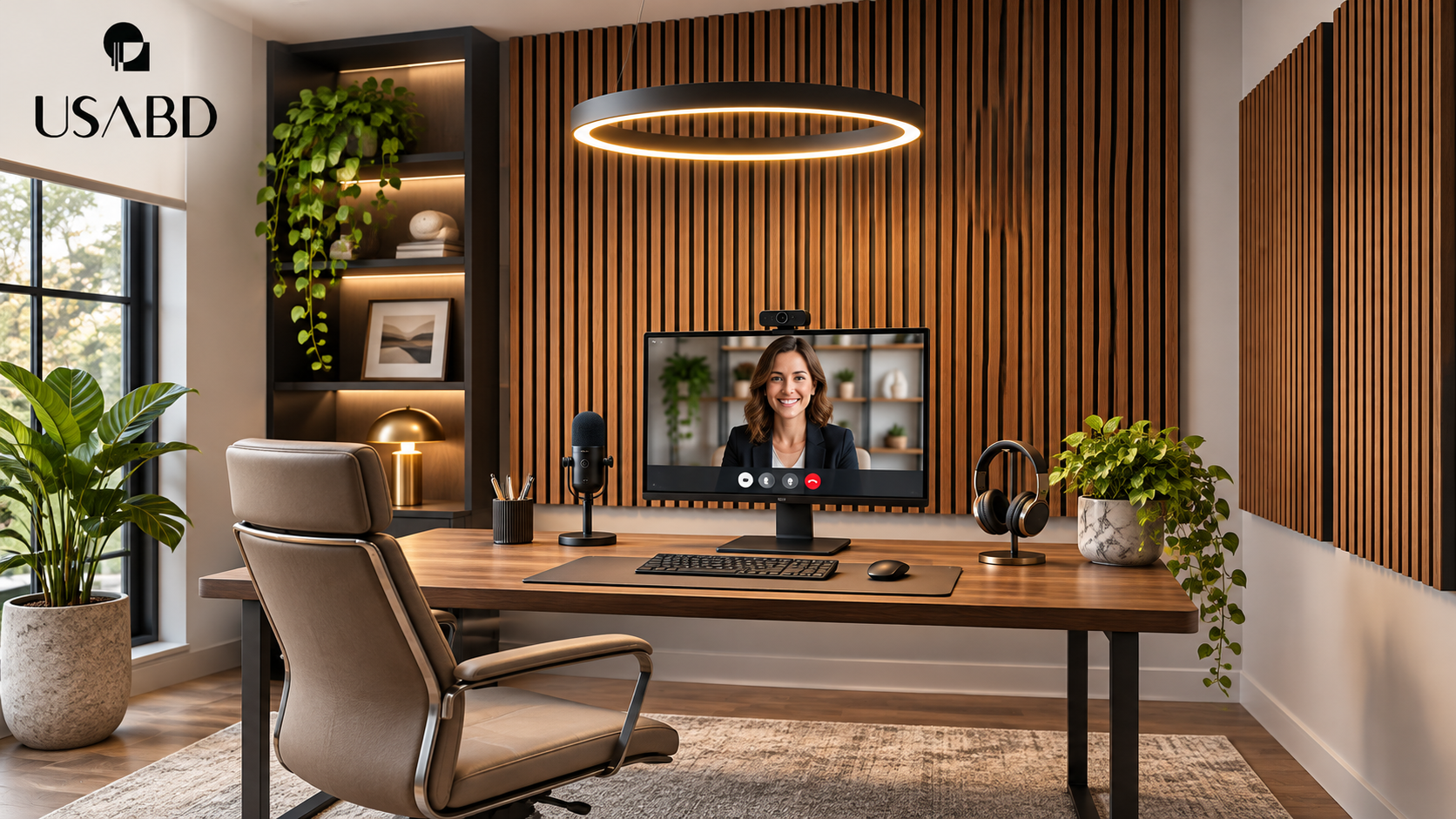
A fluted wood-slat finish behind the desk can introduce warmth and may help manage reflections from that surface. It works well in offices with a monitor and carefully arranged cabinetry. If the microphone faces a large bare wall, treatment there may be relevant. The actual benefit depends on reflection paths, not the location’s visual appeal alone.
5. Panels Behind the Chair
The wall behind the chair is commonly visible on camera, making it useful for a professional-looking video background. A Light Brown Oak, Smoked Oak or Dark Ebony finish can create an intentional architectural composition. However, background placement should not be treated as a guaranteed acoustic solution. Evaluate the surrounding walls and the microphone position.
6. Side Walls and Parallel Surfaces
Strong reflections may occur between hard parallel walls. In some rooms this creates audible flutter or a ringing character. Appropriate treatment on relevant sidewall areas can help, depending on the selected panel’s absorption. Consider the actual reflective surfaces instead of using a universal number of panels.
7. Can Panels Be Installed on a Ceiling?
Some rooms benefit from ceiling treatment, particularly with hard floors and higher ceilings. However, not every decorative wall panel is approved for overhead use. Confirm appropriate product suitability, fasteners and structural support rather than using adhesive or wall-mount instructions automatically.
8. Acoustic Slat Panels vs. Decorative WPC
Decorative WPC fluting creates architectural texture but does not automatically have a tested sound-absorption rating. Acoustic slat panels may use absorptive backing or other components. Performance still depends on the exact tested assembly. Neither should automatically be described as soundproofing. Read our WPC versus acoustic slat comparison.
9. How Many Panels Are Needed?
The quantity for a decorative feature wall depends on actual wall dimensions, usable panel width, cutting waste and packaging. The treatment needed for an acoustic objective depends on room conditions and tested panel performance, not square footage alone. Selected USABD medium acoustic panels are approximately 114 inches long by 12.8 inches wide, with some listings using four-panel boxes. Verify current specifications for the chosen finish.
10. Select a Home Office Finish
Raw White Oak can create a bright minimalist environment; Light Brown Oak adds warmth; Smoked Oak and Dark Ebony make deeper executive backdrops; White Oak with Grey Felt suits contemporary neutral palettes. Review physical samples beside the desk, flooring and lighting. Avoid excessive contrast that obscures your face on video calls. Explore the USABD acoustic panel collection.
11. Improve Your Camera Background
Position the camera near eye level and test the actual frame. An uninterrupted panel feature can appear professional without many decorative objects. Keep strong light sources behind the subject under control, and prioritize flattering light on the face. A neat background may be useful for visual presentation even if another wall needs more acoustic treatment.
12. Microphone Placement Matters
Position the microphone according to its manufacturer’s instructions. A laptop microphone far from the speaker may capture more room sound than a closer headset mic. Reduce excessive speaker volume and check echo-cancellation settings. If the sound remains reverberant after correcting the equipment, evaluate architectural absorption.
13. Installation Planning
Measure the wall and locate outlets, switches, monitors, shelves and fixtures before ordering. Mount heavy equipment to suitable structural backing—not merely slats or felt. Preserve electrical access and ventilation. Follow the selected product’s approved adhesive or mechanical mounting instructions. A particular NRC result should not be assumed when using a different mounting assembly.
14. Sound Absorption Is Not Sound Isolation
Panels may control room reflections but should not be expected to stop traffic noise from entering through windows or conversations from crossing an interior partition. Sound isolation requires separate evaluation of walls, doors, windows, penetrations and seals.
Frequently Asked Questions
Can panels improve Zoom or Teams call quality?
Suitable panels may reduce room reflections captured by the microphone, though device setup and placement also matter.
Should panels be behind the desk or the chair?
Either may be useful; choose based on reflection paths and the visual background requirement.
Will decorative WPC panels reduce echo?
Do not assume a specific acoustic result without relevant product and installation testing.
Will slat panels block outside traffic?
They are not a substitute for sound-isolating windows, doors or walls.
Final Thoughts
A successful home office combines sound-aware design with appropriate audio equipment. Diagnose electronic feedback versus physical reverberation, position the microphone correctly, and choose suitable acoustic treatment for reflective areas. A coordinated wood slat feature wall can also provide an elegant video-call backdrop.
Explore Acoustic Wood Slat Panels at USA Builders Depot
Explore USA Builders Depot acoustic slat panels and our panel quantity guide. For a home-office project, provide your wall dimensions, finish preference and documented acoustic needs through our contact page.