Black Steel Bathroom Windows: Privacy, Ventilation, Safety Glass & Sizing Guide
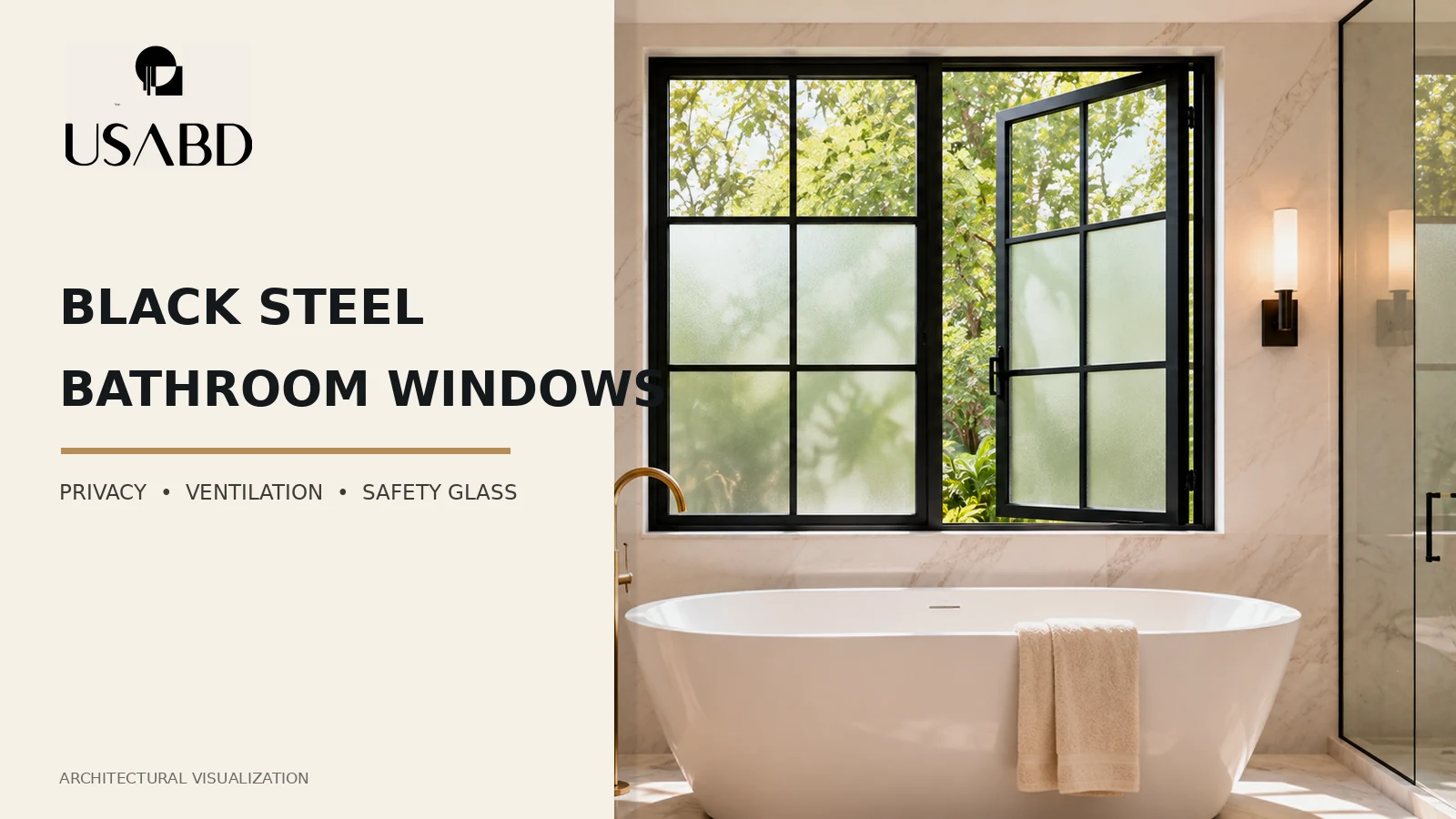
A black steel bathroom window can turn a functional opening into a prominent architectural feature. Its linear frame may complement marble, porcelain, limestone, natural wood vanities and modern plumbing fixtures. Yet bathroom windows face a unique mix of privacy, humidity, condensation, ventilation and possible direct water exposure.
The right decision starts with the full window system rather than frame color. This guide explains fixed, casement and awning options; privacy and safety glazing; sizing; thermal performance; and the details to confirm before ordering custom windows.
Can black steel windows be used in bathrooms?
Yes, where the exact window, glazing, hardware, finish and wall assembly are suitable for its location and environmental conditions. A window across a dry powder room differs from one receiving direct shower spray. Confirm the selected system’s intended use, protective finish, required safety glazing, thermal documentation and installation details.
1. Why designers choose black steel
Black frames create strong contrast against light stone and tile. Divided-lite patterns can coordinate with other windows and doors throughout a residence. Custom configurations can deliver carefully proportioned daylight openings. But slim-frame aesthetics do not establish a universal performance rating: compare the actual frame profile, tested thermal characteristics and weather exposure requirements.
2. Fixed vs. operable bathroom windows
Fixed windows provide daylight and an architectural composition but no natural ventilation. Side-hinged casement windows offer an operable option where their swing and hardware are accessible. Top-hinged awning windows can work in selected higher openings, subject to the manufacturer’s operating configuration. Some bathrooms use a combination of fixed and operable windows. The complete ventilation strategy should comply with local requirements even when the window remains closed.
3. Bathroom privacy glass
Frosted, textured and other obscure glazing treatments can diffuse light and reduce direct views. However, privacy varies with the treatment, lighting and viewing angle; silhouettes can remain visible at night. Higher sill placement, exterior screening, landscaping or compatible films may help when designed correctly. Films must be compatible with the exact insulated-glass assembly and its warranty. Confirm factory glazing availability before custom production.
4. Bathtub-adjacent safety glazing
Certain glazing near bathtubs and showers may be classified as hazardous under the locally adopted building code, making approved safety glazing necessary. Requirements depend on window position, adjacent walking surfaces and the applicable code. Do not infer compliance from the word ‘tempered’ in a marketing description without checking the complete specification. Proper sill detailing and moisture protection are also important around bathing fixtures.
5. Can a steel window be installed inside a shower?
An opening directly exposed to shower spray experiences repeated wetting, soap and cleaners. Ordinary exterior window suitability does not automatically mean the system is approved for that environment. Verify the frame finish, hinges, glazing seals, sill detail and integration with the shower’s waterproofing system. Where suitability cannot be documented, select a product specifically designed for the expected wet exposure.
6. Ventilation and humidity
An operable window may help during mild weather but is not necessarily a substitute for a required bathroom exhaust fan. Mechanical ventilation can manage humidity when outdoor conditions or privacy prevent opening a window. Persistent condensation and dampness deserve investigation rather than simply wiping the glass. The room’s HVAC and moisture-control design should be coordinated with the window selection.
7. Understanding steel frame condensation
Condensation forms when warm humid air contacts a sufficiently cold surface. Steel conducts heat, and frame construction affects interior surface temperature. Insulated double glazing and Low-E coatings can improve some thermal characteristics, but glass-only values are not the same as whole-window performance. A genuine thermally broken frame differs from an insulated, non-thermally-broken steel frame. Request exact product documentation and see the USABD condensation guide.
8. Window placement by bathroom zone
Above a vanity, coordinate mirrors, sconces and cabinets. Above a bathtub, assess privacy, safety glazing, hardware reach and water exposure. High windows can admit daylight with privacy but must be operable safely if intended for ventilation. A powder room can use a smaller fixed or awning window when its overall ventilation and lighting requirements are met. Set positions from full architectural elevations, not an isolated photograph.
9. Choosing a lite pattern
One-lite glazing creates a minimalist appearance, while two-, three- and four-lite configurations add visual divisions. The patterns should relate to the scale of the bathroom and adjacent architectural windows. More lites do not necessarily improve insulation, safety or ventilation. Confirm which configurations and grille constructions are actually available for the chosen window model.
10. Measure the rough opening and jamb
Record structural width and height in multiple places, check level, plumb and diagonal measurements, and identify the finished wall depth. Bathrooms may include tile backer, waterproofing, tile and special trim; these affect the finished jamb and sill. The manufacturer’s complete frame dimensions and installation clearances determine fit, not simply the visible tile opening. Obtain and approve final drawings before production.
11. Sample planning schedule
An illustrative custom bathroom might include a 24 × 36-inch operable casement beside a vanity; a 48 × 36-inch fixed window above a bathtub; a 24 × 24-inch awning in a powder room; and a 36 × 48-inch accent window. These are conceptual design dimensions, not confirmed available products or code approvals. Verify privacy, safety glazing, frame size, accessibility, energy performance and waterproofing for each location.
12. Cleaning and maintenance
Use only cleaning products compatible with the steel frame’s protective finish and glazing. Inspect lower corners, sealants, sill and hardware for moisture collection or coating damage. Avoid using harsh tile-cleaning chemicals on the frame. Address leaks and recurring condensation promptly. The exact maintenance requirements are product-specific.
Frequently asked questions
Are steel windows suitable for bathrooms? Yes, if the exact assembly and installation meet the room’s requirements.
Can I order frosted glass? Confirm availability for the chosen frame and glazing configuration.
Can the window be fixed? Yes, where the overall ventilation and lighting design complies with applicable requirements.
Are they safe near tubs? They must satisfy location-specific safety glazing and installation rules.
Do steel frames rust? Steel can corrode if protective systems fail; finish, exposure and care matter.
Does Low-E glass prevent condensation? It can affect thermal performance, but no universal condensation-free result is guaranteed.
Can I put a window inside a shower? Only if the exact assembly is documented for the wet exposure.
Final thoughts and shop USABD
The best bathroom window balances daylight, privacy, ventilation, safety, moisture protection and architectural character. Select the location and glass first; then confirm the steel system, jamb and drawings before ordering. Explore USABD steel windows, our fixed vs. operable guide, and the measuring guide. USA BUILDERS DEPOT — Build a Better Tomorrow.