
Acoustic Wood Panels: A Comprehensive Guide

Acoustic wood panels can add architectural texture while helping manage reflected sound inside a room. Their primary acoustic role is typically sound absorption—reducing echo and reverberation—not automatically blocking sound transmission between rooms.
This guide explains how to evaluate acoustic wood panels for residential and commercial projects. For a specific USA Builders Depot product, use the exact product listing and applicable technical documentation as the source of record for composition, acoustic performance, fire data, installation, and environmental information.
What Are Acoustic Wood Panels?
Decorative acoustic wood panels often combine a wood, veneer, or wood-look surface with an absorptive backing or substrate. Construction varies by product. Some use felt, PET-based materials, MDF, or other components; do not assume that every slatted panel has the same internal construction or acoustic performance.
Sound Absorption vs. Soundproofing
Sound absorption controls reflections within a room. Soundproofing or sound isolation addresses transmission through walls, ceilings, floors, doors, and other building assemblies. A decorative acoustic panel should not be described as a soundproof barrier unless the complete tested assembly has supporting transmission-loss data.
How Acoustic Performance Is Verified
Acoustic absorption may be reported using metrics such as NRC or frequency-specific absorption coefficients. Results depend on the exact panel, backing, thickness, mounting method, air space, substrate, and test procedure.
If a project requires a particular acoustic rating, request the report applicable to the exact product and installation configuration. Do not reuse a rating from a visually similar panel, a different thickness, or a different mounting assembly.
Material and Environmental Claims
Wood veneer, MDF, felt, PET, and other materials can all be used in decorative acoustic products. Recycled content, FSC certification, low-emitting-material claims, recyclability, and similar sustainability statements must be verified for the exact product. Appearance or material category alone does not establish those claims.
Fire and Code Considerations
Acoustic performance does not establish fire performance. Commercial projects may require specific flame-spread, smoke-developed, fire-test, or code documentation. Verify the exact product and assembly against the project requirements and the authority having jurisdiction.
Where Acoustic Wood Panels May Be Used
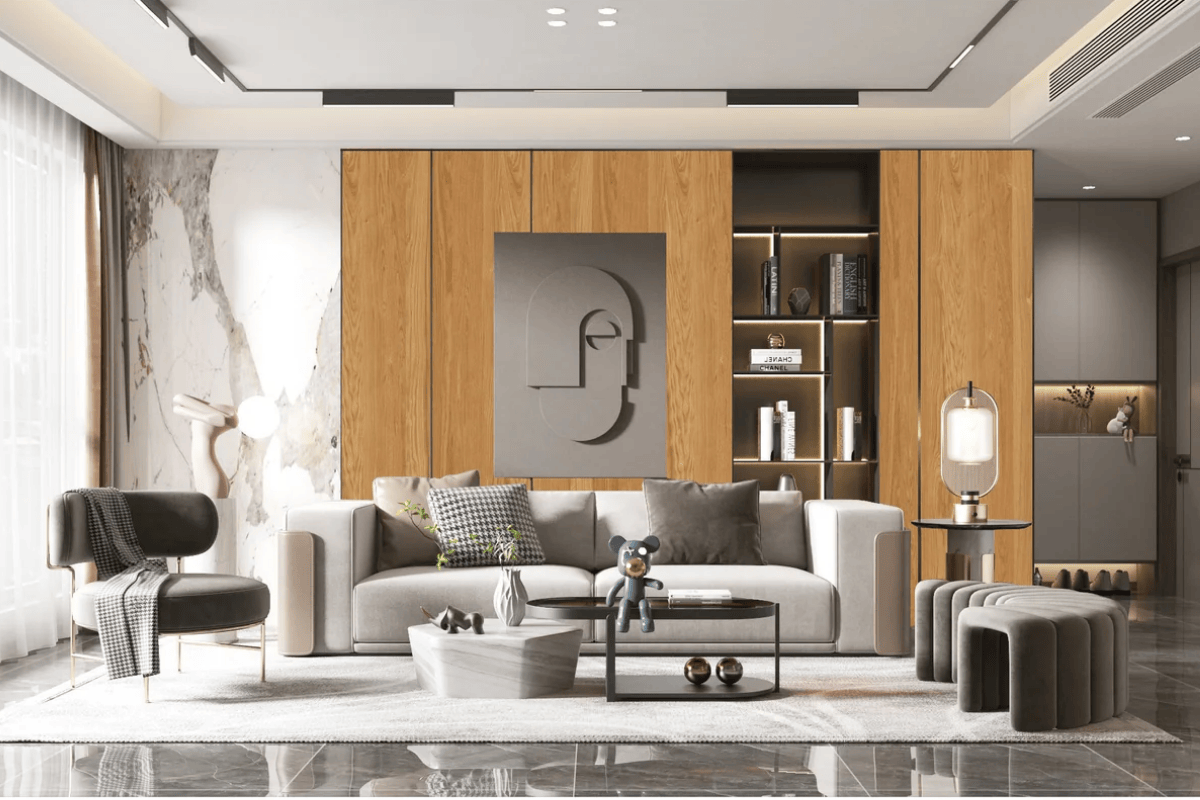
Potential applications include offices, meeting rooms, restaurants, hospitality interiors, media rooms, studios, bedrooms, living spaces, and feature walls. Suitability depends on the exact product, exposure conditions, substrate, and installation instructions.
For kitchens, bathrooms, or other moisture-prone locations, confirm whether the selected panel is intended for that environment. Keep interior products away from direct water exposure unless the product documentation specifically permits it.
Installation Considerations
Installation methods vary. Some products may use adhesive, screws, clips, battens, or other systems. Air gaps and additional absorptive material behind a panel can affect acoustic performance, but any claimed improvement should be based on the complete tested assembly rather than a generic installation rule.
Before installation, confirm wall condition, substrate, fastener or adhesive compatibility, panel orientation, cutting requirements, spacing, edge treatment, and access to electrical devices.
Design Selection
Choose a finish that works with the project palette and lighting. Natural wood tones, dark finishes, linear slats, and contrasting felt can all create different visual effects. Samples are useful because color and texture can look different on screen than they do in the installed environment.
Plan Panel Coverage and Cuts
Measure the area you want to cover and draw the panel layout before ordering. Record the wall height and width, slat direction, door and window openings, outlets and any exposed ends. Use the installed coverage stated for the exact panel and check how many panels each pack contains.
Dividing wall area by panel coverage gives a starting quantity, but the cut layout determines the final order. A tall wall may need horizontal joints; a narrow offcut may not be reusable elsewhere. Allow for planned cuts and spare material instead of assuming one waste percentage suits every project.
Decorative coverage and acoustic treatment are different decisions. Covering a feature wall does not guarantee a particular sound result. If reducing reverberation is a project requirement, have the treatment area and placement evaluated for the room and the selected product.
Choose Matching End Slats and Accessories
Plan visible edges at the same time as the panels. Match the accessory to the panel range, finish, dimensions and intended edge detail. An end slat should not be assumed to work as an inside or outside corner trim.
For Luxury Acoustic Wall Panel, White Oak & Grey Felt, use the Luxury Acoustic Wall Panel, Classic Oak End Slat as the matching accessory. This is the USABD pairing for that finish, even though the panel and accessory names differ.
For other finishes, confirm the matching end slat before ordering. Do not substitute natural veneer corner trims, interior WPC clips or exterior cladding clips solely because their color looks similar. Compare samples in the room’s lighting and check edge dimensions with your installer.
Maintenance
Care requirements depend on the finish and materials. Use the exact product’s maintenance instructions. Avoid applying water, cleaners, sealers, or coatings that are not approved for the selected product, because those treatments can affect appearance or performance.
Before Specifying or Ordering
- Confirm exact dimensions, finish, panel or pack quantity, and cut layout
- Include matching end slats and approved installation accessories
- Verify product composition
- Confirm intended use and exposure limitations
- Request exact acoustic documentation when a rating is required
- Verify fire/code documentation when applicable
- Verify environmental claims from current supplier documentation
- Follow the exact installation instructions
- Confirm warranty, stock status, and delivery requirements
USA Builders Depot Resources
Browse the wall panel collection, review Acoustic Wall Panel Technical Resources, and visit the broader Technical Resources hub for project documentation.
Need help reviewing the panel and accessory selection? Contact USA Builders Depot with your wall measurements and photos. Showroom visits are by appointment only.