



Exterior Wall Cladding Guide: Design, Durability & Installation
Exterior wall cladding can transform the appearance of a building, but long-term performance depends on more than color and texture. The exact profile, substrate, wall assembly, drainage strategy, ventilation, fasteners, trims, expansion details, and exposure conditions all matter.
Cladding Is Part of a Wall System
Exterior cladding should be coordinated with the layers behind it. Depending on the assembly, these can include sheathing, a water-resistive barrier, flashings, battens or subframing, insulation, ventilation cavities, and structural attachments.
Decorative cladding should not be treated as the building's only moisture-management layer unless the exact system documentation specifically supports that use.
Choose the Right Product for the Exposure
A covered porch ceiling, protected accent wall, and fully exposed facade can experience very different conditions. Confirm that the exact product is intended for the planned application and review any restrictions related to orientation, sunlight, temperature, moisture, coastal exposure, or wind.
Drainage and Ventilation
Many exterior cladding systems use a drained or ventilated cavity to manage moisture. The correct spacing and detailing depend on the product and wall design.
Openings at the top and bottom, insect screening, flashing, and drainage paths should be coordinated so water is not trapped behind the cladding.
Expansion and Fastening
Composite materials can move with temperature. Follow product-specific requirements for end gaps, clip spacing, fastener placement, and fixed versus sliding points.
Over-tightening or ignoring expansion details can cause distortion or stress in the finished installation.
Plan Corners and Transitions Early
Outside corners, inside corners, window returns, soffits, termination points, and material transitions should be detailed before installation begins. Confirm the trims and accessories required for the exact profile.
Color, Heat and Architecture
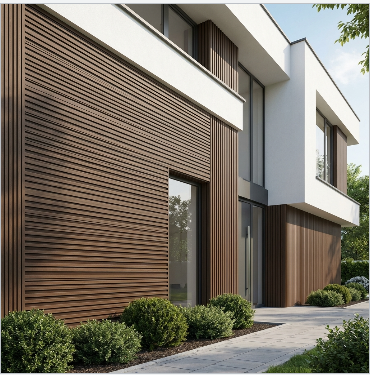
Black, charcoal, walnut, teak, and other deep finishes can create dramatic facades. Consider how the selected finish interacts with sun exposure, adjacent stone, roofing, doors, windows, landscaping, and exterior lighting.
Maintenance
Review cleaning instructions and finish expectations for the exact product. Dirt, pollen, coastal residue, construction dust, and other contaminants may require periodic cleaning.
Explore Exterior Cladding
USA Builders Depot offers selected exterior WPC, fluted, shiplap-style, and architectural wall-cladding products.
Browse Exterior Wall Panels and review Exterior WPC Technical Resources before specifying or installing a product.


