



How Lighting and Wall Materials Work Together in Interior Design
Lighting and wall materials should be designed together. The same wall panel, stone surface, paint color, or steel-and-glass element can look completely different under daylight, warm decorative lighting, or cool task lighting.
Light Reveals Texture
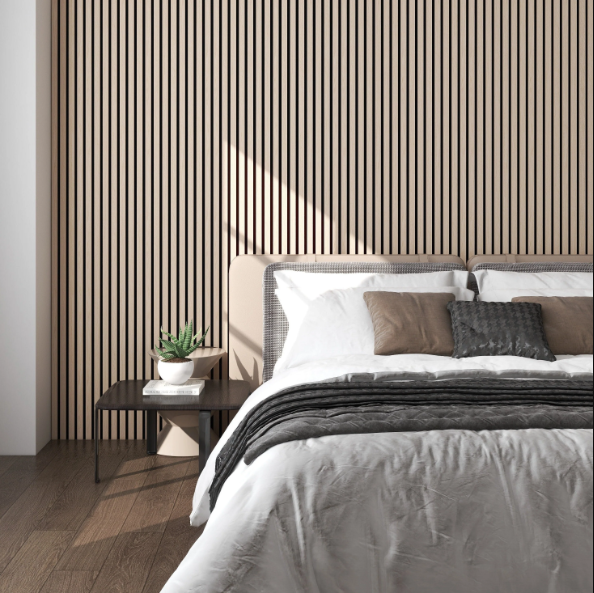
Grazing light placed close to a textured wall exaggerates grooves, fluting, stone relief, and wood grain by creating highlights and shadows. More frontal lighting reduces shadow and makes the same surface appear flatter.
When using fluted or slat wall panels, coordinate fixture position early if the goal is to emphasize the rhythm of the panel.
Color Temperature Changes Material Perception
Warm light can strengthen honey, walnut, oak, brass, beige, and warm stone tones. Cooler light can make whites, grays, metals, and black finishes appear crisper.
Review samples under the actual lighting planned for the room rather than relying only on showroom or daylight conditions.
Reflective Surfaces Need Glare Control
Glass, polished stone, glossy tile, mirrors, and metallic finishes can create strong reflections. Fixture placement, beam angle, dimming, and diffuser selection can help control glare while maintaining visual interest.
Dark Surfaces Need Intentional Illumination
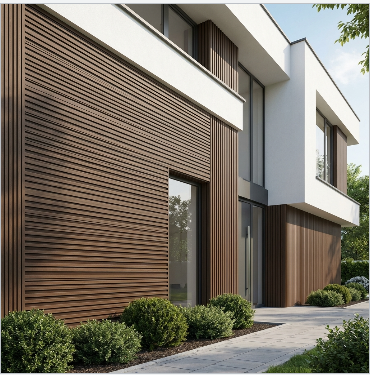
Black steel doors, charcoal cladding, dark veneer, and deep wall finishes absorb more visible light than pale surfaces. Layered lighting can prevent these materials from disappearing into the background.
Use Layers of Light
A strong interior lighting plan usually combines ambient, task, and accent lighting. Ambient light provides general illumination, task light supports activities, and accent light emphasizes architecture, art, texture, or material transitions.
Coordinate Lighting With Installation Details
Linear lighting, wall washers, sconces, and concealed LEDs may require blocking, recesses, wiring, drivers, channels, or access panels before final wall finishes are installed.
For wall-panel projects, coordinate electrical locations and cutouts before ordering or cutting material.
Create a Cohesive Material Palette
Lighting can connect steel doors, natural veneer wall panels, WPC textures, porcelain surfaces, flooring, and cabinetry into one visual composition. Select fixtures and finishes as part of the broader architectural palette rather than as isolated objects.
Explore Wall Panels and Lighting
USA Builders Depot offers selected wall panels and lighting products for residential and commercial interiors.
Browse Wall Panels and the Lighting Collection for current options.


