



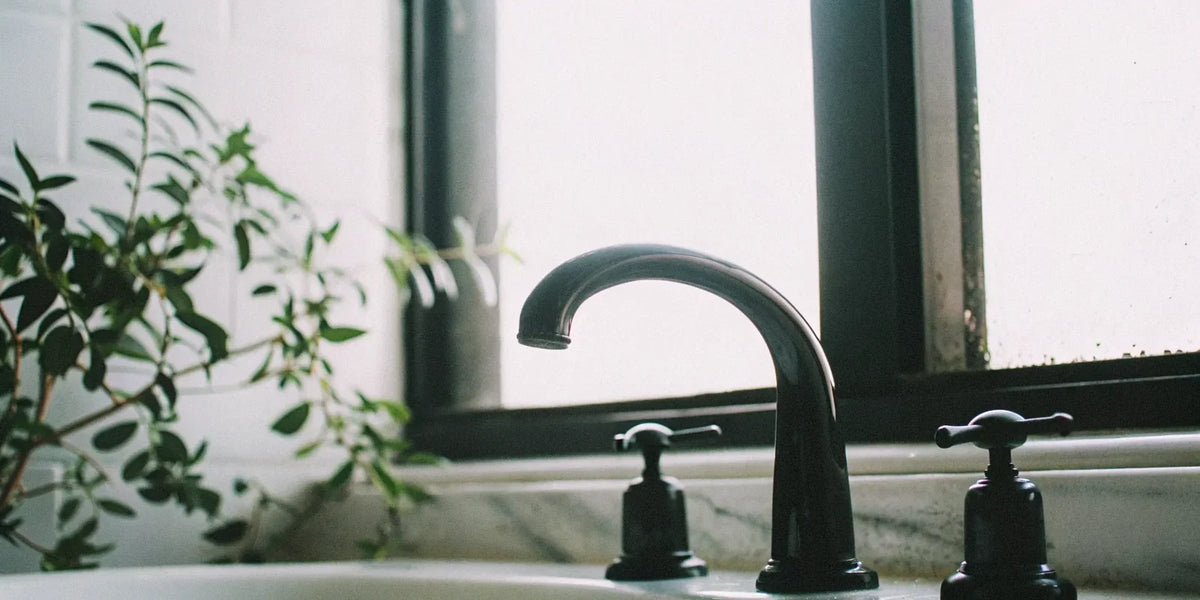
How to Clean a Black Bathroom Faucet & Keep It New

Learn how to clean black bathroom faucets with a gentle routine that starts with your manufacturer’s care instructions. A soft damp cloth and careful drying are a useful starting point. Black finishes vary, so confirm which cleaners are approved for your exact faucet before treating stains.
Key Takeaways
- Start with the product’s care guide: Use only cleaners and methods approved for your exact finish.
- Keep everyday cleaning gentle: Wipe with a soft damp cloth, remove any approved cleaner residue and dry with a clean soft cloth.
- Do not assume vinegar is safe: Avoid acidic soaks, abrasive tools and unapproved descalers. Ask the manufacturer about persistent deposits.
Shop faucets or get care support
Browse faucets and plumbing fixtures, or request care guidance for your USABD faucet. Send the model or order number, finish and a photo of the affected area so our team can help identify the relevant instructions.
Why Choose a Black Bathroom Faucet?
Black faucets have become a go-to for designers and homeowners looking to make a sophisticated statement. They act as a stunning focal point, drawing the eye and adding a touch of drama that chrome or nickel often can't match. Whether you're aiming for a sleek, minimalist vibe or a warm, industrial aesthetic, a black faucet provides a strong anchor for your design. But before you commit, it's helpful to understand the full picture—from their visual appeal to the practicalities of daily use and long-term care. Knowing what to expect ensures you can enjoy your beautiful fixtures without any surprises down the road. The right choice always starts with good information.
The Appeal of a Modern Matte Black Finish
There's no denying the trend toward black bathroom fixtures, and for good reason. As one design guide notes, "They look stylish and can make any bathroom look modern, no matter the style." A matte black finish offers a velvety, non-reflective surface that feels both luxurious and understated. Unlike polished finishes, it doesn't show fingerprints as easily and creates a soft contrast against common bathroom materials like white porcelain, marble, or light wood. This versatility allows it to fit seamlessly into various designs while still feeling custom and intentional. It’s a simple swap that can instantly give your entire vanity a high-end, curated look.
Understanding Durability and Potential Downsides
While a matte black finish is durable, it does require a bit of mindful maintenance. Because of its dark, uniform color, things like "water spots can be more noticeable up close, requiring more frequent wiping." The same goes for toothpaste splatters or powdery makeup dust. The good news is that these issues are purely cosmetic and easily managed with a quick daily wipe-down using a soft cloth. Think of it less as a flaw and more as a characteristic of the finish. By adopting a simple cleaning habit, you can easily keep these minor annoyances at bay and maintain that flawless, showroom-new appearance without much effort.
What to Know About Warranties
Warranty terms depend on the manufacturer, model and finish. Check your product’s written warranty for coverage, exclusions and care requirements; do not assume that parts and finish have the same coverage period. Keep your proof of purchase and contact our team if you need help locating the applicable documents.
The Challenge: Black Faucets and Hard Water
If you live in an area with hard water, you're already familiar with the chalky white residue it can leave behind on dishes, shower doors, and fixtures. This issue is particularly relevant for anyone considering matte black faucets. Hard water is the number one culprit behind the stubborn white spots that can mar their beautiful finish. While it might seem like a major problem, it's completely manageable once you understand what causes it and why it stands out so much on a dark surface. The key isn't to avoid black fixtures but to learn the simple techniques to combat the effects of mineral-rich water.
What Causes White Stains on Black Faucets?
Those frustrating white stains are the result of a high concentration of minerals in your water supply. According to plumbing experts at Borhn, "Hard water has a lot of minerals like calcium and magnesium. When hard water dries or gets hot, it leaves behind mineral spots." Essentially, as each water droplet evaporates from your faucet's surface, it leaves these microscopic mineral deposits behind. Over time, these deposits build up to create the noticeable, chalky film known as limescale. It isn’t a sign of a dirty faucet, but rather a natural outcome of the local water quality in many regions.
Why Matte Black Shows Mineral Buildup More
Matte black faucets don't attract more mineral buildup than their chrome counterparts, but they do make it much more visible. The reason is simple: contrast. As Borhn explains, the "dark color makes the light gray or white hard water spots stand out a lot." A non-reflective, dark surface provides the perfect backdrop for these light-colored mineral deposits to be seen clearly. On a shiny chrome faucet, the spots are often camouflaged by reflections and the lighter color of the metal itself. This visibility is precisely why the final wipe-down after each use is so crucial for maintaining a black faucet’s pristine, uniform appearance.
Choose cleaners for your exact finish
Start with the manufacturer’s care guide. A cleaner described as natural, pH-neutral or non-abrasive is not automatically suitable for every finish. Do not mix cleaning products or use scouring pads, steel wool or abrasive powders on the faucet.
Can you use vinegar on a black faucet?
Only if the manufacturer expressly permits it for that finish, using its specified dilution and contact time. Do not wrap the faucet in a vinegar-soaked cloth or attach a bag of vinegar for an extended soak based on a generic cleaning tip. If the care guide does not address mineral deposits, ask the manufacturer before using an acid or descaler.
Manufacturer examples show why finish-specific instructions matter: Delta’s finish-care guidance describes gentle cleaning and drying, while Moen’s care guide distinguishes finish requirements. These references do not replace the instructions for your own faucet.
Gather your cleaning supplies
Have two clean soft cloths and clean water ready. Use a mild soap or other cleaner only if the product’s care instructions permit it. Keep grit off the cloth and avoid scrubbing. An inconspicuous test does not replace manufacturer approval.
How to Clean Your Black Bathroom Faucet in 4 Steps
Step 1: Check the care instructions
Identify the faucet model and finish. Follow the specified cleaning products, dilution and method. If those details are unavailable, start with a soft cloth dampened with water and request the care guide before using a chemical cleaner.
Step 2: Wipe gently
Gently wipe the surface with the damp cloth. If an approved cleaner is needed, follow its instructions and the faucet care guide. Avoid forceful scrubbing and do not leave cleaner on the finish longer than directed.
Step 3: Remove cleaner residue
Follow the care guide’s rinsing instructions. Wipe away residue with a clean damp cloth where appropriate, paying attention to the base and handles.
Step 4: Dry with a soft cloth
Blot or gently wipe the surface dry with a clean soft cloth. Regular drying helps reduce water spots; it does not repair existing finish damage.
How to Tackle Stubborn Stains and Buildup
Mineral deposits and soap scum
If gentle cleaning does not remove a deposit, stop before trying stronger chemicals or abrasive tools. Use the manufacturer’s recommended treatment for the specific finish, including any stated contact-time limit. Avoid prolonged soaking unless the manufacturer explicitly instructs it.
Reduced flow or a blocked aerator
Check the model’s instructions before removing or cleaning the aerator. Follow the prescribed method for that component and keep unapproved cleaning solutions off the finished faucet body. Contact support if removal or cleaning instructions are unclear.
How to Keep Your Black Faucets Looking New
Once your black faucets are sparkling clean, the goal is to keep them that way with minimal effort. A little consistent care goes a long way in preventing buildup and protecting the finish. By creating a few simple habits, you can maintain that sophisticated, just-installed look.
Make a Habit of Wiping Faucets Dry
The most effective habit for maintaining black faucets is to wipe them down after each use. This quick step prevents water spots and soap residue from drying on the surface, which leads to mineral buildup. Keep a soft, dry microfiber cloth handy. After use, take a few seconds to gently wipe away any water droplets. This daily diligence means less deep cleaning later and helps preserve the integrity of your plumbing fixtures.
Set Up a Simple Weekly Cleaning Routine
Check for residue regularly. Wipe gently using the method approved for your faucet, remove any cleaner residue and dry the surface. Treat persistent marks as a reason to consult the manufacturer, rather than increase cleaning strength or soaking time.
How to Prevent Fingerprints and Grime
Matte black finishes are stunning but can show fingerprints more easily than chrome. The key is to avoid harsh chemicals. Never use abrasive cleaners, scouring pads, or products with bleach or ammonia, as these can strip the protective coating and permanently damage the finish. Sticking to a simple soap and water solution is the best way to clean faucets without causing harm. Gentle care is all you need to protect the surface from everyday grime.
Simple Tips for a Lasting Finish
Proper maintenance is the secret to ensuring your black faucets have a long life. Improper cleaning methods are the top cause of damage to special finishes like matte black. By committing to a gentle routine, you are protecting the factory finish. Think of it as an investment in your home’s aesthetic. A well-cared-for faucet not only functions perfectly but also remains a striking design element in your space, ensuring it looks great for years to come.
Shopping for a Black Bathroom Faucet
Choosing a black faucet is a fantastic way to make a design statement, but it’s a decision that goes beyond just looks. Before you buy, it’s important to think about how the faucet will function in your daily life and fit with your existing setup. From the number of holes in your countertop to the overall style of your bathroom, several factors will guide you to the perfect fixture. Thinking through these details upfront ensures you select a faucet that is not only beautiful but also practical and built to last. This guide will walk you through the key considerations, from mounting options to modern features, so you can shop with confidence.
Key Considerations Before You Buy
Mounting and Handle Options
The right faucet needs to be both pretty and useful, so before you fall in love with a specific design, take a moment to assess your bathroom’s practical needs. First, check your sink or countertop to see how many holes are available for installation—this will determine your mounting options. A single-hole faucet offers a clean, minimalist look, while a widespread faucet with separate handles provides a more traditional feel. Wall-mounted faucets are another great option for a modern, space-saving design, but they require specific plumbing in the wall. You’ll also want to decide between a single-handle faucet for easy temperature control or a double-handle design for precise adjustments. Thinking through these details will help you narrow down your choices from a wide selection of bathroom plumbing fixtures.
Matching Your Bathroom Style
A black faucet can anchor your bathroom's design, acting as a bold focal point. It pairs exceptionally well with modern, industrial, and minimalist styles, but it can also add a contemporary twist to a classic farmhouse or transitional space. To create a cohesive look, consider how the faucet’s finish and shape will complement other elements in the room. Think about coordinating it with your cabinet hardware, shower fixtures, and even your lighting fixtures. The right faucet can tie the entire room together, transforming your bathroom from a purely functional space into a stylish retreat.
Modern Features to Look For
Water-Saving and Accessibility Features
Today’s faucets offer more than just hot and cold water; many come with modern features that add convenience and improve sustainability. When shopping, look for models with the WaterSense label, which indicates they use at least 20% less water than standard faucets without sacrificing performance. This is a simple way to reduce your water bill and your environmental footprint. Additionally, consider accessibility. Faucets that meet ADA (Americans with Disabilities Act) standards are designed for ease of use, often featuring lever handles that can be operated with minimal force. These thoughtful features ensure your bathroom is comfortable and functional for everyone.
Popular Alternatives to Black Finishes
Chrome and Brushed Nickel
While matte black is a stunning choice, it’s not the only option for creating a beautiful bathroom. If you’re looking for a different vibe, there are several popular alternatives to consider, starting with the classics. Chrome is a timeless choice for a reason. Its bright, reflective surface is incredibly versatile, fitting seamlessly into almost any bathroom style, from vintage to ultra-modern. It’s also durable and one of the easiest finishes to clean. For a slightly softer look, brushed nickel is an excellent choice. Its subtle, matte texture is great at hiding fingerprints and water spots, making it a practical option for busy family bathrooms.
Gold, Bronze, and Brass
If you want to add a touch of warmth and luxury, consider finishes like gold, bronze, or brass. A brushed gold faucet can create a sophisticated, high-end feel, while an oil-rubbed bronze finish offers a more rustic, traditional charm. These warmer tones pair beautifully with a wide range of color palettes, from deep, moody hues to bright, airy whites. Exploring the full range of available plumbing faucets and fittings can help you find the perfect metallic finish to complete your bathroom’s design and add a bit of personality.


