Can You Mount a TV on Fluted WPC Wall Panels? A Safe Media-Wall Planning Guide
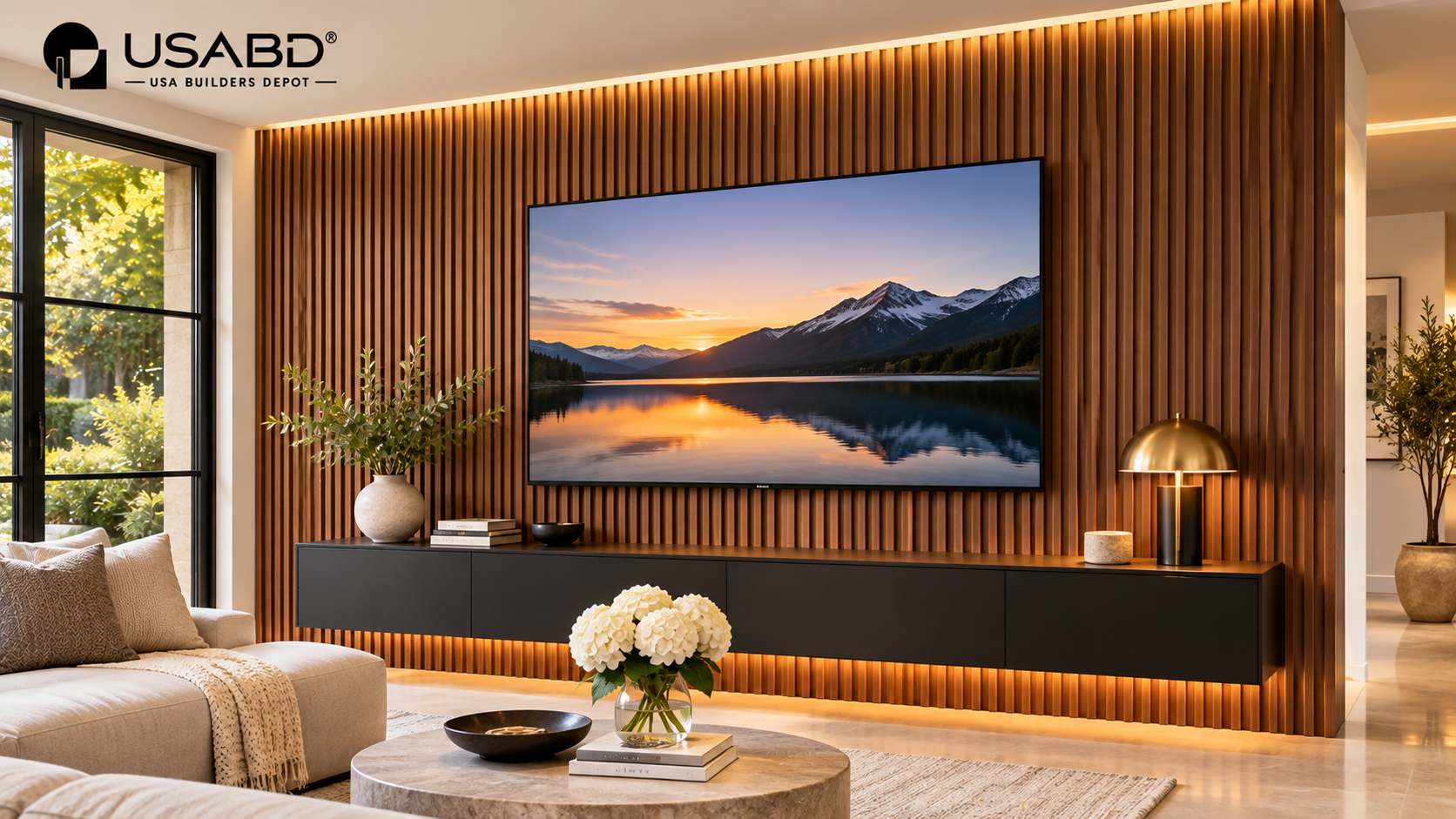
A fluted accent wall can transform a living room. Vertical grooves add architectural character, and wood-inspired finishes coordinate with contemporary cabinetry, natural stone and black metal accents. One popular application is a large TV mounted against walnut-look slat panels, with a floating console and subtle lighting.
But can you mount a television directly onto fluted WPC wall panels? A television can be incorporated into a suitably designed fluted feature wall, but decorative cladding must not be assumed to provide structural support. The mount must transfer loads to an appropriate wall structure or separately approved support system. This guide explains mounting, backing, wiring, panel layouts and finish selection before you order.
Quick Answer: Can You Mount a TV on Fluted WPC Panels?
Yes, a TV can be part of a fluted WPC feature wall. However, the supporting bracket needs an approved attachment to suitable framing, masonry or another specifically rated assembly. Do not assume that WPC panel adhesive, decorative clips, hollow ribs or panel surfaces can support the television. Locate and assess the underlying structure before installing the decorative panels.
1. Decorative Wall Panels Are Not TV Mounting Supports
Fluted WPC panels are decorative architectural finishes, not structural framing members. A TV mount transfers weight and operating forces into its supporting wall. A full-motion mount may create additional leverage when extended away from the wall. Its manufacturer specifies compatible TV weights, wall types, fasteners and installation conditions. Decorative panels do not substitute for those requirements.
For example, SANUS publishes product-specific installation and loading requirements for its mounts. Use documentation for the actual chosen mount and television rather than generalized hardware advice.
2. Identify the Wall Construction First
Wood Stud Walls
Many homes have wood studs behind drywall. Some brackets are designed for attachment to suitable wood framing; their instructions identify the permitted stud configuration and fasteners. Verify stud locations, condition and adequate support before covering the wall.
Metal Stud Walls
Metal studs may require different approved mounting components. Do not assume that wood-stud lag screws or generic drywall anchors are acceptable for metal-framed walls.
Concrete or Masonry Walls
Solid concrete, hollow masonry and brick are different substrates. Any anchor must match the actual wall and mount requirements. Do not transfer instructions for one substrate to another.
Existing Backing or Blocking
If backing was installed for a television, verify its position, condition and structural connection before reusing it. A concealed board is not proof that the installation meets the selected mount’s requirements.
3. Three Ways to Plan a Fluted TV Media Wall
Option A: Continuous Fluted Panels Behind the Television
The decorative panels continue behind the screen. A separately approved mounting arrangement transfers the television load to the underlying support. Plan for panel thickness, correct structural stand-offs if permitted, and access for cabling and servicing.
Option B: A Dedicated Flat TV Mounting Zone
Terminate fluted panels around a central TV zone with a suitably prepared structural mounting surface. This can simplify bracket positioning and can create an intentional architectural composition.
Option C: Purpose-Built Media-Wall Backing
During a renovation, properly designed backing or framing can support the television bracket while the WPC finish surrounds the system. This may be useful for a floating console, soundbar or multiple devices. The engineered load path must remain independent of the decorative material.
4. Why the Added Panel Thickness Matters
Fluted WPC increases the depth of the finished wall. Selected USA Builders Depot interior profiles are approximately one inch thick, although the installed thickness may also include clips, adhesives, or support members. Brackets originally designed for direct wall mounting may not be approved over a thick decorative layer.
Raised grooves and hollow panel sections may not provide a stable bearing surface. Simply using longer screws does not automatically correct the condition. An approved structural mounting zone or specified stand-off system must transmit forces safely without crushing the panels. Avoid improvising with loose washers or unsupported packing materials.
5. Select the TV and Bracket Before Finishing the Wall
Television size, weight, VESA mounting pattern, cable connections and ventilation requirements influence the layout. A fixed mount keeps the screen close to the wall but may limit cable access. A tilting bracket offers some viewing-angle adjustment. A full-motion arm can extend and rotate but creates different load and clearance demands. Verify compatibility with the exact television and wall substrate before buying hardware.
6. Coordinate Electrical Outlets and Cable Routing
A finished media wall should have a clean cable arrangement, but concealment must be planned safely. Locate the electrical outlet with consideration for the TV, bracket and any recessed device box permitted by the electrical design. A qualified electrician should coordinate permanent wiring and required access.
Do Not Conceal Ordinary Power Cords Inside Walls
Ordinary flexible appliance power cords generally cannot be routed through walls as substitutes for permanent wiring. Follow the applicable electrical code and use a properly installed power arrangement. Low-voltage HDMI, data and audio cables have separate ratings and routing requirements; an ordinary cable may not be suitable for in-wall use.
Preserve Service Access
Do not permanently bury junction boxes, equipment needing service or required access points behind decorative panels. Plan for future television replacement and cable maintenance. Our WPC fluted panels around outlets and switches guide provides additional finish-planning considerations.
7. Consider Soundbars, Speakers and Floating Consoles
Each accessory has its own support requirements. A soundbar can use a compatible TV-mounted bracket, an independently supported wall bracket, or a console, but should not rely on decorative WPC for structural support. A floating media cabinet may carry substantial loads and requires independent secure attachment.
Plan ventilation for televisions, receivers and other electronics. Tight decorative enclosures can trap heat; follow each manufacturer’s clearance and temperature requirements.
8. Should the Fluted Panels Continue Behind the Television?
Full-height, continuous fluting creates a warm and cohesive architectural backdrop. Alternatively, panels can frame a smooth central TV recess for a built-in appearance and potentially easier mount access. Both options can work well. Select the approach that suits the room proportions and approved mounting arrangement rather than deciding on appearance alone.
9. How Many WPC Panels Do You Need for a TV Wall?
Measure the full wall height and width, then prepare a panel layout showing the television, optional recess, outlets, console and other interruptions. Confirm the exact selected product’s overall dimensions and effective installed coverage.
Example: 10-Foot-Wide by 8-Foot-High Wall
A 120-inch-wide by 96-inch-high media wall covers 80 square feet. Selected USABD interior WPC fluted profiles are nominally around 114 × 8 × 1 inches. Using the nominal 8-inch width gives 120 ÷ 8 = 15 panel positions. This is only a preliminary layout figure; effective installed coverage, edge cuts, trim, joint requirements and waste can increase the order.
Some selected interior WPC products ship in ten-piece boxes with minimum-order requirements. Confirm package rules and quantities for the exact finish. If the panels stop around a central TV recess, prepare a cut layout instead of assuming that every square foot removed from the design represents reusable material.
10. Choose the Right WPC Finish
Natural Walnut
Natural Walnut creates an inviting wood-look surface that complements cream furniture, limestone flooring and black metal details. Explore Natural Walnut interior WPC panels.
Ebony
Ebony creates a dramatic backdrop for a contemporary media wall, particularly with soft indirect lighting and lighter furnishings. Explore Ebony interior WPC panels.
Teak
Teak offers a warmer and lighter wood-look option for modern living rooms. Explore Teak interior WPC panels.
Review samples against flooring, cabinetry and furnishings. Actual tone and texture may look different under daylight, indirect lighting and display screens.
11. Should You Add LED Lighting?
Subtle lighting above, below or beside a fluted feature wall can add architectural depth. Perimeter lighting, a glow below a floating console, or designed vertical reveals can work well. However, an arbitrary LED strip should not be inserted into any groove without checking heat, wiring and panel compatibility. Avoid excessive brightness or reflection on the TV, and follow fixture and electrical requirements.
12. What If the Media Wall Includes a Fireplace?
TV and fireplace combinations require additional care. Decorative WPC materials and electronic devices may have temperature limits that conflict with the heat from a fireplace. Do not assume a decorative panel is suitable near an opening or hot surface. The fireplace’s approved clearances, building requirements, television operating temperature and panel documentation must all be considered before installing.
13. WPC Fluted Panels vs. Acoustic Wood Slat Panels
Interior WPC fluted panels primarily provide decorative architectural texture. Acoustic wood slat panels may incorporate specific sound-absorbing materials, but acoustic performance depends on the product and tested mounting assembly. Neither product should be presumed soundproof or capable of supporting a TV mount without structural backing. If sound absorption is a primary objective, compare actual test documentation. See our WPC versus acoustic wood slat comparison.
14. Common Mistakes to Avoid
Avoid mounting a TV bracket only into decorative panels, substituting longer screws for an approved support design, concealing ordinary power cords in walls, covering required electrical access, planning outlets after the panels are installed, overlooking ventilation and mounting a floating console without independent structure. Design the supporting wall, TV and wiring first, then complete the decorative finish.
Frequently Asked Questions
Can a TV be mounted directly to WPC wall panels?
Do not assume so. Decorative WPC panels do not have an inherent TV-bearing rating. Attach the bracket to a suitable structural system according to the manufacturer’s requirements.
Can you mount a TV through fluted panels into studs?
Potentially, if the bracket, fasteners, stand-offs and complete attachment method are approved for the actual wall and finished depth. Do not improvise the connection.
Must the WPC panels be removed behind the bracket?
Not necessarily. Some designs use a dedicated mounting zone, while others may use a specifically approved arrangement through the cladding.
Can WPC panels be installed around an existing television?
Potentially, after confirming the existing bracket remains correctly attached and that new panels do not interfere with access, ventilation or the mounting system.
Can a full-motion mount work with a fluted media wall?
Possibly, with an appropriate structural mounting design that accommodates the arm’s loading and clearances.
Can TV cables be concealed behind the panels?
Yes, using suitable code-compliant electrical and low-voltage routing. Ordinary power cords should not simply be hidden inside walls.
Do WPC fluted panels reduce echo?
Not necessarily. Decorative fluting does not demonstrate a tested sound-absorption rating. Evaluate qualified acoustic products when absorption matters.
Can I install WPC behind a fireplace and television?
Only when the exact products and assembly meet all relevant heat, fire, clearance and installation requirements.
What WPC finish works best for TV walls?
Natural Walnut, Ebony and Teak can suit contemporary interiors. Choose based on the room’s lighting, flooring and furniture.
How many panels do I need?
Measure the actual wall and prepare a layout based on the selected profile’s effective coverage, cuts, trims and packaging requirements.
Final Thoughts: Design the TV Mount First, Then the Feature Wall
Fluted WPC panels can transform an ordinary media room into a refined architectural space. The key to a successful installation is planning structural support, the bracket, wiring, ventilation and service access before installing decorative cladding. With the technical details resolved, the texture and wood-look finish can become the focal point of a beautiful and functional media wall.
Explore Interior WPC Fluted Wall Panels at USA Builders Depot
USA Builders Depot offers interior WPC fluted wall panels in Natural Walnut, Ebony, Teak and additional finishes. Explore the interior WPC fluted wall panel collection for current options and specifications. For larger media-wall projects, contact USA Builders Depot with your wall dimensions, selected finish and intended application. Our team can help identify decorative materials, compatible accessories and product documentation.