



Article: Steel Door Freight Delivery Checklist: How to Inspect Your Door Before Signing
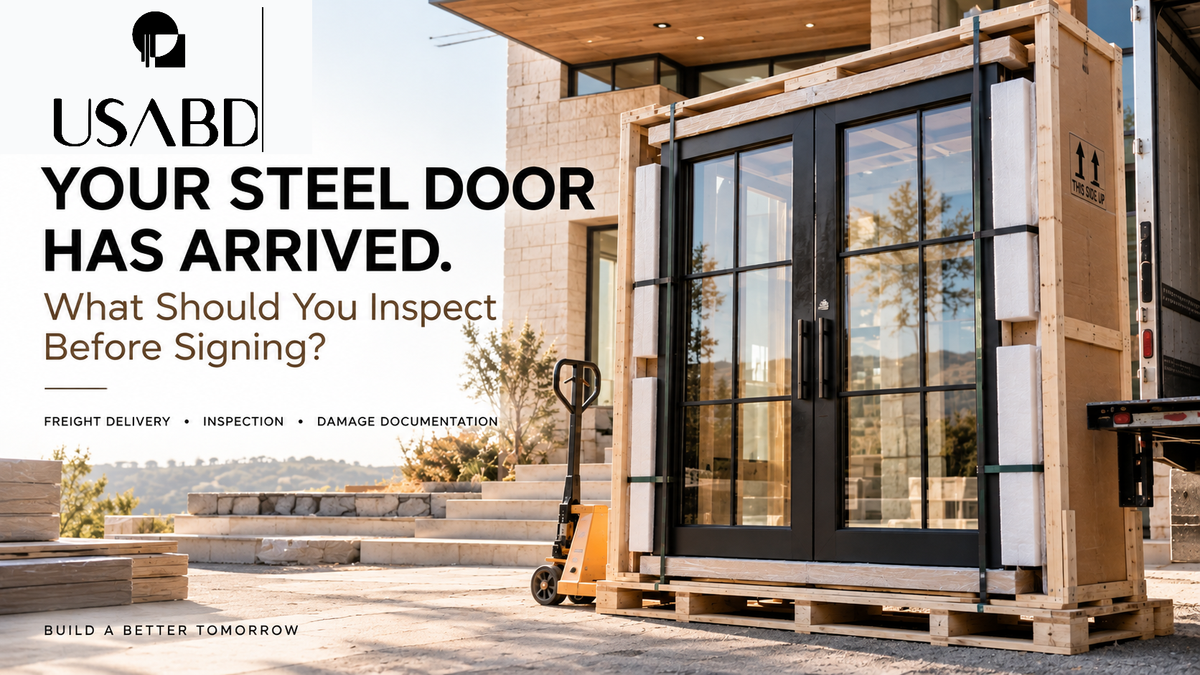
Steel Door Freight Delivery Checklist: How to Inspect Your Door Before Signing
Ordering a beautiful architectural steel door is an exciting part of building or renovating a home. Whether you have selected a modern black steel entry door, a large double French door, or a custom steel-and-glass entrance, there is an important step between ordering your door and installing it: receiving the delivery correctly. Unlike small building materials shipped in ordinary boxes, large steel doors may require freight transportation, specialized packaging, and coordinated unloading. This guide explains how to prepare, inspect, document shipping concerns, and store a door safely before installation.
Quick Answer: What Should You Do When Your Steel Door Arrives?
When a steel door arrives by freight, verify the shipment, inspect the packaging and accessible product surfaces, photograph its condition, record visible damage or shortages on the delivery receipt, and report problems promptly. Do not assume an intact-looking crate guarantees the door inside is undamaged. If inspection is restricted, document what you could and could not inspect and promptly follow the applicable carrier and supplier procedures.
Why Steel Doors Often Require Freight Delivery
Large architectural steel-and-glass entry doors can include steel leaves, an outer frame, hinges, insulated glazing, thresholds, weatherstripping, installation accessories, and protective crating. Actual inclusions depend on the selected model and order. The packaged size and weight determine handling requirements. A 72 × 96-inch double door may require different equipment and preparation from a conventional 36 × 80-inch single door.
1. Prepare for Your Steel Door Delivery Before the Truck Arrives
Confirm the delivery address and truck access. Residential construction sites may have restricted roads, unfinished driveways, parked equipment, or other obstacles. Confirm packaged dimensions and weight; protective crating can make the shipping dimensions larger than the nominal door dimensions. Confirm whether the carrier offers a liftgate or unloading service rather than assuming it is included. Arrange suitable lifting equipment and personnel, and prepare a stable unloading surface and protected storage location. Never improvise with unsafe equipment or attempt to manually lift a load beyond safe handling limits.
2. What Should You Inspect Before Signing for a Steel Door?
Compare the shipment with your order information and delivery documents. Check the expected number of packages, crates, or pallets. Examine the exterior packaging for crushed corners, broken wood, torn wrap, punctures, water exposure, unstable pallets, broken straps, missing packages, and visible broken glass. Not every packaging defect means the product itself is damaged, but each concern deserves careful documentation. Take photographs of the entire shipment and close-ups of possible damage before moving or unpacking it.
3. How to Inspect Steel Door Glass for Shipping Damage
Architectural doors may use tempered, insulated, Low-E, or other specified glazing. Check safely accessible glass for chips, cracks, broken corners, or displaced glazing. Where visible, inspect the glass edges, surrounding gaskets, and retainers. Some problems may only become visible after packaging is removed. Do not touch broken glass directly or remove structural glazing supports simply to inspect. If a complete inspection is unsafe or not permitted while the driver is present, record that limitation and follow the applicable reporting procedure promptly.
4. Inspect the Steel Door Frame and Finish
Inspect accessible frame and door surfaces for visible dents, deep scratches, chipped finishes, bent or distorted sections, damaged welds, misaligned components, and missing accessories. A cosmetic scratch is different from structural deformation, but both should be documented. Do not use generic spray paint or attempt to straighten a damaged steel frame before discussing product-specific repair guidance with the supplier.
5. What Is a Bill of Lading?
A bill of lading, or BOL, is an important freight transportation document identifying the shipment and its handling details. The carrier may also provide a delivery receipt or proof of delivery. These documents are related but are not necessarily identical. Before signing the delivery receipt, note visible damage or shortages specifically. For example: “One wooden crate received with a crushed lower-right corner and torn protective wrapping. Contents not fully inspected at delivery.” For a shortage, record what you actually observed, such as “Two pallets expected; one pallet received.” Do not rely on generic wording such as “subject to inspection” as a substitute for documenting actual visible defects. Take photographs and follow the carrier's current procedure.
6. Should You Refuse a Damaged Steel Door Delivery?
Not every packaging defect requires refusal. A damaged crate may have protected the door inside. For apparently minor damage, photograph the packaging, record exceptions, and inspect accessible contents safely. For significant damage, document the condition and contact the carrier and USA Builders Depot for guidance where possible. If the shipment is unstable, glazing is broken, or unloading would be unsafe, do not put people at risk simply to complete delivery. The appropriate decision depends on the severity, carrier rules, order terms, and supplier instructions.
7. What Is Concealed Freight Damage?
Concealed damage is discovered after delivery even though it was not visible during the initial receiving inspection. For example, a steel frame dent or cracked glazing may be hidden beneath protective material. If this happens, stop unnecessary handling, photograph the damage and packaging, preserve shipping labels and other evidence, note the delivery and discovery dates, and promptly notify USA Builders Depot and the applicable carrier. Reporting deadlines differ across carriers and orders; do not assume a universal window.
8. What Photographs Should You Take?
Photograph the entire crate or pallet, shipping labels, crate corners, protective wrapping, accessible door finish, glass panels, steel frame corners, loose accessories, and the delivery receipt showing exceptions. If concealed damage is discovered during safe unpacking, photograph the damage and its surrounding packaging. Do not discard damaged packaging before the applicable inspection and claim requirements are understood.
9. How to Check Whether All Door Components Arrived
Compare every delivered package with the order confirmation, packing list, and product documentation. Depending on the selected configuration, the shipment may include door leaves, a frame, hinges, a threshold, sweep, weatherstripping, and other components. Some door products require separately purchased handles or locks. Before reporting an item missing, confirm that it was included in your order. For double doors, check active and inactive leaf arrangements and any hardware preparation against the approved specification.
10. How to Store a Steel Door Before Installation
Prepare a protected storage area away from construction traffic, moisture, grinding sparks, masonry dust, chemicals, and accidental impact. Follow the manufacturer's specified storage orientation. Do not assume heavy glazed doors can safely be stored horizontally, vertically, or stacked without appropriate instructions and supports. Protective packaging may help avoid damage, but follow the product's requirements regarding moisture buildup and prolonged exposure. Avoid prematurely removing protective materials where the manufacturer directs that they remain in place.
11. Common Steel Door Delivery Mistakes
Common avoidable problems include having no unloading plan, signing before inspecting, failing to photograph damage, waiting until installation to report concerns, discarding the crate immediately, attempting unauthorized repairs, and storing an expensive finished door in an active work area. The better approach is to coordinate equipment ahead of time, inspect accessible areas, photograph conditions, document receipt exceptions, report concerns promptly, preserve evidence, and protect the shipment.
12. Steel Door Receiving Checklist
Before delivery: verify the order and tracking, packaged size and weight, truck access, unloading responsibility, suitable equipment, and protected storage. At delivery: verify package count, inspect exterior packaging, visible glass, frame, finish, and accessories; photograph the condition; and accurately note exceptions on the delivery receipt. After delivery: inspect when safe, report suspected damage promptly, retain relevant packaging and documentation, and give the installer product-specific instructions. A designated receiver can make this process more consistent on large jobs.
13. What If Your Steel Door Is Custom Made?
A custom architectural door may have been manufactured to a project-specific drawing. Compare the delivered configuration with approved door type, dimensions, lite pattern, finish, inswing or outswing specification, handing, frame, hardware preparation, and included accessories. Some features cannot be verified until safe unpacking. Document any differences and contact the supplier before modification. Selected custom USA Builders Depot steel-door configurations may have approximate production lead times of 8–12 weeks, depending on the approved order. Production lead time should not automatically be treated as a guaranteed installation date.
14. What Should Builders Do Before Scheduling Installation?
Receiving an undamaged door does not mean the opening is installation-ready. Review the opening dimensions, framing, threshold and sill condition, flashing, finished floor elevations, wall thickness, and surrounding materials. Brick, stone, stucco, and exterior WPC cladding may affect frame returns, installation access, and water-management detailing. Give the installer the applicable approved drawing and product instructions. Consult our steel door rough opening and threshold resources for planning.
15. Understanding USA Builders Depot Shipping and Support
USA Builders Depot offers selected in-stock and custom steel doors. Available shipping methods, lead times, and unloading arrangements vary by product, destination, and purchase terms. Review the current shipping policy and the requirements for the specific shipment. If a shipment appears damaged or incomplete, provide USA Builders Depot with your order number, delivery information, photographs, and relevant carrier paperwork promptly. Freight damage claims, ordinary returns, and product warranty procedures may differ; follow the current terms rather than assuming one universal reporting deadline.
Frequently Asked Questions
Do I need to inspect before signing? Yes. Check visible packaging, count packages, document exceptions, and photograph concerns.
What if the driver will not allow me to open the crate? Record what could not be inspected and follow the relevant procedures promptly.
What should I write if the crate is damaged? Describe the actual visible issue, such as a crushed corner or torn wrapping.
What if the damage is concealed? Photograph it, preserve packaging, and report promptly.
Can I refuse a damaged delivery? It depends on safety, severity, the carrier, and order terms; seek guidance when possible.
Does the shipment always include a frame, handles, and locks? Check the exact purchased configuration; hardware may be separate.
Can I store the door outside or stack it? Do not assume either is permitted; follow manufacturer instructions.
Should I keep the wooden crate? Yes, if damage is suspected, until requirements are understood.
How quickly should damage be reported? Promptly, within the specific applicable deadlines.
Does USA Builders Depot ship nationwide? Shipping is offered to eligible U.S. destinations and depends on the product and address.
Final Thoughts: A Successful Steel Door Installation Starts With a Successful Delivery
A beautiful steel entrance requires more than the right design. Proper freight receiving, documentation, unloading arrangements, and storage can help prevent avoidable complications. Whether you receive a single modern entry door, a double French door, or a custom entrance, inspect the shipment and protect your investment. Explore modern steel entry doors at USA Builders Depot and review the Shipping Policy before coordinating delivery. USA BUILDERS DEPOT — Build a Better Tomorrow.