7 Best Acoustic Panels for Your Home or Studio
The best acoustic panels for your room depend on the sound problem, the look you want and the mounting method you can use. Start by separating echo inside the room from noise traveling through walls. This guide compares seven brands and product ranges, explains the documentation to check, and helps you plan panels, samples and finishing pieces.
USA Builders Depot sells acoustic wood slat panels. This is a buying guide, not an independent laboratory ranking; no single panel is the best choice for every room.
Which acoustic panels should you compare?
For a decorative feature wall
Start with acoustic wood slat panels if the visible wood finish is central to your design. Compare face finish, felt color, dimensions and edge details. Request acoustic data for the exact panel and mounting arrangement before relying on a performance rating.
For speech, calls and everyday echo
Compare absorptive panels with documented performance for your planned installation. Fabric-wrapped panels and other tested absorptive systems are options to evaluate alongside wood slat products. Plan coverage around the room dimensions, furnishings and use, rather than choosing by appearance alone.
For a music room or recording studio
Review frequency-by-frequency absorption data and assess whether low-frequency treatment is needed. Decorative slats should not be assumed to replace purpose-designed bass traps. A room assessment can help identify the appropriate treatment and placement.
Trying to block noise from next door? Absorptive panels alone are not a sound-isolation system. Read our acoustic treatment and soundproofing guide before selecting products.
Choose your finish, then plan the complete order
- Order finish samples to compare wood color, grain and felt in your room. Samples help with appearance selection; they do not prove installed acoustic performance.
- Check full-size panel listings for dimensions, selling units, current prices and minimum orders. Include cuts and layout in your quantity plan.
- Plan exposed edges with matching end slats and the end-slat and finishing guide. Confirm the exact finish pairing before ordering. For Luxury Acoustic Wall Panel, White Oak & Grey Felt, use the Classic Oak End Slat.
- Review the installation guide and NRC and performance guide. Request any required documentation for your chosen product and mounting configuration.
For help preparing an order, send your room use, wall dimensions, preferred finish and delivery ZIP code. Include exposed edges and any acoustic-performance requirements.
Key Takeaways
- Panels absorb echo, they don’t soundproof your room: Their job is to improve sound quality inside a space by stopping sound waves from bouncing off hard surfaces. Plan coverage and placement for the room’s use; early reflection points are one consideration for speaker-based listening.
- Compare documented absorption: Review the exact product’s acoustic test results and mounting configuration. NRC summarizes absorption across selected frequencies; also review frequency-by-frequency results when your project has specific sound-control needs.
- Compare DIY and ready-made options: Consider materials, tools, labor, installation requirements, and available documentation. A commercially manufactured panel does not automatically have a particular acoustic or fire rating.
What Are Acoustic Panels (And Why Do You Need Them)?
Ever been in a room where conversations feel loud and chaotic, or the sound from your TV echoes just enough to be annoying? That’s usually because of poor room acoustics. Hard surfaces like drywall, hardwood floors, and large windows are notorious for bouncing sound waves all over the place, creating reverb and flutter echo. This is where acoustic panels come in. They are specially designed panels you mount on walls or ceilings to absorb sound, control echoes, and make a space sound clearer and more pleasant.
Whether you’re setting up a home theater, trying to focus in a home office, or designing a quiet living area, acoustic wall panels are a game-changer. They don’t just improve the sound quality for entertainment; they can make any room feel more comfortable and serene by taming unwanted noise. Think of them as a functional design element that serves a very practical purpose: making your space sound as good as it looks.
How Do Acoustic Panels Actually Work?
At its core, an acoustic panel’s job is to stop sound from bouncing around. When sound waves hit a hard surface, they reflect off it and continue traveling through the room. Too much reflection creates that echoey, muddled sound. Acoustic panels are made from soft, porous materials that do the opposite. Instead of reflecting sound, they soak it up.
When a sound wave hits the panel, it travels into the absorptive material, and its energy is converted into a tiny amount of heat. This process effectively traps the sound, preventing it from bouncing back into the room. The result is less echo and reverb, which leads to much clearer, more defined sound. It’s an essential fix for home studios, conference rooms, or any space where you need to control sound quality.
A Quick Guide to Acoustic Panel Types
Not all acoustic panels are created equal; they’re designed for different jobs. Understanding the main types will help you choose the right solution for your room.
- Absorbent Panels: These are the most common type and what most people picture. They are designed to absorb sound waves across a broad range of frequencies, making them perfect for reducing general echo and reverb in offices, living rooms, and home theaters.
- Diffuser Panels: Instead of absorbing sound, diffusers scatter it in different directions. This breaks up strong reflections without making the room sound completely “dead.” They help create a more balanced and natural acoustic environment, which is often preferred in listening rooms or performance spaces.
- Bass Traps: These are specialized absorbent panels designed specifically to tackle low-frequency sound waves (bass). Bass tends to build up in the corners of a room, making music or movies sound boomy and unclear. Bass-trap designs vary; compare their low-frequency test data and intended mounting rather than assuming that greater density alone is better.
Acoustic Panels vs. Soundproofing Panels
This is one of the biggest points of confusion, so let’s clear it up: acoustic panels are for sound treatment, not soundproofing. Think of it this way: acoustic treatment handles the sound quality inside a room, while soundproofing stops sound from getting in or out. An acoustic panel acts like a sponge, soaking up echoes and reverb to make a space sound clearer. Soundproofing, on the other hand, is like a solid barrier designed to block sound from traveling between rooms. So, if your goal is to stop hearing your neighbor’s TV, you need soundproofing. If you want your home theater to sound crisp and clear without annoying echoes, you need acoustic treatment.
Specialty Acoustic Panels
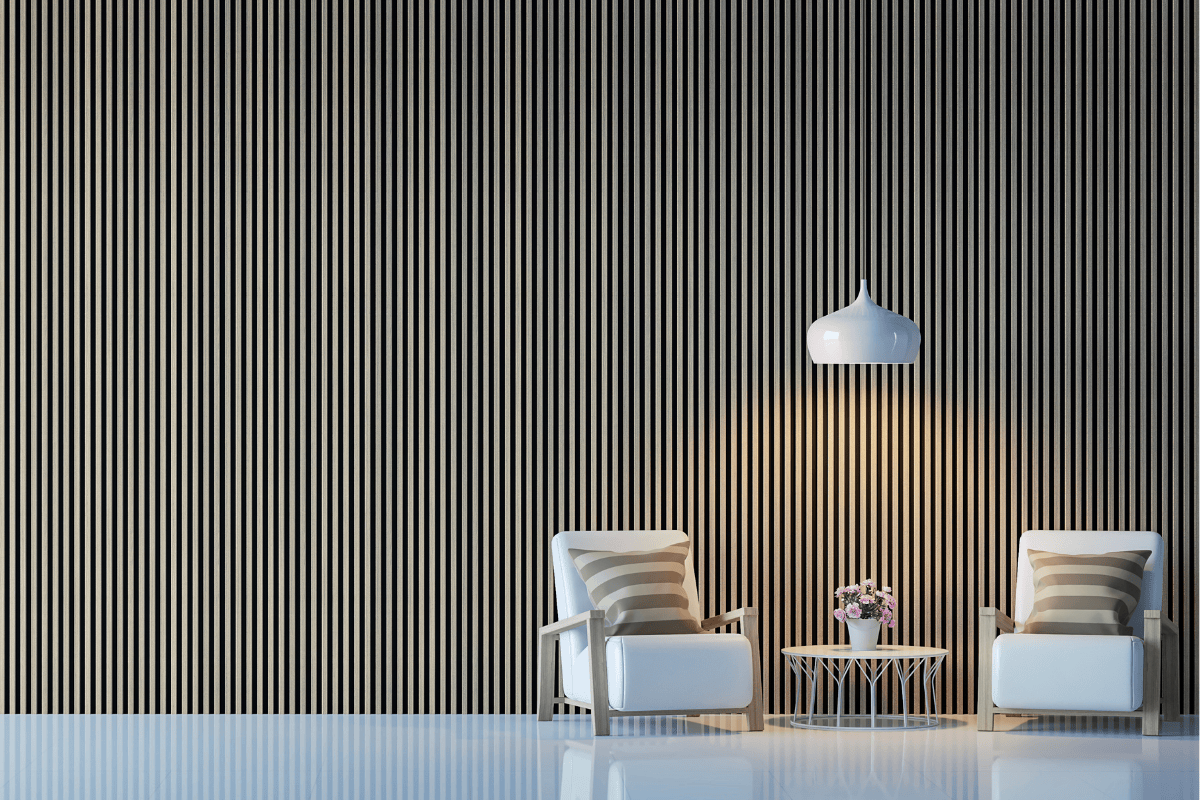
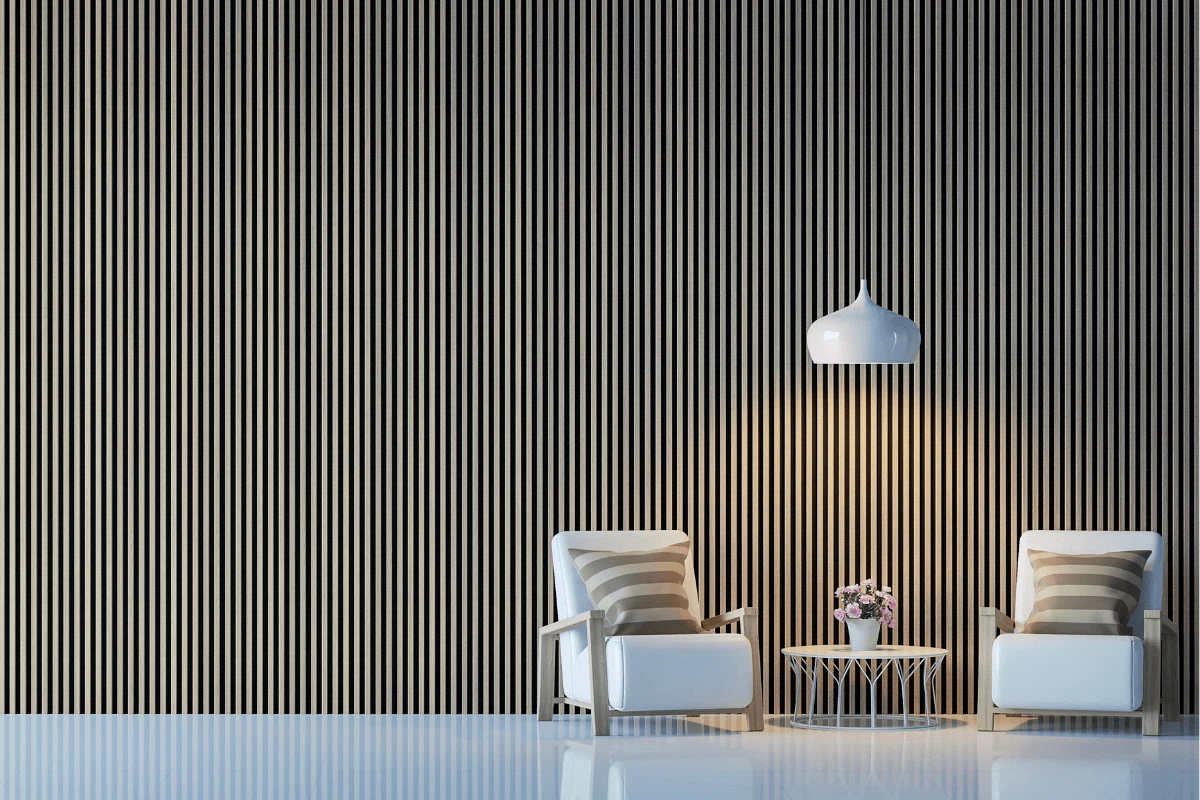
The world of acoustic treatment has expanded far beyond simple fabric-covered squares. Today, you can find specialty panels that are as much a design statement as they are a functional tool. For instance, wood slat acoustic panels have become incredibly popular for their ability to add warmth and texture to a room while effectively taming echoes with their felt backing. You can also find paintable panels that blend seamlessly into your wall for a minimalist look. Decorative interior WPC fluted panels offer another appearance option. Do not treat a decorative panel as an acoustic-treatment product unless relevant performance documentation supports that use.
Common Myths, Busted
There’s a lot of confusion about what acoustic panels can and can’t do. Let’s clear up a couple of common myths so you can set realistic expectations for your project.
First, many people believe a few panels can fix the acoustics in a large room. The truth is, effective acoustic treatment requires strategic placement and sufficient coverage. A small amount of treatment may be insufficient for the desired result; its effect depends on the room and product. The size of the room and the amount of reflective surfaces determine how many panels you’ll need.
Another huge misconception is that acoustic panels can soundproof a room. Acoustic panels are designed to improve the sound inside a room, not block sound from entering or leaving it. Soundproofing requires dense, heavy materials to create a barrier. Since acoustic panels are lightweight and porous, they won’t stop your neighbor’s music from coming through the wall.
Seven Acoustic Panel Brands and Ranges to Compare
The following brands and product types offer starting points for comparison. This guide is not a comparative laboratory test or a ranking based on testing by USA Builders Depot. Confirm the exact model, dimensions, finish, mounting method, current price, and available performance documentation before selecting a panel.
USA Builders Depot Acoustic Wood Slat Panels
Explore our acoustic wood slat wall panels for interior feature walls, media rooms, offices, and other interior projects. Compare the selected panel’s dimensions, finish, felt color, and installation requirements. Order a finish sample before choosing full-size panels, and review our acoustic panel technical resources for product documentation. A finish sample helps with appearance selection; it does not establish installed acoustic performance. Ask for documentation covering the exact panel and mounting configuration when your project specifies an acoustic or fire rating.
GIK Acoustics Professional Series
When comparing GIK Acoustics products, identify the exact model and intended use rather than relying on a general brand recommendation. Review its published absorption data, dimensions, mounting arrangement, and finish options. Match those details to the room’s needs before comparing it with another manufacturer’s panel.
Primacoustic London Series
Primacoustic’s London Room Kits use mounting Impalers, wall anchors, and screws. Follow the current instructions for your exact kit, panel, and wall construction. Do not substitute adhesive strips for the specified mounting system without the manufacturer’s approval. Renters should confirm permission for the required fixings before ordering.
ATS Acoustic Panels
For an ATS Acoustics panel, compare documentation for the exact model, core, fabric, and mounting configuration. A claim about the fabric alone does not establish the performance of the complete panel. Ask for the relevant product documentation when a project specifies acoustic, fire-performance, or material-content requirements.
Dekiru Sound Absorption Panels
When considering Dekiru panels, compare the exact product’s dimensions, thickness, finish, installation requirements, and available test documentation. Do not rely on an unattributed rating or an “Editor’s Pick” label to establish performance. Confirm that any cited acoustic result applies to the model and mounting arrangement you plan to use.
Art3d Designer Panels
For Art3d wood slat products, compare the exact model’s appearance and construction with the documentation available for its intended use. Confirm whether the selected product is decorative, acoustically tested, or both. Wood slats and felt appearance alone do not establish an installed acoustic rating.
Acoustimac DMD Panels
When comparing Acoustimac DMD panels, check the current price, size, finish, available performance data, and installation requirements for the exact product. Compare total delivered and installed cost. Clearance availability and discounts can change, so use current pricing rather than assuming a particular saving.
How to Choose the Right Acoustic Panel
Shopping for acoustic panels can feel a bit technical, but you don’t need an engineering degree to make a great choice. Once you know a few key features, you can confidently pick panels that will quiet your space and look great doing it. Think of it like buying any other material for your home or project—it’s all about matching the right product to your specific needs. From performance ratings to the materials they’re made of, here’s a straightforward guide to what really matters when you’re comparing options.
What’s a Good NRC Rating?
Noise Reduction Coefficient (NRC) summarizes a material’s sound absorption at the 250, 500, 1,000, and 2,000 Hz octave bands. Higher values generally indicate greater absorption across those test frequencies. NRC does not describe every frequency or predict how much quieter an entire room will become. Compare test data for the exact product and mounting arrangement, then choose an absorption target appropriate to the room’s use.
Understanding Key Performance Metrics
While the NRC rating gives you a great snapshot of a panel’s absorption power, a couple of other terms can help you understand the real-world impact of acoustic treatment. You don’t need to be a sound engineer, but knowing about decibel reduction and reverberation time will give you a clearer picture of what you’re trying to achieve. These metrics move beyond a simple number and get into how a room actually feels and sounds once the panels are installed. Think of them as the “before and after” measurements that show just how much of a difference the right panels can make.
Decibel (dB) Reduction Explained
A decibel difference compares sound levels under stated measurement conditions. An absorption rating does not translate directly into a guaranteed reduction in room noise or sound reaching a neighboring room. Results depend on the source, room, treatment, and measurement position. Ask what was measured before relying on a claimed dB improvement.
What is Reverberation Time (RT60)?
RT60 describes how long sound pressure level takes to fall by 60 decibels after the sound source stops. It measures sound decay, rather than the moment sound disappears completely. The appropriate reverberation time depends on the room and its use. Room dimensions, existing finishes, furnishings, and the proposed treatment all matter when planning a target.
What Are the Best Materials for Acoustic Panels?
Acoustic panels can use fiberglass, mineral wool, foam, felt, or other constructions. Material name alone is not enough to compare performance. Review the exact panel’s thickness, construction, mounting arrangement, and test results, together with finish, maintenance, and installation requirements. Browse Acoustic Wall Panels.
Does Thickness and Density Really Matter?
Thickness, material properties, panel construction, and mounting arrangement affect absorption. Avoid choosing a product solely by density or assuming a stated thickness will solve a particular problem. Compare frequency-by-frequency test results for the installed configuration you intend to use.
Why Panel Thickness is Crucial
Check the performance data at the frequencies relevant to your room. A product that addresses speech-related reverberation may not provide the low-frequency control needed for a music room. For persistent bass problems, ask an acoustic professional to assess the room and recommend a treatment approach rather than relying on a universal thickness rule.
Why You Can’t Ignore Fire Safety Ratings
Confirm the applicable project requirements with the design team and request fire-performance documentation for the exact product and assembly. Read the test method, classification, and installation conditions together. Do not assume a rating for a facing material applies to the complete panel or to another mounting configuration.
Finding Panels That Match Your Vibe
Acoustic panels aren’t just functional—they’re part of your room’s design. Gone are the days of boring, gray foam squares. Today, you can find panels that look like art, wood slats, or are wrapped in beautiful fabrics. Think about how you want the panels to contribute to the room’s aesthetic. You can make them a bold statement piece or choose a finish that blends seamlessly with your walls. Do not substitute unfinished decorative wood panels for a tested acoustic product. Confirm whether painting or refinishing is permitted and how it affects the intended performance.
Should You DIY or Buy Your Acoustic Panels?
Deciding between making your own acoustic panels and buying them ready-made is a big question for an acoustic-treatment project. There’s no single right answer—it really comes down to your budget, your timeline, and how much you enjoy a good weekend project. The DIY path gives you total control over size and appearance, and it can be incredibly rewarding to see your own handiwork improve your room’s sound. Compare the complete cost and documented design before deciding whether DIY meets the project’s needs.
Ready-made panels can simplify purchasing and provide consistent dimensions and finishes. Before ordering, confirm the exact product, installation instructions, compatible accessories, and available test documentation. Compare that convenience with the materials, tools, time, and documentation needs of a DIY approach. Commercial manufacture alone does not guarantee a particular acoustic result.
How to Build Your Own Acoustic Panels
A DIY design can give you control over size and appearance, but the finished result depends on the complete construction. Start from an appropriate documented design and compare its expected performance with tested commercial alternatives. Thickness or density alone does not prove that a homemade panel will outperform another product.
Essential Safety Precautions
Before selecting DIY materials, confirm that the proposed complete assembly is appropriate for the project. A rating for an individual component does not establish a rating for a homemade panel. Follow each material manufacturer’s handling instructions and safety data sheet, including the specified protective equipment. Confirm secure mounting for the panel’s weight, substrate, and location.
Choosing the Right Acoustic Fabric
Choose a facing material intended for the panel system and acoustic application. Follow the core and fabric suppliers’ recommendations. A simple breath test is not a substitute for acoustic or fire-performance documentation. Do not assume that replacing fabric with a decorative wood facing preserves the performance of the original assembly.
Creative Low-Cost DIY Alternatives
Existing rugs, curtains, and upholstered furniture can influence a room’s sound and are worth including in the initial assessment. Do not treat a bookshelf or an improvised blanket arrangement as equivalent to a tested absorber or bass trap. Any added hanging material needs suitable mounting and must meet the project’s applicable requirements.
Which is Cheaper: DIY or Pro Panels?
Price both approaches for the same coverage and intended performance. Include the core, facing, frame, backing, mounting hardware, tools, delivery, labor, and time. DIY is not automatically cheaper, and a lower material cost does not establish equivalent acoustic performance.
Your DIY Acoustic Panel Shopping List
Choose a documented design before buying materials. Confirm the specified core, facing, frame, backing, and mounting method as a complete assembly. Use materials intended for that application and follow supplier handling instructions. Substituting fabric or insulation can change the result; a component rating does not transfer automatically to the finished homemade panel.
Why Go with a Professional?
Professionally made panels can simplify sourcing and provide consistent dimensions and finishes. Before ordering, confirm the exact product, installation instructions, compatible accessories, and available test documentation. Acoustic results depend on the product, mounting arrangement, coverage, and room conditions; they are not guaranteed by the fact that a panel is commercially manufactured. Browse Acoustic Wall Panels.
How to Place Acoustic Panels for the Best Sound
Once you’ve chosen your acoustic panels, the next step is getting them on the walls. Proper placement is just as important as the quality of the panels themselves. Think of it like this: you wouldn’t put a speaker in a closet and expect it to fill a room with sound. The same logic applies here. Placing panels strategically ensures you get the maximum sound-absorbing benefit, turning a chaotic, echo-filled room into a calm, clear space. Let’s walk through the process step-by-step to make sure you get it right.
How to Assess Your Room’s Acoustics
Before you even think about grabbing a drill, take a good look at your space. What is the room used for? A home office has different sound needs than a home theater or a recording studio. Consider the room’s size and shape, as well as the materials already in it. Hard surfaces like hardwood floors, large windows, and bare walls reflect sound, creating more echo and reverberation. Softer surfaces like carpets, curtains, and upholstered furniture absorb it. Understanding your room’s current acoustic profile will help you identify the problem areas and decide where acoustic wall panels will make the biggest impact.
Where Should You Place Acoustic Panels?
For a fixed speaker and listening position, the mirror method can help locate early reflection points: while seated at the listening position, have another person move a mirror along the side wall and note where each speaker is visible. Those locations can inform treatment planning, but the method does not measure absorption, identify every bass problem, or establish a complete room design.
Placement should also consider low-frequency behavior, the rear wall, ceiling, furnishings, and intended use. GIK’s room-treatment overview discusses balancing early reflections, bass treatment, and the wider room. Apply product data and, where needed, room measurements to the actual project.
Placement Strategies for Different Rooms
The best placement for your panels really depends on what you do in the room. In a home theater, your goal is pristine audio, so you’ll focus on the first reflection points on the side walls, ceiling, and the wall behind your speakers to create a controlled listening environment. For a home office, the priority is clear communication. Placing panels on the wall behind you can absorb voice echoes during video calls, while treating the wall opposite your desk can cut down on distracting reverberation. In a large, open-concept living area, the aim is often to reduce overall noise and create a more peaceful atmosphere. Here, you might focus on treating large, parallel walls to stop flutter echo in its tracks. Each space has its own acoustic challenges, so tailoring your placement strategy ensures you get the best results from your acoustic solutions.
How to Hang Your Acoustic Panels
Use the mounting system specified for the exact panel. Confirm panel weight, substrate, required fixings, and whether the instructions cover wall or ceiling installation. Check which components are included and which must be purchased separately. Do not assume that a method suitable for one panel is suitable for another.
Special Installation for Soundproofing Panels
Reducing sound transmission between spaces is a separate design task. It may involve walls, ceilings, floors, doors, gaps, and paths around the separating construction. Decorative absorptive panels alone do not establish a sound-isolation rating. If neighboring noise is the problem, assess how it enters before buying room-treatment panels. See our acoustic treatment and soundproofing guide.
How Many Panels Do You Need?
There is no universal panel count or coverage percentage for every room. Record the room’s length, width, height, use, existing finishes, and the proposed panel dimensions. Use relevant product data and, where needed, an acoustic assessment to plan coverage and placement. Floor area alone cannot establish how many panels will meet your target.
How to Clean and Maintain Your Panels
Acoustic panels aren’t just functional; they’re a design element. With so many styles, fabrics, and finishes available, you can find panels that complement your room’s aesthetic. From sleek, modern wood slat designs to classic fabric-wrapped panels, choose something that you’ll love looking at. Once they’re installed, maintenance is simple. A light dusting or a quick pass with a vacuum’s brush attachment is usually all it takes to keep them looking fresh. This ensures your wall panels continue to enhance both the sound and style of your space for years to come.
Your Smart Shopping Checklist
Once you know what you’re looking for, it’s time to shop smart. Having a clear plan will help you find the best panels for your space and budget without any guesswork. Here’s a simple checklist to guide your purchase.
How Much Should You Budget for Panels?
Compare the complete project cost: panels, finish samples, compatible edge pieces, required mounting components, delivery, and installation. Check current prices for the selected dimensions and finish. If the project requires a documented acoustic or fire rating, confirm suitable documentation before ordering. A higher NRC alone does not establish the best value for every room.
Where to Buy the Best Acoustic Panels
You can find basic acoustic panels at big-box stores, but for a wider selection of high-performing and stylish options, it’s best to go to a specialized supplier. Companies that focus on building materials tend to offer a better range of products, from functional studio panels to designer-friendly acoustic wood panels that blend seamlessly into your decor. These suppliers are also better equipped to handle the needs of both homeowners and trade professionals, offering materials that meet specific project requirements for aesthetics and performance.
A Pro Tip: Save Money with Bulk Orders
If you’re treating an entire room or working on a large-scale project, ask about bulk pricing. Many suppliers offer discounts when you purchase a certain number of panels, which can lead to significant savings. This is especially useful for contractors, builders, and designers who buy materials frequently. For example, our trade program provides professionals with exclusive pricing on large orders, making it more affordable to outfit entire commercial or residential spaces with high-quality sound control solutions.
Remember to Grab Your Installation Gear
The price of the panels is just one part of the equation. Remember to factor in the cost of installation hardware. Depending on the type of panel and your walls, you might need mounting clips, construction adhesive, screws, or Z-clips to hang them securely. Some panel kits come with everything you need, but often you’ll have to purchase the mounting gear separately. Double-check the product description before you buy to see what’s included. Proper installation is critical for safety and for ensuring the panels work as intended.
Related Articles
- Decorative Acoustic Wall Panels: The Ultimate Guide
- How to Choose the Best Soundproof Wall Panels
- Decorative Acoustic Wall Panels: A Buyer’s Guide
Request pricing for your acoustic panel project
Send your room use, wall dimensions or estimated square footage, preferred finish, delivery ZIP code, and target project date. Mention exposed edges, openings, and any required performance documentation so we can discuss panels and compatible finishing pieces.
Send a project inquiry · Call (470) 491-3887 · Email sales@usabuildersdepot.com
Still choosing a finish? Browse acoustic panel samples.
USA Builders Depot · 1349 Old 41 Hwy NW, Suite 130, Marietta, GA 30060
Frequently Asked Questions
Will acoustic panels stop me from hearing my neighbors? This is a common point of confusion, but acoustic panels are designed for a different job than soundproofing. Think of it this way: acoustic panels improve the sound quality inside your room by absorbing echoes and making conversations or music sound clearer. Soundproofing, on the other hand, involves building dense, heavy barriers to block sound from traveling between rooms. Do not rely on absorptive panels alone to solve noise transmission from next door.
How many panels do I really need for my room? The answer depends on room dimensions, existing surfaces, room use, panel dimensions, mounting arrangement, and the acoustic goal. Avoid treating a fixed wall-coverage percentage as a guarantee. Share these details with the supplier and obtain an acoustic assessment where project performance needs to be established.
Can I just hang the panels anywhere on the wall? Placement depends on the room’s use, the sound problem, and the selected panel’s performance. The mirror method can help identify early reflections for a fixed speaker/listener arrangement, but it is not a complete assessment of bass response or room reverberation.
I’m worried acoustic panels will make my room look like a recording studio. Are there stylish options? Absolutely. The days of being stuck with boring foam squares are long gone. Today’s acoustic panels are designed to be part of your decor. You can find beautiful options that look like wood slat walls, are wrapped in high-end fabrics, or even printed with custom art. You can choose panels that blend seamlessly with your paint color or select a design that acts as a statement piece for the room.
Are these difficult to install on my own? Installation requirements depend on the exact panel, substrate, location, and mounting system. Review the current instructions before choosing fixings or adhesive, and confirm any additional requirements for ceiling installations. Assess whether the work calls for a qualified installer.