
Extra Wide Plank Flooring: Pros, Cons, & Costs
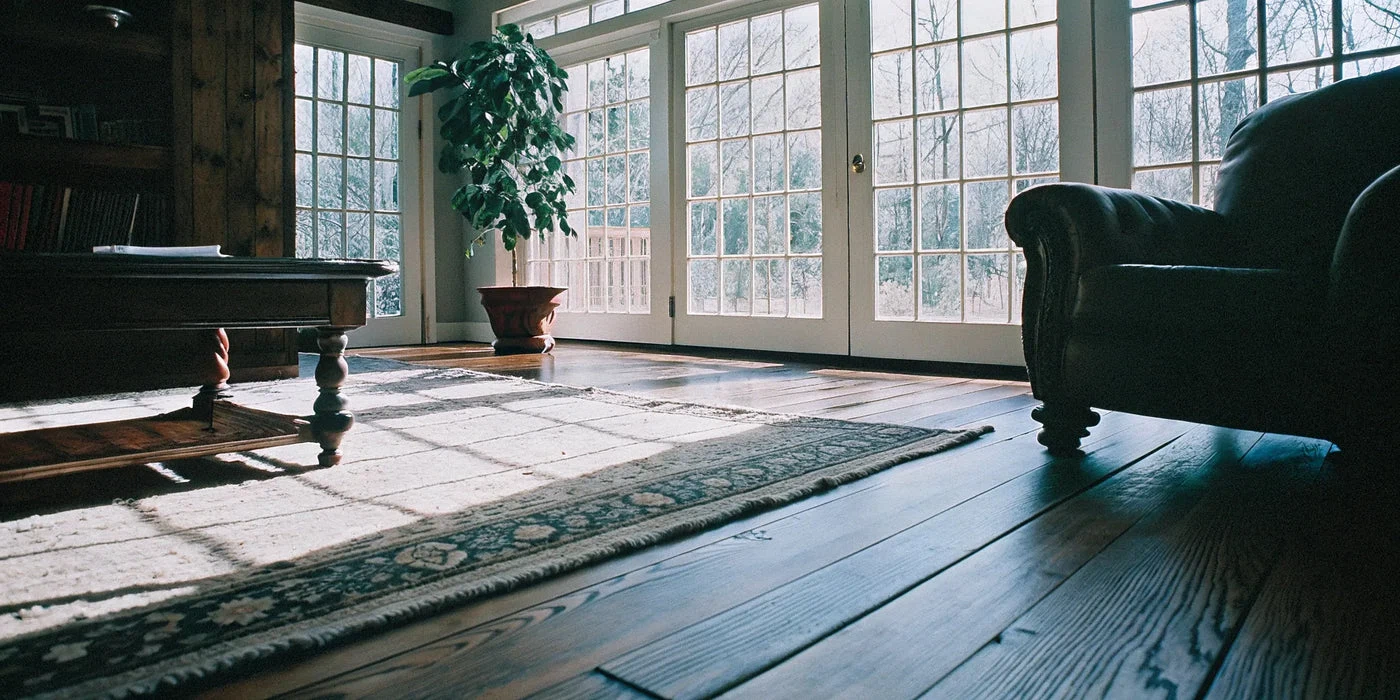
Extra wide plank flooring emphasizes board proportions, grain and the rhythm of joints across a room. Whether it suits your home depends on the actual product, the room layout and the complete installation budget—not the width label alone.
Use this guide to compare options and prepare questions for your installer. Explore our hardwood flooring collection, then check the listed width, length range, construction and carton coverage of the specific flooring you like.
1. Compare dimensions, not just labels
Use the published board width rather than assuming “extra wide” identifies the same format across suppliers. Also compare board thickness, length range and whether the cartons contain fixed or random lengths. Width alone does not describe the finished layout.
Record the species, grade, surface texture, finish and construction alongside the dimensions. This creates a useful comparison when two products look similar online but differ in the details that affect your order.
2. Weigh the appearance in your own room
Wider boards can show larger areas of grain and reduce the number of side joints across a given floor width. That may suit a quieter visual layout, but it also makes each board’s character more prominent. Review the color variation and knots you are comfortable seeing.
There is no need to decide from a rule that wide boards always enlarge—or overwhelm—a small room. Mark out candidate widths and consider the direction of the boards, furniture and transitions. View a flooring sample in your lighting, while remembering that a small sample cannot show the full range of a natural product.
3. Review construction and location together
Compare solid and engineered options using their actual specifications. For engineered flooring, ask about the top layer, total thickness and approved uses. Do not treat “engineered” as a promise that a floor is waterproof or suitable for every basement, kitchen or heating system.
Tell the supplier and installer where the floor will go, what lies beneath it and how the space is used. Ask them to confirm product-specific restrictions before ordering. Our engineered versus solid hardwood guide offers further comparison questions.
4. Confirm the installation scope before purchase
Have your installer review the current instructions for the exact flooring. Ask which installation methods are approved and what the supporting surface needs before work can begin. Do not add nails or adhesive simply because the boards are wide.
Request a written plan covering substrate assessment, required moisture checks, site conditions, conditioning and layout allowances. Have any conflicting product instructions resolved before installation. A generic number of acclimation days does not replace the selected flooring’s requirements.
If adhesive is proposed, review our engineered flooring glue guide and confirm the complete compatible system with your installer.
5. Calculate coverage and round to cartons
Measure each area and have the installer determine an allowance for cuts, the layout and any spare material. Then use the product’s stated carton coverage. Round up to whole cartons and confirm the final quantity before purchase.
Illustrative example, not a product quote: a 500-square-foot project with a chosen 10% allowance needs 550 square feet. If each carton covers 24 square feet, 550 ÷ 24 is 22.92 cartons, so the order is 23 cartons covering 552 square feet. The allowance and carton size in this example must be replaced with your project’s actual figures.
6. Compare the complete cost
Calculate material cost from the purchased carton quantity. Continuing the example, at an assumed $168 per carton, 23 cartons cost $3,864. That is equivalent to $7 per purchased square foot; it does not include installation, delivery or other project charges.
Request separate amounts for removal, preparation, installation materials, labor, trims, stair details, delivery and tax where applicable. Check what happens if the installer finds additional repair work. Compare quotations with the same scope instead of relying only on a per-square-foot headline.
Ask for current availability and delivery timing. Do not assume wider boards guarantee a higher resale value or that fewer boards automatically reduce labor. The practical decision is whether the specified floor and total project cost suit your needs.
7. Plan care and repair options
Request maintenance instructions for the actual finish before committing to the product. Ask about approved cleaning products, environmental requirements and repair procedures. Confirm any refinishing options with the manufacturer and a qualified flooring professional rather than assuming all engineered boards can be sanded repeatedly.
Keep the product identification, installation records and warranty. Discuss retaining spare material for future repairs. Review the refund policy before ordering so quantity decisions account for the applicable return terms.
Frequently asked questions
Does extra wide mean a particular width?
Compare the exact published dimensions; marketing labels are not a substitute for the specification.
Are wide planks suitable for small rooms?
Assess the layout and appearance in your space. Room size alone does not settle the choice.
Will a wider floor always cost more?
Compare current quotes for the actual products and installation scope. Construction, finish, lengths and preparation also affect the total.
Contact USA Builders Depot with your room measurements and preferred flooring. Showroom visits are by appointment only.