
Article: Do Black Steel Front Doors Get Hot in the Sun? Heat, Shading & Thermal Performance Guide
Do Black Steel Front Doors Get Hot in the Sun? Heat, Shading & Thermal Performance Guide
A black steel front door can transform a home with slim architectural profiles, a dramatic dark finish and expansive glass. But owners planning a sunny entrance often ask: will a black steel door become too hot in direct sunlight? The short answer is yes: the exterior surface can get hot. How that affects interior comfort depends on the finish, door construction, glazing, thermal breaks, insulating core, orientation and shading. This guide explains those distinctions so homeowners, architects and builders can specify a suitable entrance before ordering.
Quick Answer: Do Black Steel Doors Get Hot in Direct Sunlight?
Yes. A black steel door in strong sunlight may become substantially hotter than the outdoor air and can be uncomfortable or unsafe to touch. Dark finishes tend to absorb more solar energy than comparable light-colored finishes. However, a hot exterior surface does not automatically mean that the interior face reaches the same temperature. Insulating cores, thermally separated profiles, appropriate glazing, weather seals and architectural shading address different pathways for heat and air movement. The appropriate combination depends on the exact product and project conditions.
1. Why Black Steel Doors Absorb Heat From the Sun
Solar radiation striking a door is partly reflected and partly absorbed. Many black surfaces absorb more of the incoming energy than otherwise comparable light-colored surfaces, causing the outer finish to warm. This occurs with other dark building materials too. Steel is also an effective heat conductor: continuous metal components can move heat between exterior and interior. Two black doors may behave differently because of coating, construction, thickness, glazing area and exposure. A shaded porch and a west-facing entrance in full afternoon sun present very different conditions.
2. Exterior Surface Heat vs. Interior Comfort
Separate three effects. Exterior solar absorption raises the temperature of sunlit metal. Conduction transfers some heat through metal components and surrounding assemblies. Solar gain through glazing occurs when sunlight passes through glass and contributes heat indoors. A door can be hot to touch outside while its inside remains substantially more comfortable, depending on its construction. Likewise, a highly glazed door can admit unwanted solar energy even if its metal frame has a thermal break. Each effect requires an appropriate response.
3. Why the Direction Your Front Door Faces Matters
An east-facing entrance may receive morning sunlight. A west-facing entrance can receive low-angle afternoon sun when ambient temperatures are already elevated, making it important to evaluate in hot climates. A south-facing entrance may receive substantial seasonal sunlight, with shading effectiveness influenced by latitude and roof geometry. A north-facing entrance may receive less direct exposure in many Northern Hemisphere settings, but conditions still vary. Surrounding trees, nearby homes, porch depth and the season all matter. Observe the actual entry at different times of day; compass direction alone does not determine the final heat exposure.
4. Can a Thermal Break Help Reduce Heat Transfer?
A thermal break interrupts part of the direct heat-conducting pathway through a metal door or frame. In a continuous steel profile, exterior and interior metal can provide a conductive route. In a thermally separated profile, a lower-conductivity section helps reduce that flow. An insulated door and a thermally broken door are not automatically the same thing. A door may have an insulating core while still retaining metal paths across the assembly. A thermal break does not prevent the exterior black surface from heating in direct sun; its role is to reduce heat transfer through the relevant profile. USA Builders Depot offers selected custom-crafted thermally broken steel-door designs. Confirm exact construction, availability and documentation for the chosen model. For additional background, see our thermal break steel door guide.
5. Does Polyurethane Foam Inside a Steel Door Help?
Some steel doors contain polyurethane foam or another insulating core. Such a core can reduce heat flow through insulated areas, but does not automatically eliminate conduction through metal frames, edges or other continuous components. It also does not correct unwanted airflow at door edges. Think of three distinct elements: an insulating core reduces heat flow through relevant sections; a thermal break reduces conductive transfer through metal profiles; and weatherstripping helps limit airflow at moving joints. Overall performance depends on the complete door system.
6. Does Low-E Glass Help Keep an Entryway Cooler?
Low-emissivity, or Low-E, glass has a coating that influences radiant heat transfer. Different glass packages have different design objectives, and not every Low-E unit provides identical solar control. Solar Heat Gain Coefficient (SHGC) describes the fraction of incident solar energy transmitted or admitted through a fenestration product; a lower SHGC generally means less solar heat gain. U-factor describes heat-transfer performance of the complete evaluated assembly; generally, a lower value represents less heat transfer. The two ratings answer different questions. Double-pane glass alone does not establish either a particular SHGC or U-factor. On a heavily glazed sun-facing entrance, request verified documentation for the exact configuration. Read the steel door glass guide for glazing background.
7. Does a Door With More Glass Get Hotter?
Not necessarily, but glazing proportion strongly influences which performance properties matter. A mostly solid steel entry door emphasizes the construction, insulating core, frame, and finish. A full-lite French door introduces a larger area through which solar heat can enter. Double doors with sidelights or a transom create a complete assembly whose glazing and framing should be evaluated together. Choose the desired amount of glass and the glass specification during design rather than treating energy performance as an afterthought.
8. How to Reduce Heat Exposure on an Existing Black Steel Door
Consider shading. A suitable canopy, deeper recess, approved architectural screen or thoughtfully positioned landscaping may reduce direct sunlight. For west-facing entries, low-angle afternoon sun may pass beneath a shallow horizontal overhang, so actual geometry matters. Check air sealing. If the concern is warm air coming through gaps, inspect weatherstripping, threshold and alignment; shading alone will not repair drafts. Review the glazing. If direct sunlight through glass creates interior heat gain, verify the current glazing before considering replacement or aftermarket film. Some films can cause thermal stress or affect warranties. Maintain the finish. Follow the door manufacturer's cleaning and maintenance guidance; do not apply unapproved coatings or repaint a factory-finished product as an improvised heat solution.
9. Can Direct Sunlight Damage a Black Steel Door?
The complete entrance includes coatings, gaskets, glazing seals, insulation, hardware and other parts in addition to steel. Materials have different environmental limits. Heat causes thermal expansion in steel as it does in other building materials; properly designed assemblies account for anticipated movement. Persistent sticking, scraping or visible distortion deserves investigation, but sunlight should not automatically be assumed to be the cause. Finish durability depends on the exact coating and maintenance conditions. Avoid unauthorized repairs or modifications that might damage a protective finish or affect warranty terms.
10. Can You Use Black Steel Doors in Hot Climates?
Yes, when the complete selected system is suitable for the installation. In Georgia and other humid southeastern locations, solar exposure, air sealing and glazing should be considered alongside moisture control. In hot Texas locations, afternoon sun and thermal performance may be priorities. In Arizona and other desert climates, intense exposure can make shade and material selection particularly valuable. Florida projects can additionally require special wind or impact approvals depending on location and building requirements. A thermal or insulated-glass specification is not proof of hurricane or impact certification. USA Builders Depot does not currently represent its steel doors as hurricane-rated products; projects requiring that certification must use adequately documented products.
11. What to Look for When Buying a Sun-Exposed Black Steel Front Door
Review the exterior finish and its maintenance instructions; dimensions and door configuration; solid versus glazed area; any insulating core; verified thermal-break design; glazing and solar-control properties; required U-factor and SHGC documentation; weatherstripping and meeting-stile details; threshold and drainage requirements; approved swing and installation instructions; and relevant project codes. No single feature guarantees comfort or suitability. Choose a specification for the complete installed assembly rather than relying on appearance or an isolated marketing claim.
12. Example: Planning a West-Facing Steel Entry Door
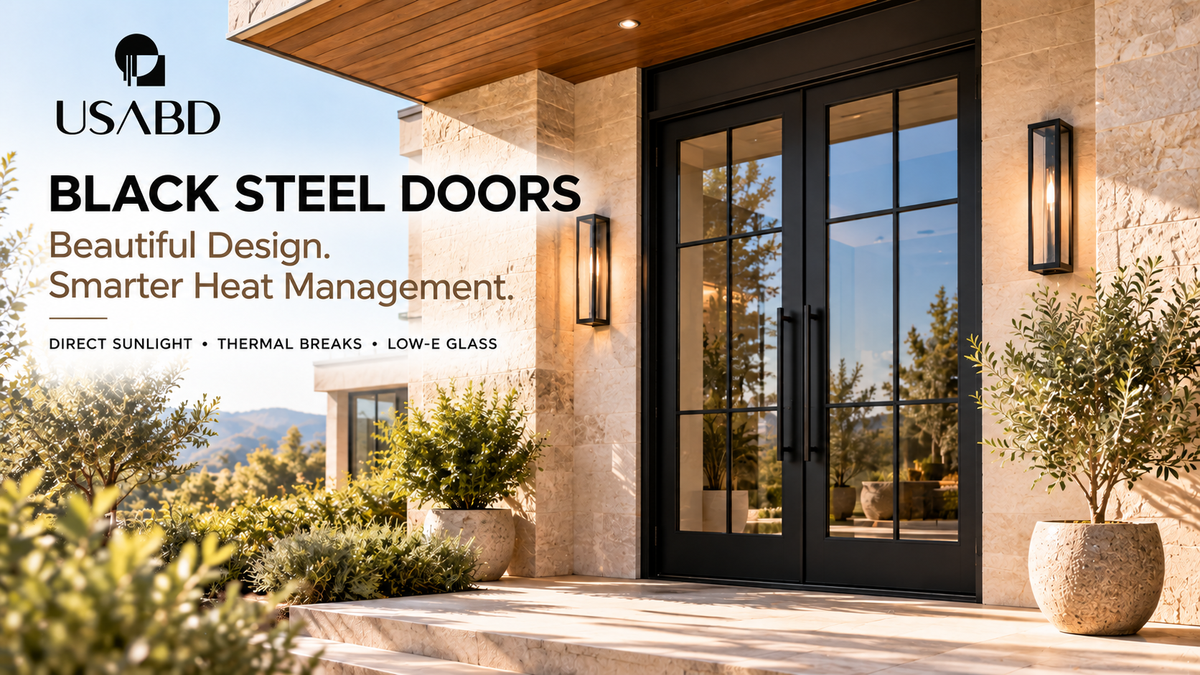
Imagine a contemporary west-facing entrance with oversized black double doors, a limestone façade and a shallow porch. First, assess when and how long the entrance receives afternoon sunlight. Second, determine the glazing area and required solar-control performance. Third, review whether the leaf and frame profiles are thermally separated and whether an insulating core is present. Fourth, coordinate weather seals, double-door meeting details, threshold and installation. Finally, identify the applicable project energy or performance requirements and obtain the exact supporting documentation. This process produces a more informed specification than choosing by appearance alone.
13. Should You Choose a Thermally Broken Steel Door?
Thermally broken steel doors are worth considering when reducing conduction through the metal system is important, particularly in demanding climates or projects with specific thermal requirements. But a thermal break is not a universal fix for all sun-related problems. If the concern is solar radiation through glass, glazing and shading deserve attention. If the issue is a hot exterior touch surface, finish and solar exposure are relevant. If the problem is airflow, seals and installation matter. Select the combination appropriate for the project.
14. Questions to Ask Before Ordering
Before approving a sun-exposed black steel entry door, confirm the entrance orientation and actual direct-sun exposure; porch and shading conditions; door dimensions and configuration; solid-to-glass ratio; insulating core and thermal-break construction; glazing package; documented U-factor and SHGC if required; finish care instructions; threshold and weather-seal details; applicable energy, structural and local code requirements; and whether the product is in stock or custom-crafted. Have the product drawings and specifications approved before fabrication.
Frequently Asked Questions
Do black steel doors get hotter than white doors? Dark finishes commonly absorb more solar energy under otherwise comparable conditions, although actual temperatures vary.
Can a black steel door become too hot to touch? Yes. Avoid prolonged contact with sun-heated metal, especially around children and pets.
Will a thermally broken steel door stay cool outside? No guarantee; a thermal break reduces conductive heat transfer but cannot prevent exterior solar absorption.
Does foam insulation stop the outside from heating? No. It helps reduce heat flow through insulated areas, but cannot keep the sunlit finish cool.
Does Low-E glass matter? Yes, particularly on heavily glazed entrances; evaluate the exact system's documented properties.
Is a west-facing black door a bad idea? Not automatically. Carefully consider shading, glazing, construction and finish suitability.
Will sunlight warp the door? Thermal movement is normal, but persistent operational problems need diagnosis rather than an assumed cause.
Can I apply aftermarket film? Only after checking compatibility and any warranty restrictions for the specific glass.
Are all black steel doors thermally broken? No. Verify each model.
Can USABD doors work in hot climates? Selected configurations may be suitable depending on exact specifications and project requirements.
Does USABD offer thermally broken steel doors? Yes, in selected custom configurations; verify specifications and lead time.
Insulated or thermally broken? They address different heat paths and may be combined in certain assemblies.
Final Thoughts: Black Steel Doors Can Work Beautifully in Sunny Locations
Black steel doors offer striking architectural proportions and work well with limestone, natural wood and contemporary façades. Direct sunlight is a design consideration, not an automatic reason to reject them. Distinguish hot exterior surfaces from conductive transfer and solar gain through glazing. Consider shading, insulating construction, thermal separation, properly selected glass, effective seals and correct installation as a complete system.
Explore residential steel doors at USA Builders Depot and request information about selected thermally broken custom configurations. When requesting a quote, include your door dimensions, preferred design, project location, orientation, glazing preferences and applicable thermal requirements.
USA BUILDERS DEPOT — Build a Better Tomorrow.