


How to Install WPC Fluted Wall Panels Around Electrical Outlets & Light Switches

Interior WPC fluted wall panels bring architectural texture to living rooms, offices and hallways. But receptacles and switches interrupt the profile, and decorative cladding changes the finished wall thickness. Can you install WPC fluted wall panels around electrical outlets and switches? Yes, when the product is suitable and the device installation remains code-compliant. This guide explains how to coordinate cutouts, electrical boxes, cover plates, and safe installation planning.
Can WPC Fluted Wall Panels Be Installed Around Outlets?
Yes, where the exact decorative panel is suitable for the wall and the finished electrical installation complies with applicable electrical requirements. Adding panel thickness can change the relationship between the electrical box, device, finished surface, and cover plate. Making a cutout alone does not establish a safe installation. Plan the work with a qualified electrician.
Why Panel Thickness Matters
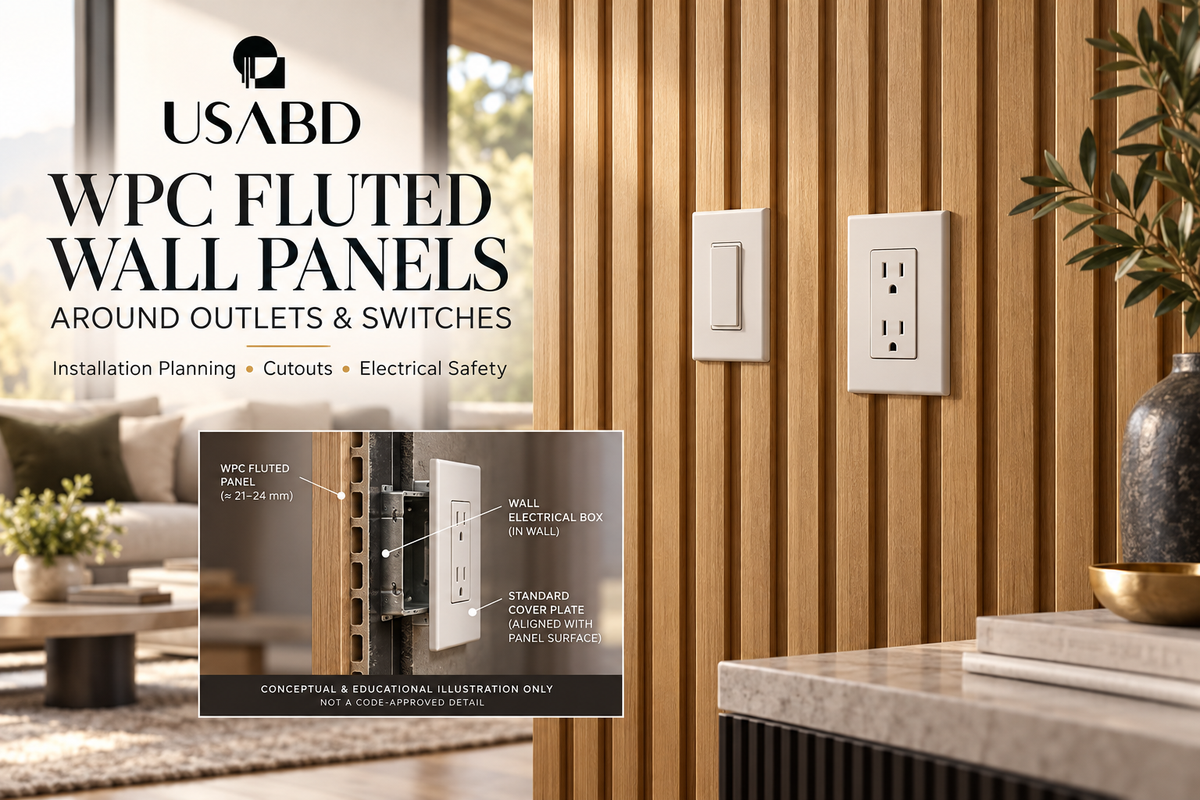
Interior WPC panels have a finished profile that may stand proud of the original drywall. Because fluted faces have raised ribs and recesses, the visible face may also be uneven around a device. A recessed electrical box may require an appropriate listed box extension or other code-compliant arrangement. The correct detail depends on the surface, box, device and governing code; do not improvise using only longer screws or a larger cover plate.
Step 1: Record Electrical Locations Before Panel Installation
Identify each receptacle, switch, dimmer, data outlet and access point. Measure locations from fixed references such as the floor, neighboring wall or door casing. Record panel direction, joint positions and finished wall thickness. Make an elevation drawing so device positions and panel cuts are coordinated before ordering material.
Step 2: Confirm the Exact WPC Panel Profile
Check the selected SKU's full thickness, usable coverage, hollow or solid construction, installation orientation, allowable cuts and compatible trims. Raised flutes and grooves may prevent an ordinary cover plate from seating properly. Never assume specifications for a different WPC profile also apply to your product.
Step 3: Coordinate Box Positioning With an Electrician
Before cladding, have a qualified electrician evaluate whether each existing box will remain appropriately positioned relative to the new finished wall surface. The electrician should select any needed approved extensions, supports or device mounting details and safely de-energize and modify wiring where necessary. Never conceal an outlet, junction box or live connection behind decorative cladding. Changes to required receptacle locations must also comply with applicable electrical rules.
Step 4: Mark and Cut the Panel Carefully
Once the approved electrical configuration and panel layout are established, mark the cutout from verified measurements. Follow the WPC manufacturer's cutting instructions and avoid damage to visible faces. Check behind the intended cutting area for wiring, plumbing and other services before cutting. The electrical circuit must be safely isolated and electrical components handled by appropriately qualified personnel. Do not cut blindly into a finished wall.
Step 5: Finish Cover Plates and Cut Edges
A well-planned installation should leave accessible electrical devices correctly mounted and supported. A compatible flat finishing detail or other approved arrangement may be required where the fluted surface is uneven. Do not fill an electrical box with adhesive, trap a device behind panel material, or use decorative cladding as an improvised electrical component. Exposed panel edges should be finished as specified by the panel manufacturer.
Step 6: Inspect the Completed Wall
Confirm that the WPC panels are securely attached, cover plates and devices seat correctly, boxes remain accessible, and appliance or service openings have not been obstructed. Any required electrical inspection should be completed. The illustration accompanying this guide is conceptual, not a code-approved construction drawing.
Should You Move Outlets Before Installing Fluted Panels?
Relocating a device may help maintain uninterrupted decorative grooves, especially on an accent wall. But required receptacle locations, accessibility, service needs, and wiring restrictions must be considered. Only a qualified electrician should make the necessary electrical changes; a decorative design preference cannot override applicable code.
Can WPC Panels Be Installed Behind Switch Plates?
Potentially, if the wall finish, box positioning, device support and cover-plate arrangement are compatible and compliant. A cover plate should not be expected to bridge deep grooves without an appropriate solution. Verify the specific product and approved finish detail before cutting.
Common Mistakes to Avoid
Common problems include installing panels before planning electrical locations, leaving a box improperly recessed, using long screws instead of a required box extension, covering unused outlets without compliant electrical work, cutting near unidentified wiring, applying adhesive inside box openings, and using oversize cover plates to conceal inaccurate cuts. Coordination with an electrician and the panel manufacturer prevents many of these errors.
Frequently Asked Questions
Can you install WPC fluted panels around outlets?
Yes, with suitable panel construction, accurate cutouts, and a compliant electrical installation.
Do electrical boxes need extensions?
Possibly. A qualified electrician should assess finished thickness, box position, material and applicable code.
Can a cover plate sit on fluted panels?
Only where the chosen finished detail provides appropriate device mounting and safe plate fit.
Can you cover an unused outlet?
No, not simply by hiding it behind panels. The wiring and box must be addressed through approved electrical work.
Should an electrician be involved?
Yes, for evaluation and all required electrical modifications.
Can every WPC panel be cut the same way?
No. Follow the manufacturer's instructions for the exact profile.
Explore Interior WPC Fluted Panels at USA Builders Depot
USA Builders Depot offers decorative interior WPC fluted wall panels in contemporary colors and wood-inspired finishes. For installations containing receptacles or switches, confirm the selected product's dimensions, substrate, cutting instructions and approved accessories. Explore our interior WPC wall-panel collection and related corner and edge-finishing guidance. The acoustic panel outlet-cutting guide covers a different material category and should not be used as an installation specification for WPC.
Final Thoughts
Fluted WPC panels can create striking architectural features, but electrical outlets and switches must be planned before cladding begins. Confirm panel thickness, cutouts, device positioning, compliant electrical box details and appropriate finishing methods. Good planning creates a cleaner appearance without sacrificing safety. USA Builders Depot — Better Materials. A More Beautiful Tomorrow.