Cathedral Grain vs. Straight Grain Wood Veneer Wall Panels: Which Should You Choose?
Natural wood veneer wall panels bring warmth and architectural character to luxury interiors. But selecting a wood species and color is only part of the decision. The direction and pattern of the grain can dramatically change the final appearance. Cathedral grain has sweeping arched figures; straight grain presents relatively linear markings. Understanding both helps homeowners and designers choose panels that complement the architecture.
What Is Cathedral Grain Veneer?
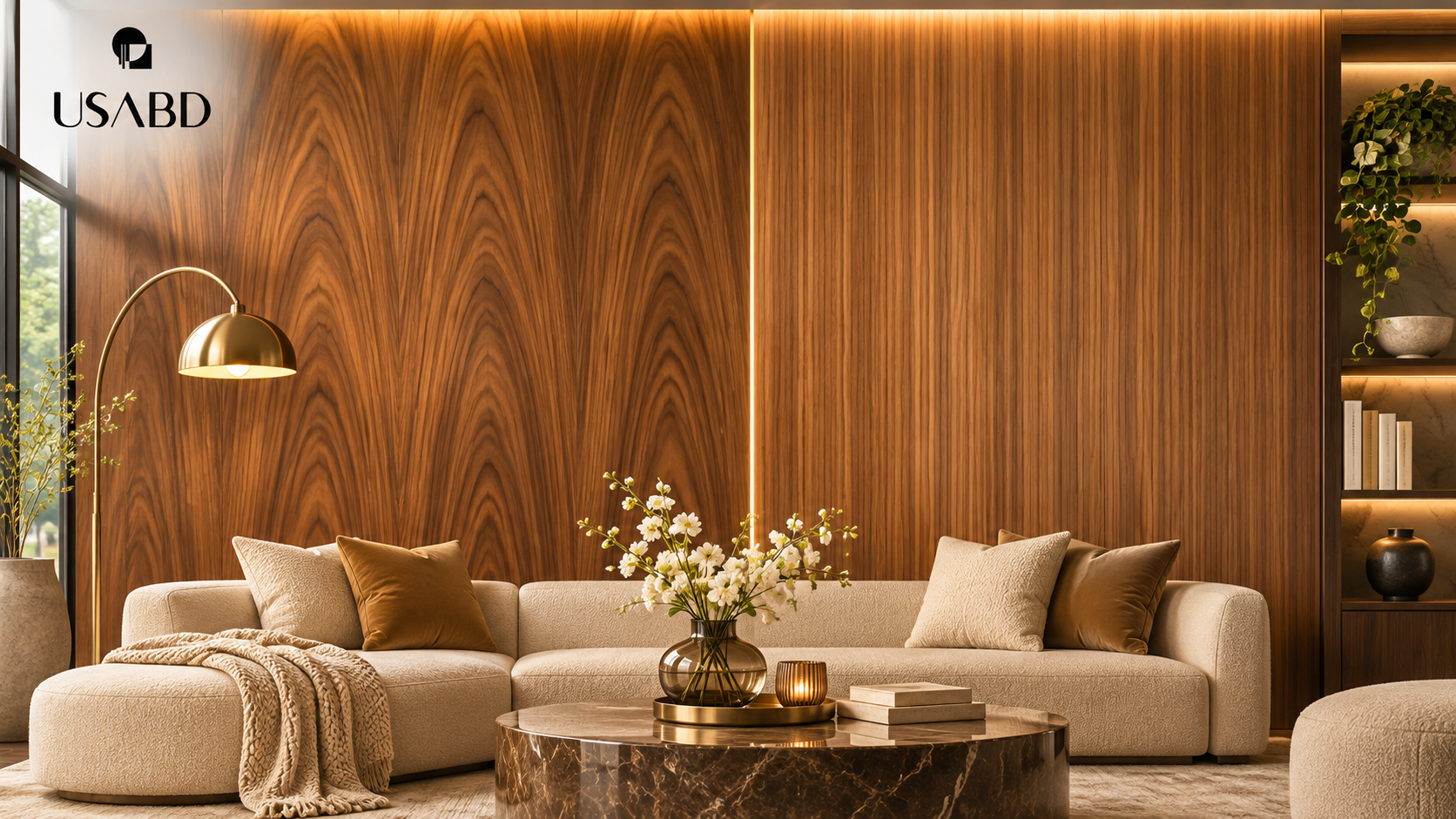
Cathedral grain describes the peaked or arching patterns associated with many flat-cut or plain-sliced veneer leaves. The pattern follows the natural growth structure of the log. Cathedral-grain panels may show strong visual movement and variation. They can make a large walnut feature wall a focal point even in a restrained modern interior.
What Is Straight Grain Veneer?
Straight grain has comparatively parallel lines and a more uniform visual rhythm. Quarter-cut and rift-cut veneers are often associated with straighter grain, but these are distinct cutting methods. Oak may also show characteristic ray fleck depending on the cut. The exact species and veneer selection determine the appearance.
Cathedral vs. Straight: Key Differences
Cathedral grain creates sweeping arches and prominent natural character. Straight grain often produces a cleaner linear architectural effect. Neither is universally better or always more expensive. Species, grade, color, finish, panel dimensions and matching arrangements all influence the final design and price.
Which Works Better for a Luxury Home?
A formal living room can use dramatic cathedral-grain black walnut behind a fireplace or seating group. A minimalist office or full-height concealed cabinet wall may benefit from straight-grain white oak. A home can use both if color, proportions and transitions are coordinated intentionally. Select based on the architectural objective, not a rule that one is more luxurious.
Black Walnut Cathedral Grain
Black walnut offers rich brown tones and natural figuring that can pair elegantly with light limestone floors, neutral upholstery, black steel windows and understated lighting. Cathedral grain may create a dramatic feature wall. Review adjacent panel samples and sequence before installation because natural wood varies in color and pattern. Explore selected USA Builders Depot walnut veneer options through our interior wall-panel collection.
Bronze Cathedral Grain Finishes
Bronze cathedral grain combines a descriptive grain pattern with a bronze-toned finish. It does not necessarily indicate metallic bronze within the material. Selected USABD walnut and elm products offer bronze-toned cathedral grain appearances. Confirm the actual surface, protective finish and color from the specific product before ordering.
White Oak: Cathedral vs. Straight Grain
Cathedral-grain white oak adds movement while maintaining an often lighter palette than walnut. Straight-grain white oak can provide a restrained backdrop for concealed doors, cabinetry and modern furniture. The best choice depends on the actual selected veneer, finish and room lighting. Avoid treating digital photos as exact color matches.
Elm Cathedral Grain
Elm brings another natural grain character for decorative walls, private offices and hospitality interiors. Cathedral-grain elm can provide a visibly organic surface distinct from oak or walnut. Confirm the precise panel dimensions and construction for the selected product.
Is Cathedral Grain the Same as Bookmatching?
No. Cathedral describes the grain shape. Bookmatching describes the arrangement of adjacent veneer leaves to create mirrored patterns. Slip matching places leaves alongside each other in the same orientation. A cathedral-grain panel is not necessarily bookmatched or sequence-matched. Do not assume multiple boxes will create continuous grain without a manufacturer confirmation.
How Lighting Changes the Appearance
Warm light can emphasize amber or brown tones. Grazing light may highlight grain and surface texture, while broad wall washing creates a softer effect. Compare physical samples under actual daylight and installed lighting. Avoid purchasing a large installation based only on one online product photograph.
Plan Seams and Corners
Make a measured panel layout before cutting. Coordinate seams with doors, cabinetry, fireplaces, outlets, and architectural focal points. Review the panels’ natural variation and, where handling allows, arrange them before permanent attachment. A large-format panel can reduce the number of joints, but it does not guarantee grain continuity. See our veneer grain, seams and lighting guide.
Check Product Dimensions and Installation
Selected USABD natural-veneer panels are approximately 108.46 inches high by 48.23 inches wide and around 3/8 inch thick, depending on the product. They are manufactured panels with a real-wood veneer surface, not solid hardwood boards. Confirm the actual substrate, adhesive or mechanical fixing options, suitable moisture exposure and edge details before installation.
Can Veneer Panels Be Used on Ceilings or in Bathrooms?
Do not assume a wall panel is approved for overhead installation. Ceiling use requires appropriate support and product confirmation. Likewise, decorative interior veneer should not automatically be considered waterproof or suitable for wet areas. Review humidity, ventilation and manufacturer instructions for the location.
How Should the Panels Be Maintained?
Follow the finish-specific care instructions, generally avoiding harsh chemicals and excessive moisture unless explicitly permitted. Natural wood appearance can change with exposure and use. Ask about cleaning, repair and finish options for the exact panel construction.
Frequently Asked Questions
Is cathedral grain real wood?
The term describes a grain pattern often seen in real veneer, but imitation decorative surfaces may also reproduce it. Check the product’s actual material.
Is straight grain always quarter-cut?
No. Rift-cut and other selections can produce straight-grain appearances.
Does cathedral grain automatically mean bookmatched?
No. Grain figure and veneer matching are separate specifications.
Which is more modern?
Straight grain often looks more restrained, but cathedral grain can also suit modern interiors.
Final Thoughts
Cathedral grain emphasizes natural movement; straight grain creates a controlled linear appearance. Compare samples, species, finish, matching method, panel dimensions and lighting before ordering. The best result is the grain that supports the architecture.
Explore Natural Veneer Wall Panels at USA Builders Depot
Browse USA Builders Depot interior wall panels and contact our team with your wall dimensions and preferred walnut, oak or elm finish for available product information.