How to Combine Exterior WPC Cladding With Stone Veneer: Design, Flashing & Installation Details
Natural stone veneer and wood-look exterior WPC cladding can form a beautiful mixed-material façade. Stone offers texture and weight, while fluted composite panels provide warm linear contrast. However, the two systems have different backing, thickness, movement, drainage and attachment requirements. Successful mixed-material walls need coordinated design and technical details—not just matching colors.
Why Combine Exterior WPC and Stone Veneer?
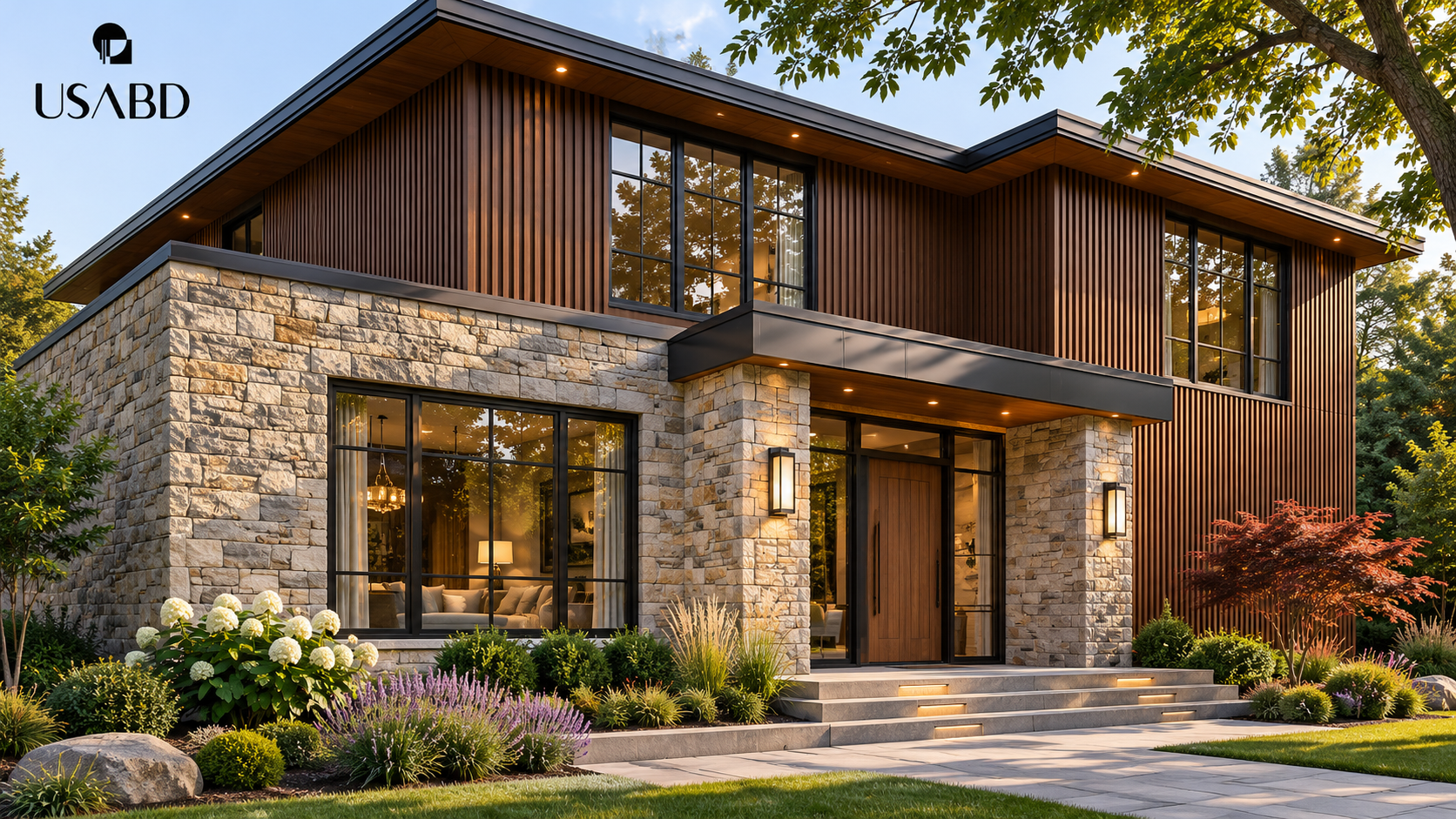
A cream limestone entrance framed by Brown Walnut fluting can create a warm architectural feature. Stone on a lower story and composite panels above can visually ground a façade. Recessed WPC beside stone columns may emphasize an entry. The contrast can work on luxury residences and selected commercial exteriors when materials and proportions are intentional.
Understand the Two Cladding Systems
Exterior WPC is a manufactured wood-plastic composite cladding available in fluted and shiplap-style finishes. Natural stone veneer is a stone facing supported by an approved adhered or anchored system depending on the product. Neither should automatically substitute for the other’s backing or structure. The overall building wall still needs suitable structural support and water management.
1. Design the Façade Before Ordering
Decide exactly where each material begins and ends, and show those boundaries on an architectural elevation. Common approaches include stone on the lower level with WPC above; stone columns beside WPC accents; or a mostly stone exterior with WPC around a recessed entrance. Coordinate with black steel doors, window frames, lighting, paving and landscaping.
2. Start With the Wall Assembly
Behind the decorative finishes, the wall may require structural sheathing, air- and water-control layers, drainage space, supports and flashing. The WPC and stone systems may use different support and cavity details. Their interface must preserve water-control continuity. Do not cover a moisture problem with decorative panels or assume the finish layer is the primary waterproofing.
3. Vertical Material Transitions
Where stone meets WPC side by side, plan a compatible edge trim, reveal or another approved termination. Account for different finished thicknesses, irregular stone edges and composite movement. Avoid creating uncontrolled water-entry paths behind either system. An attractive decorative trim is not automatically a flashing component.
4. Horizontal Material Transitions
When WPC is above stone, water running down the upper finish needs an appropriate route outward. The transition may need purpose-designed flashing and defined drainage openings. The flashing should discharge properly rather than channeling moisture behind the lower veneer. Sealant alone is not a complete water-management design.
5. Coordinate Finished Thickness
WPC panels, support framing, cavity and trims can project by a different amount than the stone assembly. Decide whether the materials should be flush, stone should project, or WPC should be recessed. Do not reduce required structural attachment or drainage simply to achieve a flush decorative surface.
6. Plan Movement at Rigid Stone Boundaries
WPC can change dimensions with temperature. Where it terminates against rigid stone, follow the specific manufacturer’s movement allowances and fastening method. Do not force panel ends tightly into a rigid reveal unless the approved system permits it. An individual product’s required gap should not be copied from another profile.
7. Coordinate Fasteners and Support
Selected exterior WPC products use specified screws, clips or approved support arrangements; stone veneer may require mortar-based or mechanically anchored support. Do not attach structural stone loads to decorative WPC. Confirm the underlying structure, corrosion-resistant fasteners and applicable wind requirements for each system.
8. Pay Special Attention Around Doors and Windows
A stone entrance with WPC accents and black steel doors can look coordinated, but the frame, sill, jamb, head flashing and wall returns need careful detailing. Decorative finishes should not block weeps, flashing or required access. Align panel ribbing with nearby architectural lines where visually appropriate without sacrificing construction requirements.
9. Choose a Coordinated Finish
Brown Walnut with light limestone creates warm contrast; Golden Teak can complement beige stone; Charcoal/Black contrasts strongly with pale masonry; Ash Gray may suit certain cool-toned stones. View samples together outdoors before deciding. USA Builders Depot lists selected exterior fluted profiles and compatible trims; confirm exact finish availability and dimensions.
10. Plan the Construction Sequence
The builder, stone installer and WPC contractor should work from the same wall sections. Establish the water-control system and support layers first, then coordinate flashing and material terminations. Installing one finish before designing the adjacent system can create rework around joints and offsets. The approved detail, not a rendering, should control the sequence.
11. Calculate the WPC Quantities
Measure each actual WPC section rather than the entire elevation. Selected USABD exterior fluted panels are listed around 114.17 inches long with about 6.24 square feet of nominal full-panel coverage, but a wall containing stone columns and window openings may have substantial cut waste. Confirm effective coverage, panel direction, usable offcuts, packaging and compatible trims before ordering.
12. Common Mistakes
Failing to prepare a material-transition detail, blocking drainage behind stone veneer, omitting horizontal flashing, mixing incompatible accessories, ignoring expansion, using the wrong backing, and misaligning finished surfaces are common risks. An architectural rendering alone cannot answer these questions.
Frequently Asked Questions
Can WPC cladding be installed next to natural stone?
Yes, when both systems and their transition are appropriately designed and suitable for the wall.
Can decorative WPC support stone veneer?
Do not assume so. Stone requires an approved independent support arrangement.
Do you need flashing between stone and WPC?
Applicable joints may require flashing and drainage details, particularly horizontal transitions.
What WPC color works with limestone?
Brown Walnut and Golden Teak can create warm contrast, while Charcoal offers a darker option. Evaluate actual samples.
Final Thoughts
A beautiful stone-and-WPC exterior depends on coordinated construction as much as color. Start with the water-control strategy, structural support, transition geometry and movement allowances, then choose panels, trims and finishes that work together.
Explore Exterior WPC Cladding at USA Builders Depot
Explore exterior fluted WPC panels and contact USA Builders Depot with your elevation, material boundaries and project specifications for product and accessory information.