
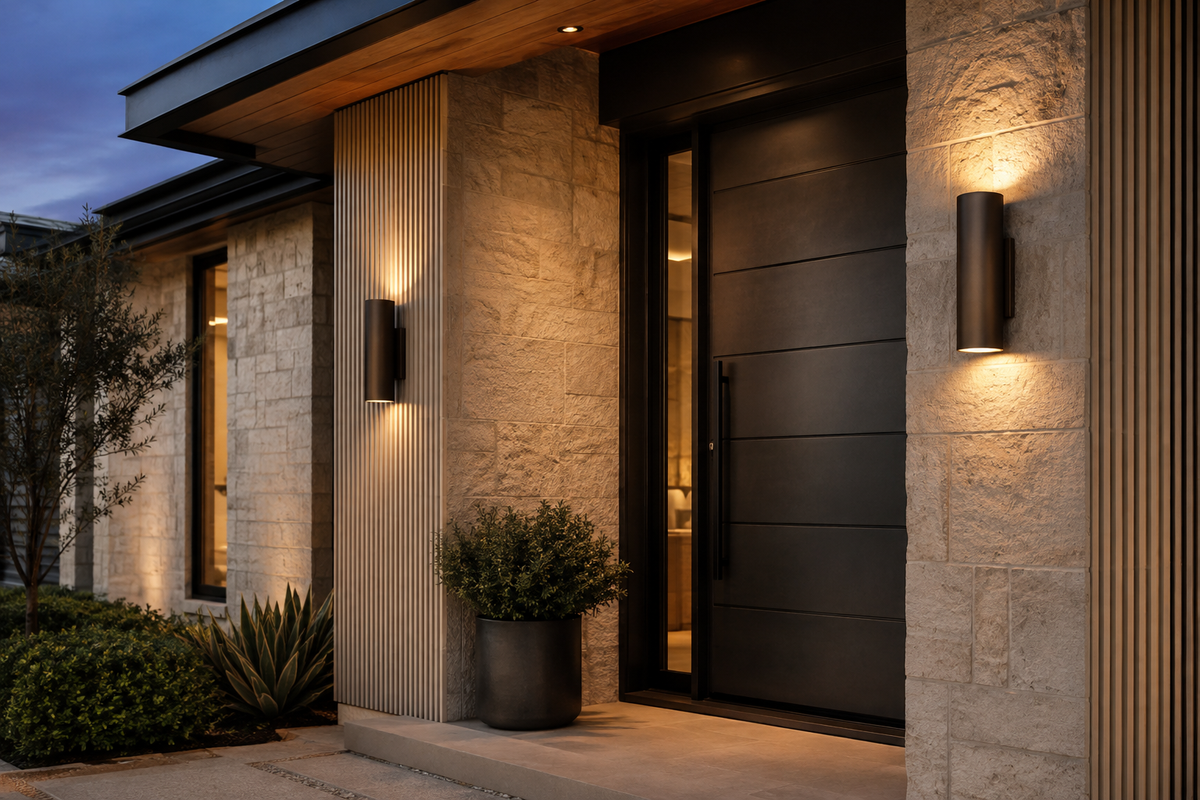
How to Choose Outdoor Wall Lighting for a Modern Home

Drive past a thoughtfully designed home in the evening and the lighting is often what makes you slow down. It picks up the texture of the exterior, gives the entrance a warm sense of arrival, and lets the architecture remain legible after sunset. You notice the home, not necessarily the fixtures—and that is usually the point.
The most convincing results come when exterior lighting is treated as part of the architecture instead of decoration added during the final walkthrough. A few early decisions about scale, placement, and light direction can make an enormous difference.
Start With the Purpose of Each Fixture
Not every outdoor wall light has the same job. Identify the primary purpose of each location before choosing a style.
Common functions include:
- Marking the front entrance
- Lighting a path, landing, or address number
- Supporting visibility near a garage or side door
- Washing light across stone, stucco, or exterior cladding
- Creating visual rhythm along a long elevation
- Providing layered ambient light for a patio
Once the purpose is clear, it is easier to evaluate fixture size, output, beam direction, and mounting position.
Match Fixture Scale to the Architecture
A fixture that looks substantial in a product photo may appear small beside a tall steel door or wide masonry surround. Conversely, an oversized sconce can overwhelm a narrow entrance.
Evaluate the fixture against the total composition: door height, wall width, ceiling or soffit height, nearby windows, cladding joints, and landscape elements. On symmetrical entrances, paired fixtures often work best when their centers align with the architectural geometry rather than an arbitrary distance from the door casing.
Use measured elevations when possible. Tape a full-scale paper outline to the wall or create a simple digital mockup to judge the fixture’s visible mass before installation.
Coordinate Lighting With Steel Doors and Exterior Materials
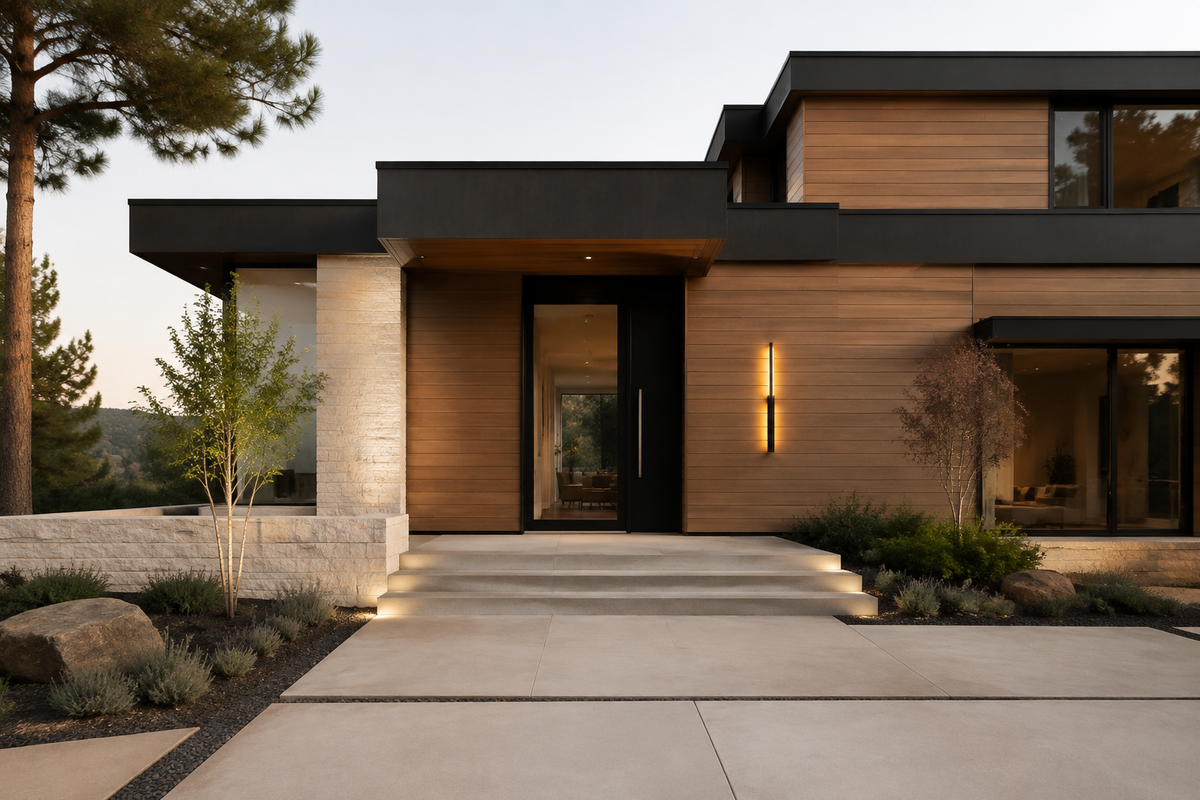
Modern entrances often combine dark metal, glass, stone, stucco, and textured cladding. The wall light should relate to these materials without disappearing into them.
Black fixtures can echo the frame of a modern steel entry door. Bronze or warmer finishes may soften pale stone, warm wood tones, or brown exterior panels. The goal is not necessarily an exact match; it is a deliberate relationship.
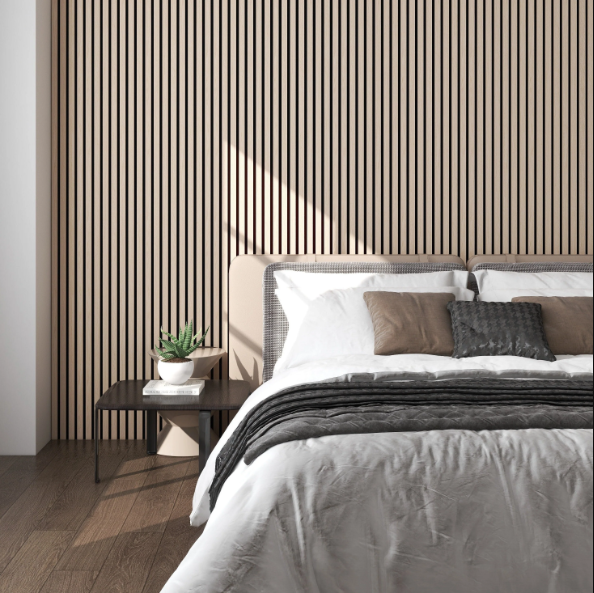
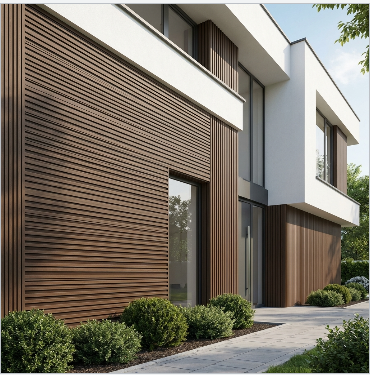
Also consider shadow. A directional fixture can emphasize the grooves of exterior fluted wall panels, but the mounting distance and beam pattern will affect whether the result looks subtle or dramatic.
Compare Up, Down, and Diffused Light
Exterior wall fixtures distribute light in different ways:
- Downlight helps illuminate a landing, path, or wall below the fixture.
- Uplight can emphasize height but should be evaluated for glare and nearby openings.
- Up-and-down light creates a graphic wall effect and can reveal texture.
- Diffused light provides a softer glow through glass or a shade.
- Directional light focuses attention on a specific surface or feature.
Product photographs are useful for style, but review the listed specifications and documentation for the exact model. Apparent brightness and beam effects vary by fixture, lamp or integrated light source, mounting surface, and surrounding ambient light.
Verify Suitability for the Location
An attractive fixture is not automatically appropriate for every exterior condition. Before ordering, confirm that the exact product is intended for the proposed environment and mounting location.
Review available information for:
- Exterior or damp/wet-location suitability
- Fixture dimensions and projection from the wall
- Mounting orientation and junction-box requirements
- Lamp or integrated LED specifications
- Finish and care guidance
- Electrical requirements
- Applicable product certifications or ratings
The electrician should verify installation conditions and applicable local electrical requirements. Coastal exposure, direct rain, snow, intense sun, and other environmental factors may require additional consideration.
Plan Mounting Positions Before Finish Work
Lighting locations should be coordinated before exterior finish work is complete. Junction-box placement, blocking, cladding layout, trim, and door clearances can all affect the final result.
Check that fixtures will not conflict with door swings, trim, gutters, downspouts, cameras, address signage, or landscaping. On a fluted or uneven wall surface, the installer may need an appropriate mounting detail that maintains the intended weather-management strategy.
Use Layers Instead of One Overly Bright Source
A refined exterior usually relies on several controlled sources: entry sconces, soffit lighting, path lighting, landscape accents, and low-level ambient illumination. Layers make circulation easier to understand and reduce the need for a single harsh fixture.
Keep color appearance and brightness relationships consistent across fixtures that are visible together. The exact specification should be selected with the project’s lighting designer or electrician when performance is critical.
Outdoor Wall Lighting Checklist
Before purchasing an outdoor wall fixture, confirm:
- Intended function and desired lighting effect
- Fixture dimensions and projection
- Relationship to the door and façade proportions
- Finish coordination with surrounding materials
- Suitability for the installation location
- Electrical and mounting requirements
- Quantity and symmetry
- Current availability and lead time
Explore the current USABD lighting collection to compare exterior and interior fixture options. Product details can change, so verify the exact listing and current documentation before finalizing the electrical plan.
Browse lighting at USA Builders Depot and coordinate your fixtures with steel doors, cladding, and architectural finishes.