Can You Replace Glass in a Steel Entry Door? A Complete Repair and Replacement Guide
Modern steel entry doors bring natural light and architectural character to homes, but a cracked pane or permanently foggy insulated glass unit raises a practical question: Can you replace the glass without replacing the entire door? Sometimes yes. The answer depends on the door’s steel profile, glazing-retention system, manufacturer instructions and the availability of correctly specified replacement glass. This guide explains broken-glass safety, insulated glass units, replacement options, and when a new door may be the better solution.
For background on glazing terminology, read our steel-door glass specification guide. For moisture that appears on the room-facing surface rather than inside the insulated unit, see our steel-door condensation guide.
Can you replace glass in a steel door?
Yes, sometimes, but not every steel door is designed for field reglazing. Feasibility depends on the model, steel profile, removable glazing stops, gaskets, sealants, and availability of compatible replacement glass. Some factory-assembled units may require replacing a door leaf or larger component. Confirm the manufacturer’s approved procedure before attempting removal.
What to do immediately when steel door glass breaks
Keep people and pets away from broken glass. Do not push on cracked glazing or pull loose fragments from the frame. If the entrance is exposed, arrange appropriate temporary weather protection and security. Photograph the condition from a safe distance and consult a qualified glazier. Broken glass should not be treated as an intact safety or weather barrier.
Understand the glass in your steel entry door
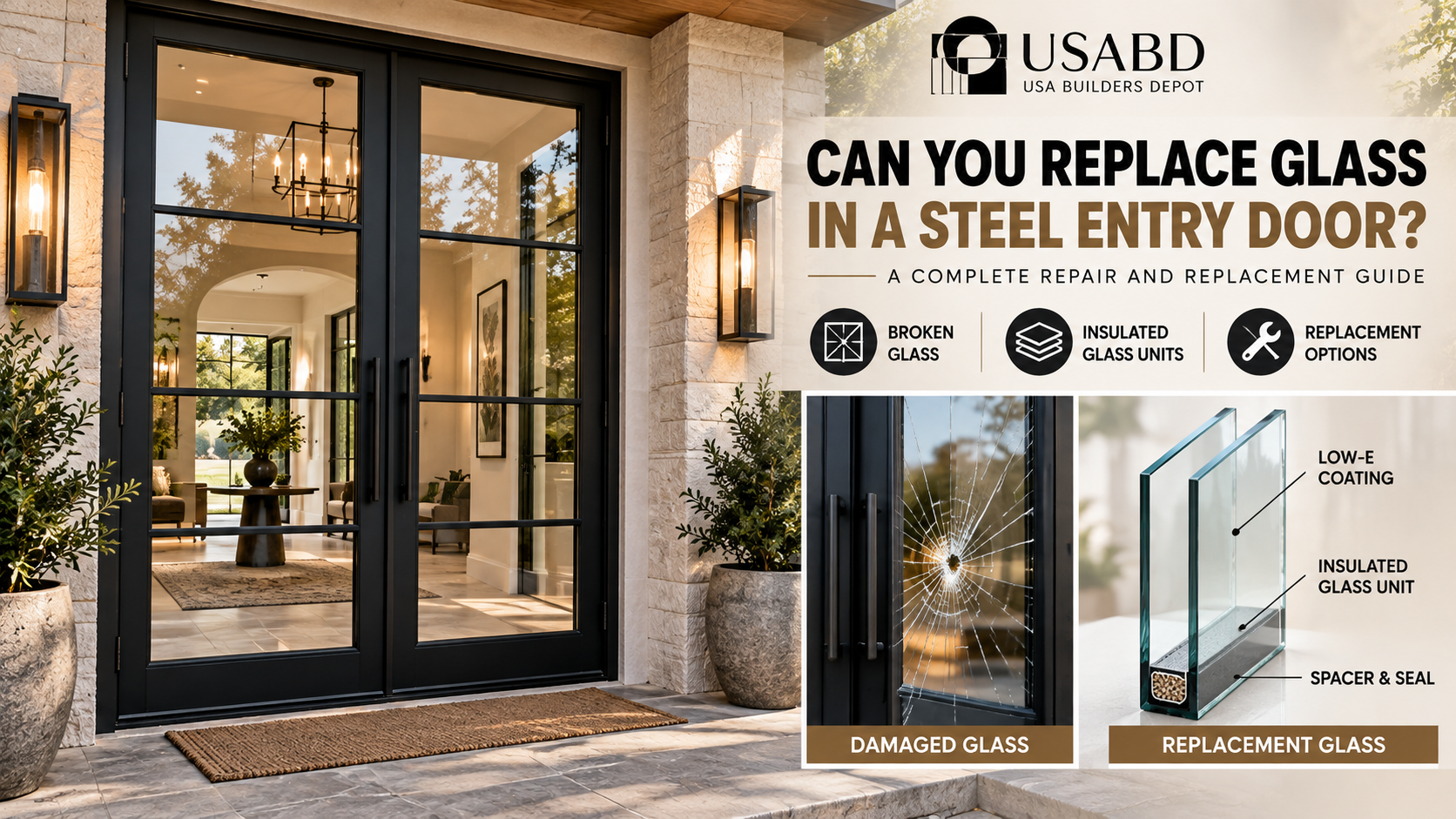
Single-pane glass consists of one sheet, while a double-pane insulated glass unit (IGU) contains sealed panes separated by a spacer and cavity. Low-E coatings manage radiant heat transfer; tempered safety glass has specific breakage behavior; laminated glass uses a bonded interlayer. These features are distinct. Tempered, laminated, insulated and Low-E products cannot be substituted casually, and none alone proves hurricane-impact certification.
Can you replace one pane of double-pane steel door glass?
Typically the complete sealed IGU is replaced rather than one broken sheet in place. The perimeter seal and insulating cavity are integral to the unit. If the door is designed for reglazing, a qualified professional may install a compatible replacement IGU; otherwise the manufacturer may require replacement of a larger factory-assembled component. Visible opening dimensions alone are not sufficient for specifying the new unit.
Can you replace one glass section in a steel French door?
Potentially. A true divided-lite door may have independently glazed openings separated by structural steel members. A simulated divided-lite door may use one large glass unit behind decorative muntins. The apparent number of lites does not necessarily establish how many glass assemblies are present. Confirm the actual construction before ordering replacement glass.
Foggy glass between the panes
Persistent haze or moisture trapped within a sealed IGU often indicates a failed edge seal. This differs from condensation on accessible interior or exterior surfaces. Normal cleaning cannot reach the sealed cavity. Drilling holes or improvised defogging does not necessarily restore original insulating and sealing performance. Where permitted, replacing the complete IGU is commonly the appropriate repair.
When glass-only replacement makes sense
Glass-only replacement may be appropriate where the frame and door leaf are sound, the manufacturer allows field reglazing, and compatible replacement glazing is available. Damage around the stops, severe frame deformation, corrosion, or an obsolete factory glazing system can change the recommended scope. A qualified glazier should inspect the complete assembly.
Step 1: Identify the manufacturer and exact model
Use the original order confirmation, invoice, product label, CAD drawing or specification. Record door size, configuration, glazing layout and glass specification if available. Take safe photos of the whole door and the damaged portion. Doors with similar appearances may use different glazing systems and should not be assumed interchangeable.
Step 2: Verify that reglazing is permitted
Ask the door manufacturer or supplier whether the exact configuration has an approved glass-replacement procedure. Some doors have removable stops; others may use welded profiles or specialized retention systems. Unauthorized grinding, cutting or dismantling can damage the steel frame, seals and finish.
Step 3: Match the glazing specification
Replacement glazing must meet the approved thickness, overall IGU dimensions, pane construction, safety requirements and relevant coatings. Spacer, seals, thermal properties and any project-specific performance criteria also matter. Have the qualified glazing professional establish exact manufacturing dimensions; do not order from a homeowner’s visible-opening measurement alone.
Step 4: Confirm safety glazing
Door glazing is frequently located in a hazardous area under building codes and may require compliant safety glass. Do not substitute ordinary annealed glass for required safety glazing. Fire, impact, security and structural ratings are separate properties of an approved assembly; replacing only the glass does not establish those ratings for the complete door.
Step 5: Arrange professional installation
Broken glass presents cut and falling-glass hazards. A qualified glazier should follow manufacturer-approved instructions, including retention components, compatible setting materials and seals. After replacement, verify proper retention, sealing and door operation. Do not improvise with generic adhesive or sealant.
Can clear glass be replaced with frosted or privacy glass?
Possibly, where the original door manufacturer approves the proposed glass construction. Frosted, reeded, textured, tinted and other privacy options may have differing thickness or availability in an insulated unit. A compatible privacy film may be another option if approved for the exact glazing. Verify safety and other required performance characteristics.
Can clear glass be upgraded to Low-E?
A replacement Low-E insulated unit may be possible if compatible with the glazing system. Overall thickness, weight, spacer and seal construction must be checked. Glass-only changes do not guarantee a particular whole-door U-factor because frame, threshold, seals and installation also contribute to thermal performance.
Can replacement glass make a steel door impact-rated?
Not automatically. Windborne-debris or hurricane-impact approval applies to a tested and approved assembly, which may include steel frame, glazing retention, anchors, hardware and installation. A stronger-looking glass pane alone cannot establish a rating. If project requirements call for certified impact resistance, obtain the exact assembly documentation; a complete system replacement may be needed.
What if the steel frame is damaged?
Check for visible deformation, rust, displaced glazing stops, coating damage and difficulties with door operation. An impact that cracks glass may also affect the surrounding steel. Installing new glass in a compromised frame may not restore proper operation or safety. Seek an authorized repair assessment and consider a new leaf or complete unit if necessary.
How much does steel door glass replacement cost?
Cost depends on the glazing dimensions, safety specification, Low-E or privacy features, whether a custom IGU is needed, compatible components, labor and accessibility. Repairing damaged steel or replacing a complete door can add expense. Request a detailed, project-specific quotation rather than relying on a generic price for residential window glass.
Glass replacement versus a new steel door
Reglazing is often worth evaluating when the complete door is in good condition and the manufacturer supports it. A new door may be preferable when glass parts are unavailable, the frame is extensively damaged, or the repair cannot restore required performance. A replacement door also permits a different glass layout, dimensions or frame construction, but must fit the approved rough opening and installation conditions. Compare the total project cost.
Does the warranty cover broken glass?
Warranty coverage depends on the written terms and cause of damage. Accidental impacts may be treated differently from material defects or insulated-glass seal failure. Document the condition, retain order information and ask the supplier about the authorized claims process before making modifications. Do not assume all broken glass is covered.
Preventing future damage
Protect glazed entrances during renovation and landscaping work. Keep heavy tools and ladders away from the glass, avoid slamming doors that bind, and inspect accessible glazing seals and frame components periodically. If a pane is cracked or loose, discontinue normal use until assessed. Use appropriate nonabrasive cleaning methods.
Information to provide when requesting a replacement
Prepare the manufacturer and model, order number, approximate installation date, door size, glass-lite layout, existing glazing specification, photographs taken safely, description of the damage, project location and any safety or thermal performance requirements. This helps the supplier determine whether a compatible replacement unit or a larger assembly is required.
Frequently asked questions
Can you replace just the glass in a steel door?
Sometimes, if the door is designed for reglazing and compatible components are available.
Can only one pane of a sealed double-pane unit be replaced?
The complete IGU is generally replaced rather than replacing one pane in the sealed assembly.
Can you replace one glass lite in a steel French door?
Potentially; first verify true versus simulated divided-lite construction.
Can tempered glass be cut to fit?
No. It must be manufactured to the required dimensions before tempering.
Can a foggy IGU be repaired?
Internal fogging often indicates seal failure. A compatible complete IGU replacement may be possible.
Can glass be changed to frosted or privacy glass?
Possibly, if the exact door system and safety requirements permit it.
Does Low-E glass need to be replaced with Low-E?
Replacement specifications should match the original performance needs and the approved door configuration.
Can new glass turn the door into a hurricane-rated door?
No, not without the required approval for the entire door assembly.
When should the whole door be replaced?
When the frame or factory assembly is irreparably damaged, replacement components are unavailable, or reglazing would not restore required performance.
Explore steel entry doors at USA Builders Depot
USA Builders Depot offers contemporary single and double steel entry doors and steel French doors in multiple divided-lite designs. Before ordering, verify frame dimensions, handing, glass specification, threshold and installation requirements. For replacement-glass inquiries, provide the original USABD order information to determine what options can be evaluated. Explore Residential Steel Doors & Frames.
Final thoughts
Broken or foggy glass does not automatically mean the entire steel entry door must be replaced. In some cases a qualified glazier can replace a compatible sealed glazing unit while preserving the surrounding door. The correct decision starts with identifying the exact product, documenting the damage and obtaining an approved glazing procedure. USA Builders Depot — Better Materials. A More Beautiful Tomorrow.