Replacing a TV on a Finished WPC Media Wall: What to Check First
Before replacing a TV on a finished WPC media wall, compare the new screen’s actual outline, mounting requirements and connection locations with the existing installation. Confirm what can be reused and which panel edges or cutouts may become visible before ordering the replacement.
This checklist is for an existing decorated wall. For a new installation or a mounting-system redesign, start with our TV mounting and structural-support guide.
Gather the existing installation records
Find the TV model, mount model, original manuals and any installation photographs. Receipts or the installer’s records may identify equipment without disturbing the screen. If a label or connection cannot be reached safely, have the installer inspect it during a planned removal.
Include photographs showing the wall before the panels were fitted, if available. Record the panel finish and any remaining spare material. These details help separate a straightforward equipment swap from work that affects the finished wall.
Compare screen outlines, not just diagonal sizes
Ask for a drawing of the proposed TV in its intended position on the existing wall. Use the replacement manufacturer’s dimensions and mounting diagram. Do not assume the old bracket position will place the new screen’s edges at the same height.
| Check on the drawing | What to establish before purchase |
|---|---|
| Overall width and height | How the new screen fits between cabinetry, shelving and trim. |
| Screen edges relative to the mount | Whether the intended viewing position can be achieved with an approved arrangement. |
| Existing wall cutouts | Whether openings or unfinished panel edges will remain concealed. |
| Connection locations | Whether the required plugs can be reached and accommodated. |
| Soundbar and console | Whether equipment and required access still fit below the screen. |
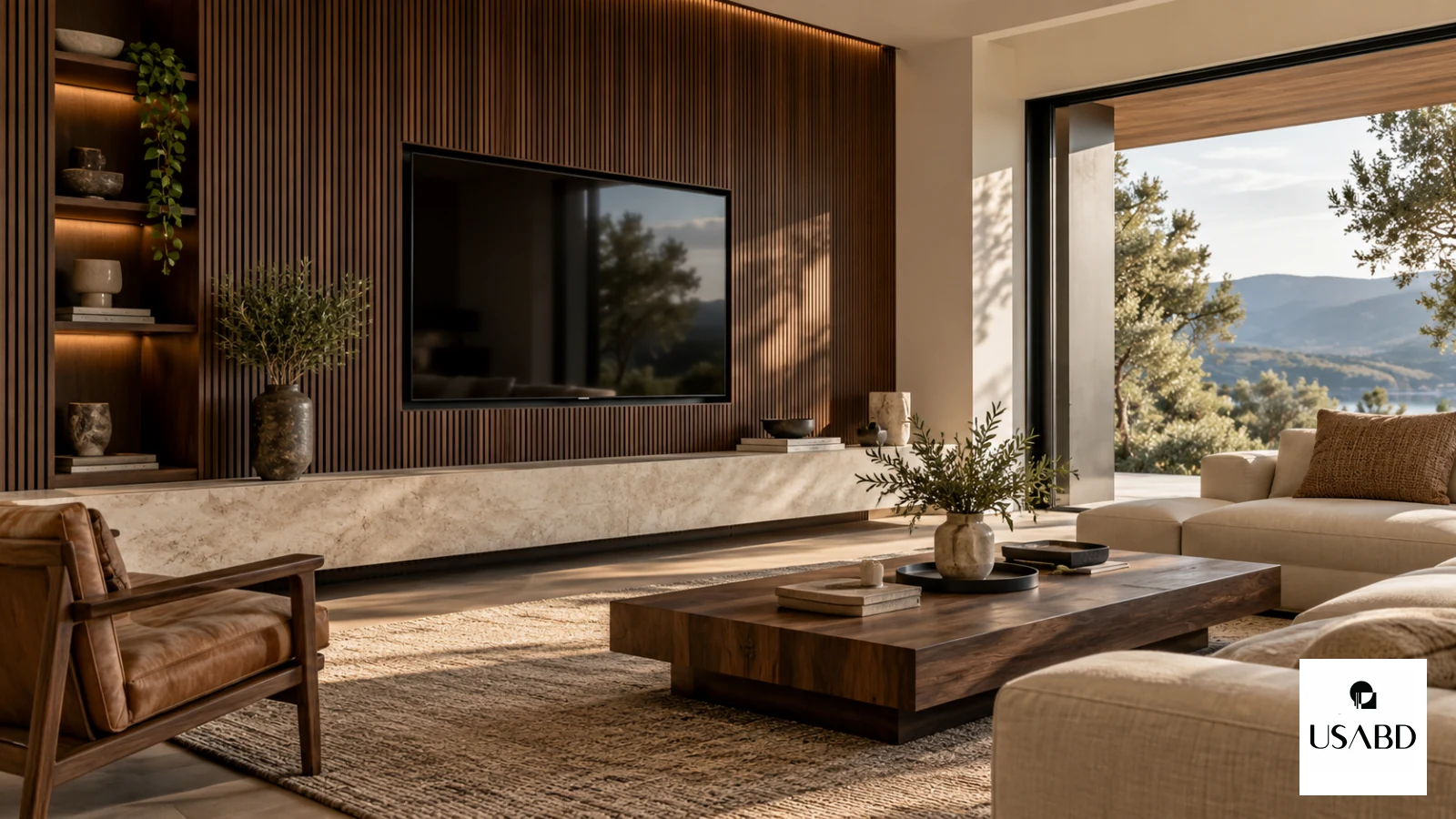
Review the drawing from the normal seating position as well as from the room entrance. A larger screen can change the balance of a narrow fluted feature panel even when the surrounding wall has enough space.
Have the existing mount assessed for the replacement
Check the exact new TV against the exact mount’s current instructions, including its supported mounting pattern, load and hardware requirements. For example, SANUS provides model-specific documentation and a TV-model compatibility check. A result for one mount does not approve a different model or the concealed wall attachment.
Have the installer confirm the condition and suitability of the existing wall connection and its relationship to the WPC finish. A bracket that held the previous television is not, by itself, evidence that the complete arrangement is suitable for the replacement. Decorative paneling does not replace the required support.
Plan any newly exposed panel area
A smaller screen or changed position may reveal old openings, fixing marks or unfinished edges. Ask the installer to document these areas when the old equipment is safely removed, before finalizing cosmetic work.
Identify the original panel using the order record and a real sample. A product reference such as USABD’s Dark Walnut interior WPC panel can help that discussion, but confirm the actual installed profile, finish and current availability. Do not assume a new piece will match an older wall without comparison.
Include access in the handover
Have the installer demonstrate the approved removal and service procedure and confirm the equipment’s required ventilation clearances. Check that connections remain accessible using that procedure. Keep the new TV and mount references, installation notes and updated photographs together for the next equipment change.
Frequently asked questions
Can the same screen size use a different mounting arrangement?
Yes. Compare the exact model’s dimensions, mounting diagram and hardware requirements; the advertised diagonal alone is not a compatibility check.
Does changing the TV mean replacing the WPC wall?
Not necessarily. First establish whether the approved mounting arrangement, visible panel coverage and service access can be retained. Any exposed damage or cutout needs its own finish plan.
Contact USABD with your original panel order reference and photographs for help identifying the decorative material while your mounting professional assesses the equipment change.