
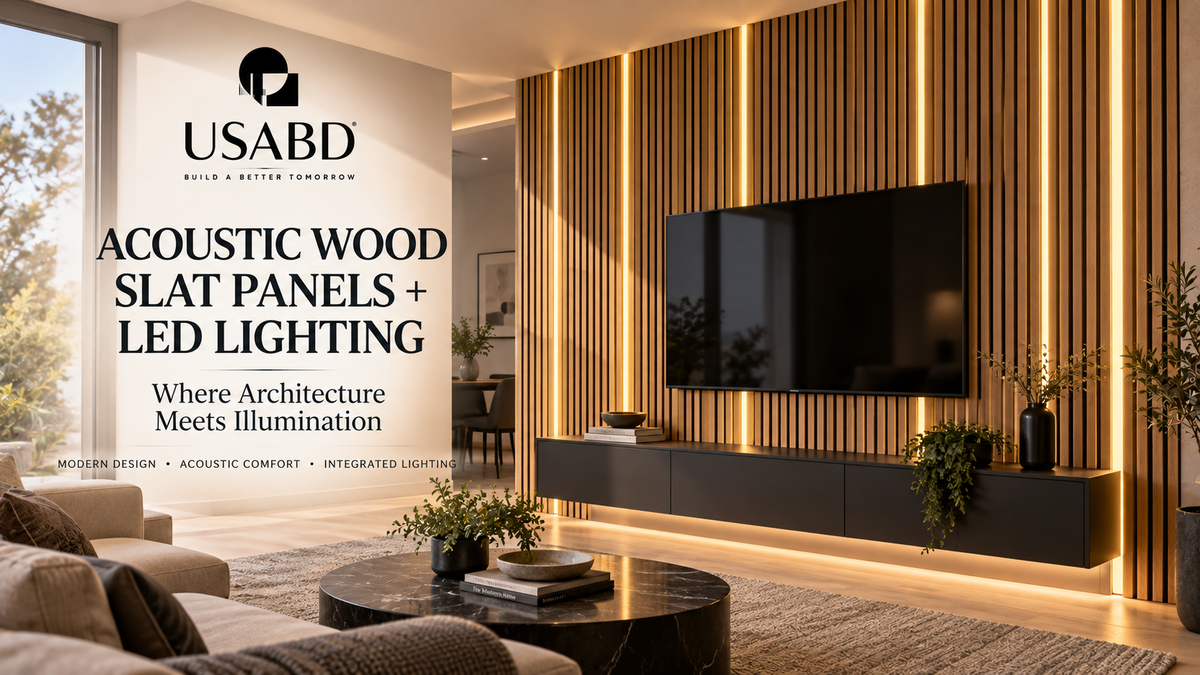
How to Add LED Lighting to Acoustic Wood Slat Wall Panels
Quick answer: LED lighting can be integrated into certain acoustic wood slat wall designs using compatible lighting channels, perimeter details or purpose-built reveals. Check panel spacing, electrical requirements, installation instructions and acoustic implications before starting.
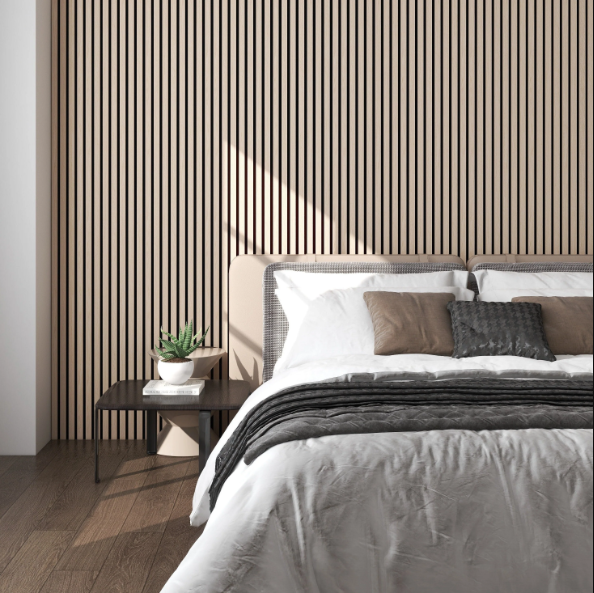
Modern interior design increasingly combines architectural materials and carefully planned lighting. An illuminated wood slat wall pairs wood-inspired texture with warm light to create a distinctive feature in a living room, media room, bedroom, office or reception area.
But professional results take more than inserting an LED strip between two slats. Lighting compatibility, proper attachment, electrical access, heat management and the complete wall assembly must be coordinated. This guide explains how to plan the design and avoid common mistakes.
Can You Install LED Lights on Acoustic Wood Slat Panels?
Yes, when the specific lighting system is compatible with the panel construction and installation requirements. LED lighting may be located in suitable between-slat channels, concealed perimeter details, or dedicated architectural reveals. Measure the actual slat spacing, backing and available mounting depth first. Not every slat panel accepts every lighting kit.
Why Combine LED Lighting With Acoustic Wall Panels?
Slatted panels add warmth and repeated architectural lines; properly positioned lighting highlights the raised slats and recessed areas. Accent lighting can create a dramatic feature wall or softer ambient layer, particularly in living rooms, bedrooms, reception spaces and media rooms. The lighting does not itself establish additional sound absorption. Acoustic performance depends on the installed panel assembly.
Three Ways to Integrate LED Lighting
1. Between the slats
Compatible linear light profiles may fit in selected openings between slats. Confirm the clear space, profile width, depth and mounting method. Do not force a generic channel into an unsuitable gap.
2. Perimeter backlighting
A concealed light source in a purpose-designed edge detail can give a feature wall a floating appearance. The supporting assembly, access to drivers, wiring route and thermal requirements must be planned before finishing.
3. Architectural lighting reveals
Dedicated vertical or horizontal illuminated details can frame a television or divide materials. The most effective arrangements reinforce the wall composition instead of lighting every slat.
Lighting Styles Compared
| Style | Appearance | Common application |
|---|---|---|
| Between-slat LED | Distinct linear lights | Media and feature walls |
| Perimeter glow | Floating-wall effect | Bedrooms and lounges |
| Concealed edge lighting | Soft accent | Reception and feature surfaces |
| Vertical reveals | Architectural rhythm | Contemporary interiors |
| Indirect wall washing | Highlights texture | Residential and commercial settings |
Choosing LED Strips, Channels and Diffusers
Flexible LED strips vary in width, voltage, wattage, light output and color temperature. Some systems use linear profiles and diffusers for straight mounting and a more uniform visual line. COB strips can help reduce the appearance of individual light points, but their actual effect depends on diffuser depth and viewing distance. A channel's thermal performance is product-specific: follow the selected lighting manufacturer's instructions. A kit made for another panel brand is not automatically compatible with USA Builders Depot panels.
How to Measure Slat Spacing for LED Lights
Measure the clear opening between adjacent slats, not the nominal panel width or an estimate from product photography. Check the available mounting depth, panel thickness, slat material, felt or other backing construction, lighting profile width and depth, and intended driver location.
| Measurement | Purpose |
|---|---|
| Slat spacing | Determines whether a channel fits |
| Available depth | Controls profile placement |
| Panel thickness | Coordinates wall buildout |
| Backing | Influences attachment and cable planning |
| Channel width/depth | Must match the intended opening |
| Driver location | Supports electrical access and servicing |
What Color Temperature Works Best?
2700K creates a warm, inviting feel often suited to living rooms and bedrooms. 3000K provides a warm contemporary appearance that complements many oak and walnut finishes. 3500K is more neutral, while 4000K may suit selected offices and commercial interiors. For residential wood slat feature walls, 2700K–3000K is often a good starting point, but evaluate real samples, brightness, color rendering and dimming in the actual room.
Where Should the Lighting Go?
For a TV wall, consider subtle perimeter lighting or a restrained number of vertical reveals, while preventing screen glare. For a bedroom, warm dimmable edge illumination can emphasize the headboard wall. In offices, combine decorative light with separate task lighting to avoid monitor reflections. Commercial installations must address applicable electrical, material and fire requirements. A television or heavy shelving should be supported independently by suitable structure—not by decorative panels alone.
How to Plan the Installation
- Select the panels: Confirm exact SKU, finish, dimensions, backing and installation instructions.
- Measure the wall: Record walls, outlets, corners, furniture, screens and seams.
- Design lighting placement: Decide whether the wall needs between-slat channels, perimeter light or purpose-built reveals.
- Verify compatibility: Compare panel dimensions with lighting product drawings, heat and mounting restrictions.
- Plan electrical work: Identify drivers, controllers, accessible connections, wiring and switch locations with a qualified professional where required.
- Prepare supports: Use approved methods for panel attachment and independent lighting hardware.
- Install and test: Confirm electrical operation, dimming, light uniformity and glare before closing the finish.
- Complete detailing: Align trims, exposed edges, seams and service access. Inspect in daytime and at night.
Can You Hide LED Wiring Behind Acoustic Panels?
Some properly designed wall systems accommodate concealed cable runs, but low-voltage wiring does not exempt an installation from electrical rules. Use approved cable routes, accessible equipment and connections, and the lighting manufacturer's installation methods. Do not bury power supplies or connections that require service or access behind permanently finished material. Coordinate the service cavity, if needed, before installing panels.
Does Integrated Lighting Change Acoustic Performance?
It can. Sound absorption and reverberation control may depend on slat spacing, felt backing, mounting depth, cavity and installed area. Rigid inserts, lighting channels, altered backing or new wall cavities can change the assembly. Do not claim an NRC result from an unmodified panel for a materially different LED-integrated configuration unless supported by applicable testing. Consult the USABD acoustic technical resources and existing NRC guidance.
Heat and Electrical Safety
LED equipment still generates heat, even if it usually produces less radiant heat than many traditional lamps. Use properly evaluated lighting components and follow the maker's installation temperatures, mounting requirements, clearances and thermal-management guidance. Do not assume a strip can be adhered directly to felt, wood veneer or engineered wood. Fireplace-adjacent walls require additional heat-clearance review. Electrical work should comply with applicable requirements, with a qualified electrician involved when appropriate.
Fire Classification and Applicable Codes
Adding lighting does not automatically preserve a material or assembly classification. Requirements vary by jurisdiction, occupancy and project. Verify the exact decorative panel, electrical equipment, mounting arrangement and relevant documentation—particularly in commercial or multifamily projects. Never transfer a fire rating from a different-looking or different-constructed panel.
Common Mistakes to Avoid
Frequent problems include buying lighting before checking slat spacing, using excessive brightness, ignoring glare, failing to route wiring before panels are mounted, using incompatible channels, hiding inaccessible electrical devices, treating felt as structural support and claiming acoustic performance without documentation. A coordinated drawing and early electrical review can prevent costly rework.
What Does an LED Acoustic Feature Wall Cost?
Project costs depend on the area of panel coverage, selected finish, LED lengths, channels, diffusers, drivers, controllers, wiring, labor, trims and finishing. Complex media walls with multiple reveals or specialty cabinetry will differ substantially from a simple accent wall. Create an elevation showing panel coverage and each lighting run, then request project-specific quotations rather than treating panel price as installed wall cost.
Before You Order: Compatibility Checklist
| Component | Confirm |
|---|---|
| Acoustic panel | Exact dimensions, finish, slat and backing construction |
| Lighting | Specific approved model, width, depth, voltage and power |
| Channels | Profile and diffuser compatibility |
| Placement | Slat spacing, mounting direction, joins and clearances |
| Electrical | Drivers, controls, accessible wiring and permitted routing |
| Wall substrate | Support for panels and lighting independently as needed |
| Acoustics | Applicable assembly performance data |
| Codes | Fire and electrical requirements for the project |
Frequently Asked Questions
Can LED strips be placed between acoustic wood slats?
Yes, if the specific channel and lighting system are compatible with the panel and approved mounting arrangement.
Can lighting go behind the panels?
Some designed wall systems allow concealed backlighting, subject to support, wiring and access requirements.
What is the best color temperature?
Warm 2700K or 3000K lighting often suits residential wood slat features, but evaluate samples.
Is an aluminum channel required?
Some systems require or recommend profiles for mounting, appearance or thermal management. Follow product instructions.
Can LEDs damage panels?
Improper installation or heat management can create problems. Select compatible approved equipment.
Can a television mount to the panels?
Do not rely on decorative panels to carry a television. Provide suitable underlying structural support.
Will lighting change NRC performance?
It may change the assembly. Do not assume existing tested values apply after substantial modification.
Can these walls be used commercially?
Potentially, provided applicable product, electrical and fire requirements are satisfied.
Does USABD sell acoustic slat panels?
Yes, USA Builders Depot offers selected wood-inspired acoustic wall panels.
Does USABD guarantee a universal LED kit?
No universal compatibility should be assumed; verify the exact kit and panel dimensions before buying.
Final Thoughts
A successful illuminated acoustic wall combines architectural texture with carefully planned lighting. Begin with the exact panels, confirm slat spacing and mounting details, coordinate the electrical installation and use applicable technical documentation. The result can be a refined feature wall by day and a warmly illuminated interior element at night.
Explore the USA Builders Depot acoustic wood slat panel collection, review cutting and outlet guidance, and contact USABD with your project's wall dimensions and lighting design.
USA BUILDERS DEPOT — Build a Better Tomorrow.