
Can You Add Frosted Film to a Steel Door? Privacy Glass vs. Window Film

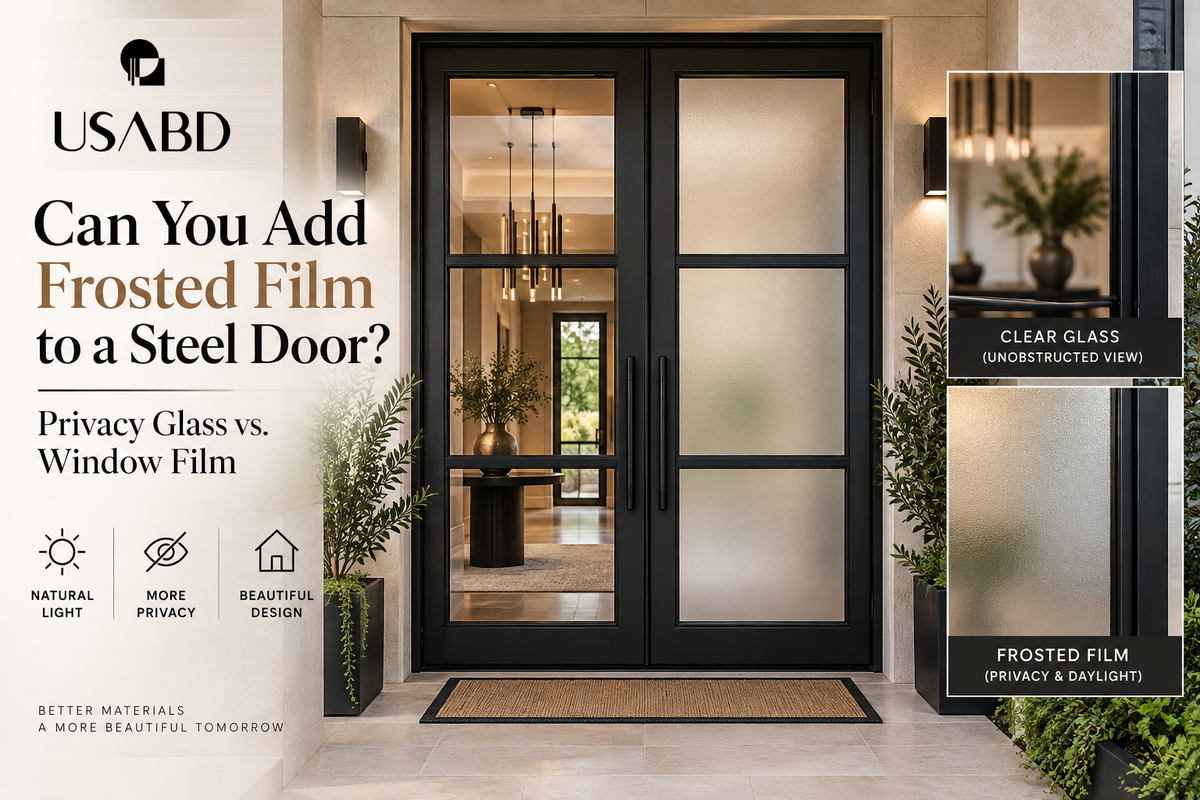
A steel entry door with clear glass can fill a foyer with natural light while giving the entrance a refined architectural character. But it can also create unwanted sightlines into your home. Should you add frosted film to your existing glass, or order factory privacy glass? This guide compares appearance, daytime and nighttime privacy, insulated-glass compatibility, installation, warranty considerations, and custom steel-door options so you can choose with confidence.
Can You Apply Frosted Film to a Steel Door?
Yes. Suitable frosted privacy film can be applied to many steel doors with glass, provided that the film is compatible with the specific glazing and that the manufacturer's application instructions are followed. Film diffuses light and makes views through the glass less distinct. That means an existing clear-glass steel door may gain privacy without replacing the full door or glass assembly. Compatibility matters especially with insulated glass, Low-E coatings, and specialty glazing.
What Is Frosted Glass Film?
Frosted film is a thin decorative layer placed on an accessible glass surface to create an obscured or etched-glass appearance. Depending on the product, it uses adhesive or static-cling technology. Available finishes include uniform frost, patterns, stripes, gradients, and decorative designs. Opacity and light transmission vary. An adhesive film may offer longer-lasting application; some static-cling products can be removed more easily. Choose based on the desired privacy and the specific film manufacturer's requirements.
Frosted Window Film vs. Factory Privacy Glass
Frosted window film
Film is applied after the glass is manufactured, making it a practical retrofit for some existing clear-glass doors. It offers different patterns and may be replaceable, but dust, bubbles, trapped moisture, imperfect trimming, and edge damage can affect the appearance. Maintenance and service life depend on the product.
Factory privacy glass
Factory privacy glass is manufactured with an obscured or decorative finish, potentially through etching, texture, or other processes. It may provide a more integrated finish for a new custom steel door. Available treatments, glass constructions, pricing, and lead times depend on the door manufacturer.
| Feature | Frosted film | Factory privacy glass |
|---|---|---|
| Existing clear-glass door | Often a retrofit option | Typically requires glass replacement |
| New custom door | Possible when approved | May be specified during production |
| Privacy | Varies by film | Varies by glass finish |
| Daylight | Often retained in part | Often retained in part |
| Removability | Product-dependent | Requires glazing replacement |
| Finished appearance | Applied surface | Manufactured glass finish |
| Warranty | Check film and glazing terms | Check door and glass coverage |
Neither is automatically superior. The right choice depends on the existing door, intended appearance, desired privacy, and project timeline.
Does Frosted Glass Provide Privacy at Night?
Daytime privacy does not guarantee nighttime privacy. If indoor lights are brighter than outside, a translucent treatment may still reveal silhouettes or movement, particularly when someone stands close to the glass. Results depend on film opacity, lighting, and viewing distance.
Test a sample first
View the proposed sample from the exterior in daylight. Then repeat after dark with interior lights on, and check visibility from the likely sightlines. This is more reliable than judging privacy from a single product photograph.
Is Reflective or One-Way Film Better?
Not necessarily. Reflective mirror-style films often rely on the brighter side reflecting more light. A film that seems private in daylight may reveal the interior at night when the lighting balance reverses. If consistent privacy is the goal, evaluate opacity in realistic conditions rather than assuming reflective or dark film is always more private.
Can You Add Frosted Film to Double-Pane Steel Door Glass?
Potentially, but compatibility must be verified. Insulated glass units contain multiple panes separated by a sealed space and may use Low-E coatings or gas-filled cavities. Film is applied to an appropriate accessible surface, not inside the sealed unit. Some films can change the glazing's solar-energy absorption or thermal behavior, making glass-to-film compatibility important.
Before applying film, establish whether the glass is single or insulated, whether it has Low-E coatings, whether the film is approved for that assembly, where it may be applied, and which warranties apply. For more context, review our steel door glazing guide and consult the film and glazing manufacturers.
Can Frosted Film Be Applied to Tempered Glass?
Many films are designed for compatible flat glazing, potentially including tempered glass. But tempered glass does not automatically make every tinted, reflective, or solar-control film suitable. Check compatibility for the entire glazing assembly. Decorative film does not replace required safety glazing; the door's original glass must satisfy applicable requirements.
Will Frosted Window Film Void My Steel Door Warranty?
The answer depends on the actual warranty terms and installation. Privacy film does not automatically alter the door's steel structure, but improper application may affect glass, coatings, seals, or adjacent finishes. Distinguish the door warranty, insulated-glass warranty, and film warranty.
Before modifying a USA Builders Depot door, provide the door model, glazing details, and proposed film specifications for review. Retain written product documentation and any applicable compatibility approval. Never assume a universal warranty promise for every film and glazing combination.
How to Apply Frosted Film to Steel Door Glass
1. Confirm compatibility
Check the exact glass construction and the film manufacturer's application restrictions.
2. Measure the glass
Measure each lite individually. Visible glass dimensions may differ from the overall door or frame opening.
3. Prepare the surface
Clean using the film manufacturer's specified products and avoid abrasives that may damage glass or coatings.
4. Apply the film correctly
Follow the manufacturer's adhesive, wet-application, or static-cling method. Avoid excess moisture around seals, joints, and hardware.
5. Inspect the result
Check edges, bubbles, alignment, and appearance under different lighting conditions. Allow the prescribed curing time. For large or complex insulated-glass installations, consider a qualified installer.
Can You Frost a Double Steel French Door?
Yes, where film and glazing are compatible. Double steel French doors may have several individual glass lites, each requiring careful measurement and trimming. A 4-Lite design needs a different cutting plan from 3-Lite or 8-Lite configurations. Consider both leaves together for symmetry. Some homeowners prefer fully frosted panes, while others prefer selectively treated panes that balance sightlines and privacy. Explore our guide to steel door lite configurations for additional layout considerations.
What About Steel Door Sidelights?
Sidelights bring daylight into foyers but may expose direct views from a sidewalk or driveway. Compatible privacy film can be considered for existing sidelights; factory privacy glass can be evaluated for a newly specified entrance. Matching the door and sidelight finish creates a coordinated appearance, although different levels or patterns of obscurity can be intentional design choices. Test the privacy from likely exterior viewpoints.
What About Reeded Glass?
Reeded glass uses a linear texture that distorts views and can complement slim-profile architectural steel doors. It does not necessarily offer the same opacity as a heavily frosted treatment. Patterns and lighting affect visibility. Compare physical samples and inspect the appearance from both sides rather than assuming all textured glass provides equivalent privacy.
Which Privacy Option Is Best for Your Project?
Existing clear-glass steel door
Compatible frosted film may be a practical retrofit without full door replacement.
New custom steel door
Factory privacy glazing may provide a more integrated manufactured finish.
Large double entry doors
Compare pane layout, desired appearance, manufacturing options, and total project timing.
Busy street or exposed entry
Prioritize real-world daytime and nighttime privacy tests over marketing labels.
Covered porches
Shade affects lighting but does not guarantee privacy. Evaluate actual viewpoints.
Interior steel doors
Decorative film may also be suitable for compatible interior glazing, subject to the room's privacy and safety requirements.
In-Stock Door or Custom Privacy Glass?
USA Builders Depot offers in-stock and custom-crafted steel doors. For an available clear-glass door, an approved compatible privacy film may fit the project. Custom privacy glass can be reviewed when ordering a new door. Estimated custom manufacturing lead time is generally 8–12 weeks, subject to final approved specifications and current schedules. Confirm door dimensions, glass, swing, hardware, and availability before ordering. Browse in-stock steel doors or custom-crafted options.
Questions to Ask Before Choosing Privacy Glass
- Is the glazing clear, tempered, insulated, Low-E, or specialty glass?
- Is the obscured finish factory manufactured or applied later?
- What privacy does it provide during daylight and after dark?
- How much natural light passes through?
- Is the exact film approved for the exact glass assembly?
- Which warranty conditions apply?
- Does the project require custom production?
- Are door dimensions, swing, hardware, and lite layout confirmed?
- What cleaning and maintenance instructions apply?
- Has the appearance been reviewed from a sample?
Frequently Asked Questions
Can I make a clear-glass steel door frosted?
Yes, if the selected film is compatible with the glazing and correctly installed.
Is factory frosted glass better than film?
Factory glass can offer an integrated finish, while film can be useful for retrofits. The best choice depends on the project.
Does frosted glass block all daylight?
No. Many treatments diffuse light while retaining some transmission; the amount varies.
Can people see silhouettes at night?
Sometimes. Opacity, indoor lighting, and distance matter.
Can film be used on insulated glass?
Sometimes, after verifying compatibility with the exact assembly.
Does decorative film improve security?
Do not treat it as a substitute for specified safety or security glazing.
Does frosted film make glass energy efficient?
Not automatically. Thermal claims require documentation for the exact combination.
Can the film be removed later?
Some products are removable; follow their removal instructions.
Can USABD custom-make privacy glass doors?
Customers can request custom glass options for review, subject to model and manufacturing capabilities.
What style works best?
Uniform frost suits minimalist designs, while patterned or reeded finishes can offer more decoration. Choose based on actual privacy needs.
Final Thoughts: Privacy Without Compromising Design
A glass steel entry door brings light and architectural character into a home. Suitable frosted film can be a practical privacy upgrade for an existing door; factory privacy glass can be an attractive option for a new custom order. The important step is confirming the precise glazing construction, treatment compatibility, appearance, and privacy under realistic lighting. USA Builders Depot helps homeowners, designers, architects, and builders explore steel-door choices and custom glass configurations. Review our steel door technical resources or contact the team with your preferred style, dimensions, glass finish, and project timeline.