

Article: WPC Siding vs. Vinyl Siding: Which Is Better for a Modern Home?

WPC Siding vs. Vinyl Siding: Which Is Better for a Modern Home?
Quick answer: WPC siding is often chosen for wood-look architectural texture and fluted profiles, while vinyl siding is commonly chosen for affordability and conventional residential siding. Which is better depends on appearance, whole-wall design, installation and actual product documentation.
When homeowners consider replacing exterior siding, vinyl is often one of the first materials they evaluate. It is familiar, widely available and offered in a range of colors. But for a project seeking dimensional wood-look cladding or strong modern lines, wood-plastic composite siding—commonly called WPC—deserves consideration.
Although both products finish exterior walls, they differ in materials, profiles, appearance, support systems, installation and costs. This guide compares the options without assuming every product in either category performs identically.
Quick Answer: Is WPC Siding Better Than Vinyl Siding?
WPC siding is often appealing when architectural texture and wood-inspired appearance are priorities, while vinyl siding is commonly chosen for affordability, lightweight construction and conventional residential applications. Neither material wins universally. Compare appearance, installed cost, maintenance, color performance, thermal movement, moisture management, code requirements and the complete installation system.
What Is WPC Exterior Siding?
WPC means wood-plastic composite, a material family using wood-derived constituents, polymers and formulation-specific additives. Manufacturers form exterior WPC into fluted, slatted or shiplap-style profiles. Product formulation and performance vary, so check the exact exterior-rated SKU. USA Builders Depot offers both exterior fluted WPC cladding and exterior shiplap profiles. WPC can add vertical lines, wood-look finishes and dimensional accents around entrances or larger façades.
What Is Vinyl Siding?
Vinyl siding is generally made primarily from PVC and is widely used in conventional residential exterior applications. Familiar horizontal lap profiles, lightweight handling and widespread installer experience are among its attractions. Certain specialty vinyl products offer textured or vertical profiles, but conventional lap siding creates a different architectural appearance from deep fluted WPC cladding.
WPC vs. Vinyl Siding at a Glance
| Consideration | Exterior WPC | Vinyl |
|---|---|---|
| Primary material | Wood-plastic composite | Primarily PVC |
| Typical appearance | Wood-look, fluted, textured, shiplap | Conventional lap and specialty profiles |
| Weight | Varies; can be heavier | Generally lightweight |
| Initial price | Often premium | Often lower |
| Thermal movement | Must be allowed for | Must be allowed for |
| Moisture control | Requires correctly detailed wall | Requires correctly detailed wall |
| Fire/code compliance | Verify exact assembly | Verify exact assembly |
| Installation | May use rails, clips or supports | Manufacturer-specific siding system |
This table describes common product tendencies, not test results for a specific SKU.
1. Appearance: Which Material Looks Better?
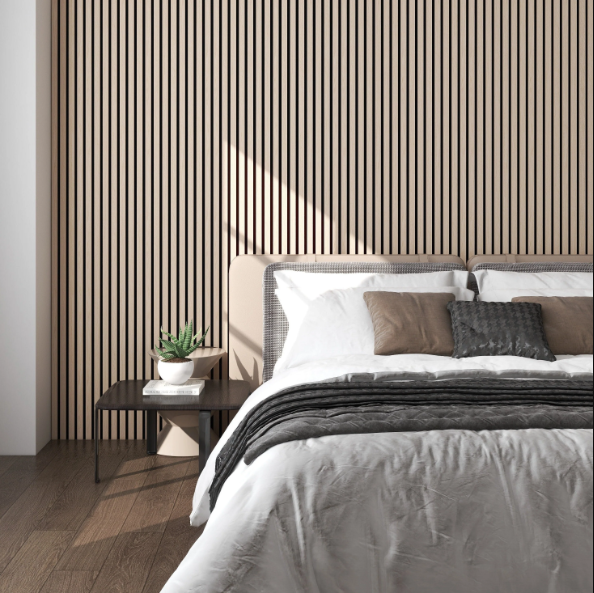
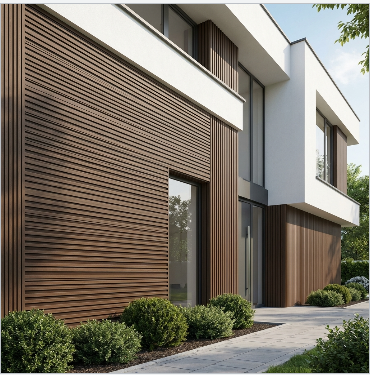
For many modern-home projects, appearance drives the choice. Conventional vinyl lap siding produces a familiar horizontal residential pattern. Fluted WPC introduces raised ribs and recessed grooves, creating strong shadows and visible texture across the wall. Around limestone, stucco and black metal windows, a warm wood-look WPC feature can help distinguish an entrance or projection. Neither appearance is inherently superior: choose the visual language that fits the architecture, using actual samples rather than photographs alone.
2. Fluted WPC vs. Vinyl Lap Siding
Fluted cladding may be arranged to emphasize vertical or horizontal lines when the specific installation system allows that orientation. Vertical fluting can visually reinforce a tall entrance or second-story feature. Vinyl lap typically emphasizes long horizontal courses. Where WPC's fluting is too pronounced, a shiplap-style composite profile may offer a more restrained look. Check current exterior wall panel options against the building elevations.
3. Is WPC Siding More Durable Than Vinyl?
Durability cannot be assigned solely from a material category. Results vary with formulation, profile, thickness, UV exposure, temperature cycling, impacts, fasteners and installation. A substantial WPC board may feel more rigid than a thin vinyl panel, but that does not prove superior tested impact performance. Both systems require allowances for temperature-related movement. Request product-specific documentation rather than relying on absolute claims that one material never fades, cracks or warps.
4. Is WPC Siding Waterproof?
Do not use WPC cladding as the only water-control layer. Even an exterior cladding described as moisture resistant is part of a larger wall assembly. Depending on the construction, that assembly will include appropriate water-resistive barriers, flashing and drainage details. Similar principles apply to vinyl siding. Wind-driven rain and incidental moisture can reach locations behind siding, so the relevant question is how the complete wall manages water—not whether the face panel alone is called waterproof.
5. Which Is Easier to Maintain?
Both materials are commonly positioned as lower-maintenance alternatives to some natural-wood finishes, but neither is maintenance-free. Inspect for dirt, finish damage, joints, trim, sealants, fasteners and blocked drainage openings. Follow the selected manufacturer's cleaning and care guidance; abrasive cleaners, solvents or aggressive pressure washing may be unsuitable. Some finished exterior WPC profiles do not require routine painting, but verify those claims for the selected product.
6. Will WPC or Vinyl Fade?
UV exposure, formulation, finish, orientation and environmental conditions influence long-term color change. Dark finishes can experience elevated solar temperatures. For WPC and vinyl alike, request applicable weathering information and warranty terms; do not assume identical color retention across product lines. Examine physical samples in daylight, shade and direct sun before approving a large installation.
7. Which Costs More: WPC or Vinyl?
Vinyl siding often has a lower initial price, while architectural WPC profiles can cost more. But a fair budget includes panels, usable coverage, cutting waste, furring or rails, fastening systems, water-control layers, flashing, corners, edge trims, labor, equipment, freight and future care. A premium architectural feature wall has a different cost objective from replacing siding across an entire house. For panel coverage and estimating, see the WPC quantity guide and WPC cladding cost guide.
8. Can You Replace Vinyl Siding With WPC?
Potentially, yes. Replacing vinyl with an appropriate WPC cladding system requires assessment of the existing wall and the proposed new assembly. Check for damaged sheathing, existing water intrusion, WRB condition, flashing around windows and doors, fastening substrates, wall flatness, foundation and sill transitions, drainage and clearances. The new cladding may differ in weight, support requirements, finished wall thickness and trim geometry. Those conditions must be resolved before purchasing materials.
9. Can You Install WPC Directly Over Vinyl Siding?
Do not assume that existing vinyl provides an adequate attachment surface. Overcladding can conceal wall damage, water-management problems or poor flashing. If it is proposed, the designer or installer needs to verify structural fastening, substrates, drainage, code requirements and the WPC manufacturer's accepted installation method. Removing old siding often enables a more thorough inspection of the wall.
10. Which Is Better for a Modern Luxury Home?
WPC can be particularly useful on modern entries, garage projections, second-story accents and courtyard walls where the design calls for dimensional shadows or warm wood-look material. Vinyl can remain appropriate where conventional lap styling and initial cost control take priority. A compelling exterior usually depends on the relationship among all materials rather than choosing a single siding type for every wall.
11. Can WPC Siding Run Vertically or Horizontally?
Some WPC systems permit multiple orientations, but permission depends on the exact profile and attachment system. Orientation changes support layout, joints, drainage, end conditions and movement requirements. Never assume a panel approved for one direction is approved for another; consult the product's current instructions.
12. Can WPC Be Used With Steel Doors and Windows?
Yes, with an appropriately detailed wall assembly. Warm WPC tones can complement black steel doors and windows, but opening transitions must be treated technically: coordinate the frame, flashing, sills, cladding returns, head and jamb trims, drainage, expansion and fasteners. A clean-looking transition is only successful if it also manages movement and water. Review the WPC cladding substrate guide for additional planning.
13. Fire Safety and Building-Code Requirements
Neither WPC nor vinyl has a universal fire rating or approval by material name. Applicable requirements depend on occupancy, building height, fire separation, jurisdiction, substrate and complete exterior wall assembly. Where fire, flame-spread, wind or other documented performance is required, use data applicable to the exact product and assembly. Check the WPC specification checklist and request supported documentation.
14. How Do You Choose a WPC Finish?
Selected USA Builders Depot exterior fluted products are offered in Golden Teak, Brown Walnut, Ash Gray and Charcoal/Black. Golden Teak can create a warm contemporary feature; Brown Walnut delivers a deeper wood-like tone; Ash Gray supports restrained neutral façades; Charcoal/Black can create dramatic contrast. Actual finishes and availability vary by SKU. Compare physical samples beside stone, roof finishes, paint, windows and exterior doors in natural light.
15. Should You Cover the Entire House in WPC?
Not necessarily. Selective cladding can provide architectural impact without treating WPC as the main siding for every façade. A project may combine stucco or masonry for primary wall areas, WPC at the entry or projecting volumes, stone at the base and black steel doors or windows. The appropriate distribution depends on the architectural design, project budget, exposure and wall-system detailing.
WPC vs. Vinyl: Which Should You Choose?
Choose WPC when you want fluted or dimensional wood-look surfaces, strong architectural texture, distinctive entry features, or visual coordination with modern doors and windows—and the exact product satisfies project requirements.
Consider vinyl when a familiar lap-siding appearance, light handling, installer familiarity and an affordable initial system are higher priorities. Neither decision eliminates the need for sound water management and product-specific technical review.
Exterior Siding Buying Checklist
| Item | Confirm before ordering |
|---|---|
| Product | Exact exterior-rated SKU and profile |
| Finish | Approved physical sample |
| Sizes | Actual dimensions and installed coverage |
| Layout | Manufacturer-approved orientation and support |
| Wall | Sound substrate, WRB, flashing, drainage |
| Fixings | Approved clips, rails or screws |
| Movement | Required gaps and clearances |
| Accessories | Trims, corners, edges and terminations |
| Compliance | Applicable assembly documentation |
| Order | Quantity, waste, current lead time and freight |
Frequently Asked Questions
Is WPC siding the same as vinyl?
No. WPC is a wood-plastic composite family, while conventional vinyl siding is primarily PVC. Profiles and fastening systems also differ.
Is WPC siding good for modern homes?
Yes, when the selected product and wall assembly are suitable. Fluted profiles can produce distinctive texture and shadow lines.
Does WPC cost more than vinyl?
Architectural WPC is often more expensive initially, but compare complete installed costs rather than panel price alone.
Can WPC replace vinyl siding?
Potentially, after checking the underlying wall and designing a compatible WPC installation.
Can WPC be installed on existing vinyl?
Not automatically; confirm an acceptable attachment path, substrate condition, water control and manufacturer approval.
Does WPC need painting?
Some finished products do not require routine field painting; follow the selected SKU's maintenance guidance.
Does WPC fade?
Color change depends on finish, formulation and exposure. Check documentation and warranties for the exact product.
Is WPC waterproof?
Do not rely on the cladding alone as a waterproofing layer. The wall assembly needs appropriate water-management details.
Is WPC better in hot climates?
Neither material wins universally. Review solar exposure, expansion and product-specific performance.
Can WPC run vertically?
Some profiles allow it, subject to the manufacturer's installation instructions.
Does USABD sell exterior WPC siding?
Yes. USA Builders Depot offers selected exterior fluted and shiplap WPC cladding systems.
Where should I use WPC?
Common design uses include entries, façade accents, garage projections, courtyard walls and larger exterior surfaces where suitable.
Final Thoughts: Is WPC Worth Considering Instead of Vinyl?
Vinyl remains useful for homeowners seeking familiar siding profiles at a cost-conscious entry point. WPC creates another architectural option through wood-look finishes, fluting and dimensional texture. For modern homes, the visual difference can be compelling, but proper substrates, flashing, drainage, movement allowances, trims and documentation remain essential.
Explore USA Builders Depot exterior WPC wall panels, including fluted and shiplap options. For another material comparison, see our WPC vs. fiber cement siding guide.
USA BUILDERS DEPOT — Build a Better Tomorrow.

