


3D Wall Panels: Your Complete Guide to Stunning Walls

3D wall panels add physical depth through raised patterns, grooves or layered surfaces. The right choice depends on the effect you want, the room conditions and the details at corners, outlets and exposed edges. Start with a sample and a measured layout before ordering a full wall.
Choose a Pattern That Fits the Room
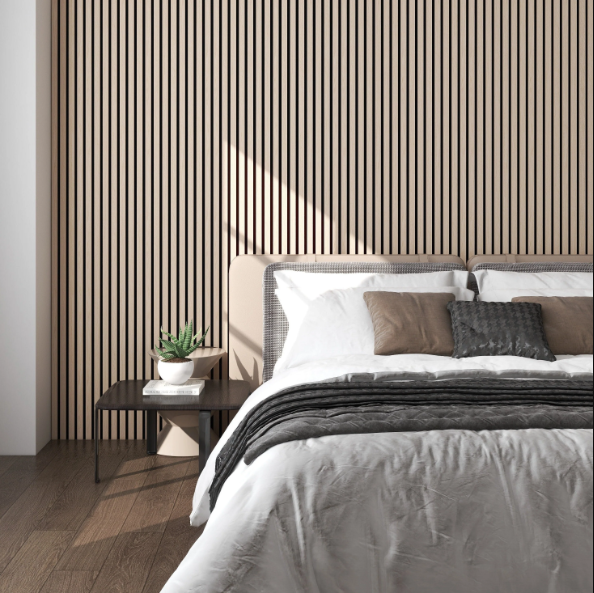
Large geometric relief can become the main feature of a room. Smaller repeating patterns create a quieter backdrop. Linear slats and fluted surfaces offer another way to introduce depth without a tile-like pattern. Compare the scale against the wall, furniture and viewing distance.
Test a sample in daylight and under the fixtures you plan to use. Light directed along a surface emphasizes both texture and joints, so check the panel edges as well as the center of the pattern. Plan lighting locations before installation and follow fixture clearance requirements.
For a TV wall, leave room for cables, ventilation and equipment access. Mount the television to suitable structural support; decorative panels do not replace that support. See our TV wall panel design guide for layout ideas.
Compare the Actual Panel Construction
| Panel type | Questions to ask |
|---|---|
| Wood or wood-based | Is the surface solid wood, veneer or a decorative finish? What are its moisture limits and approved edge treatments? |
| Molded polymer | Which substrates and adhesives are approved? Are there heat, impact or exposure restrictions? |
| Gypsum or mineral-based | What support, joint finishing and painting does this exact product require? |
| Acoustic construction | What backing and mounting configuration were tested, and which acoustic report applies? |
These are general material categories, not a statement that every type is stocked by USABD. Browse our wall panel collection to compare current products and finishes.
Separate Decorative Texture from Performance Claims
A raised surface alone does not establish sound absorption, sound isolation or insulation performance. If controlling echo is part of the project, review the exact acoustic product and installation data. Our acoustic wood panel guide explains the distinction between absorbing reflections inside a room and blocking sound between rooms.
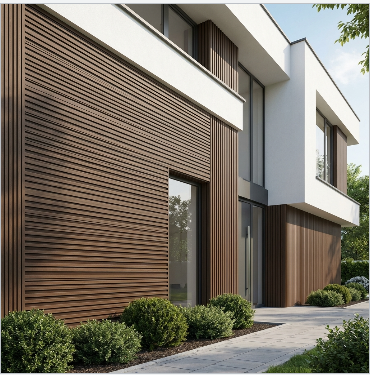
Similarly, a moisture-resistant panel face does not make the entire wall waterproof. Bathrooms, shower areas, fireplaces and exterior walls need products and assemblies approved for those conditions. Check the applicable documentation rather than relying on the material name.
For commercial projects or specified performance requirements, request the relevant fire, emissions and other product reports. Do not apply ratings from a similar-looking panel to a different product or mounting method.
Plan Seams, Cuts and Exposed Edges
Measure the wall and mark doors, windows, outlets and fixtures. Draw the panel grid or board direction using the installed coverage dimensions. Decide where the pattern begins and ends, and avoid awkward narrow cuts at highly visible edges where possible.
Divide the planned area by coverage per panel or pack for an initial quantity, then check the cut layout. Pattern repeats, orientation and joint details can prevent you from reusing an offcut. Base spare material on the actual layout rather than a fixed allowance for every project.
Choose trims for the exact panel profile and finish. A corner trim for one range may not fit another. Natural veneer panels, interior WPC panels and acoustic panels use different accessory selections. For natural veneer options, review the natural veneered corner trim collection. Confirm the matching finish before ordering.
Confirm the Installation Method Before Starting
Read the instructions for the selected panel before preparing the wall. Confirm substrate condition, flatness, storage or conditioning requirements, approved adhesive or fasteners, movement allowances and cutting methods. A generic construction adhesive is not automatically suitable for every panel or surface.
Do not cover dampness, loose paint or unstable surfaces. Wallpaper, tile and painted walls need product-specific compatibility checks. Plan electrical box details and any necessary electrical work with a qualified professional before adding panel thickness.
Some panels need visible joints; others use specified joint treatments. Do not fill every seam or paint a factory finish unless the manufacturer allows it. Follow separate instructions for ceiling use where permitted. Installation time depends on the material, wall condition, cuts and finishing work.
Compare the Complete Installed Cost
Ask for a quote covering panels, matching trims, approved installation supplies, wall preparation, cutting, finishing, delivery and labor. Compare coverage per pack rather than the pack price alone. Decorative paneling may still require a suitable backing wall, so it is not automatically a substitute for drywall.
Check the order unit, finish, availability, delivery arrangements and return terms before purchasing. A sample helps confirm appearance; a sample installation can also help your installer evaluate joints and finishing details.
Plan Cleaning and Future Changes
Follow the care instructions for the actual finish. Avoid assuming that water, solvents, sanding or repainting are suitable. Inspect a lifting edge before simply adding more glue: movement or substrate problems may need correction.
Removal can damage the underlying finish, especially with adhesive installations. If reversibility matters, discuss it before choosing a system rather than assuming that a peel-and-stick panel will remove cleanly.
For related options, read our 3D panel materials and buying guide or brick wall panel guide. Contact USA Builders Depot with your measurements and project photos for selection assistance. Showroom visits are by appointment only.


