Can You Install Natural Veneer Wall Panels on Drywall? Adhesive vs. Z-Clips & Screws

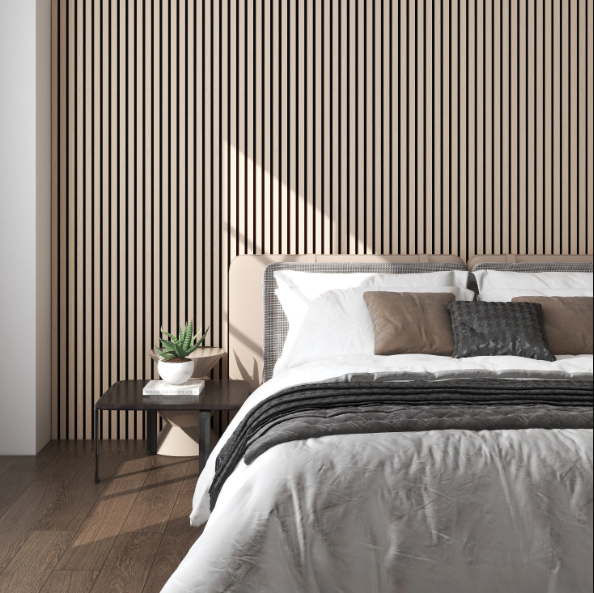
Natural veneer wall panels bring warmth, depth, and authentic wood grain to contemporary interiors. Before installing large-format panels, though, homeowners and contractors need to determine how they attach to the wall. Can natural veneer wall panels be installed over drywall? Often yes, but suitability depends on the product, panel weight, wall condition, attachment system, and manufacturer's instructions. This guide compares compatible adhesives, screws and mounting strips, and concealed Z-clip systems, with practical guidance for planning a professional finish.
Quick Answer: Can Natural Veneer Wall Panels Be Installed on Drywall?
Many natural veneer wall panels can be installed over properly prepared drywall when the specific panel and mounting system permit it. Drywall alone should not automatically be considered adequate structural support for large or heavy panels. Depending on the approved system, the installation may need mechanical support, blocking, suitable framing attachment, or another supporting substrate. Verify that the wall is sound, dry, clean, sufficiently flat, and capable of supporting the actual installation. Check adhesive and panel compatibility, or confirm clips and fasteners engage suitable structure. Select the method before ordering or cutting panels.
1. Understand the Type of Natural Veneer Panel You Are Installing
Not every veneer product has the same construction. A flexible veneer wallcovering may use a very different installation process from a rigid architectural panel with a real-wood veneer face and engineered core. Decorative acoustic slat panels may have felt backing and separate mounting instructions. This guide focuses on rigid natural veneer panels for interior feature walls. Confirm core, finish, intended location and approved attachment method for the actual product.
2. Know the Size and Construction of Your Panels
Large-format veneer panels can create expansive, low-seam feature walls but require handling and attachment planning. Selected USABD natural veneer listings identify panels approximately 108.46 × 48.23 inches and a nominal thickness of 3/8 inch, subject to the exact SKU. Products differ in finish, construction and approved installation options. A nearly nine-foot panel may need multiple installers to handle safely. Panel thickness alone does not establish weight, support needs, or fastener quantity.
3. Can You Install Natural Veneer Panels Directly Over Painted Drywall?
Potentially, if the adhesive and panel system permit it. A bond is only as sound as the surface to which it attaches. Inspect for loose paint, soft drywall, peeling paper, moisture marks, cracking and other defects. Correct underlying moisture problems and repair unsound areas before installation. Check flatness; a large panel can emphasize bows and protrusions. Follow the chosen adhesive manufacturer's requirements for cleaning, abrasion, primer and curing. Mechanical systems may require framing, backing or blocking rather than fastening to drywall alone.
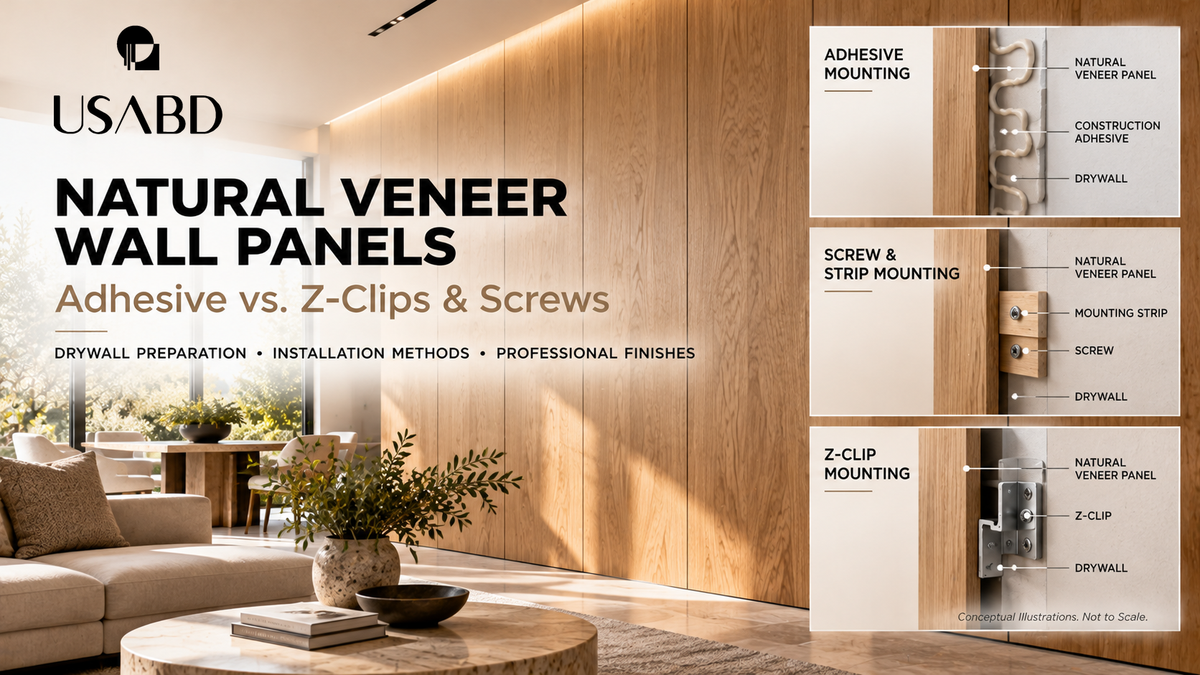
4. Adhesive vs. Screws vs. Z-Clips: What's the Difference?
Adhesive with required support: May reduce visible fasteners, but needs compatible bonding surfaces, suitable conditions and curing support.
Screws with mounting strips: Provides mechanical attachment where the strips and fasteners are secured to approved support; requires alignment and appropriate fastening details.
Z-clips: Concealed mating hardware may allow defined mounting and, in compatible systems, potential removal; requires structural attachment, sufficient depth, and approved clip geometry.
These methods are not interchangeable. The manufacturer's requirements and wall assembly determine the selection.
5. Installing Natural Veneer Panels With Adhesive
First confirm that the chosen adhesive is specifically appropriate for the panel backing and wall finish. Prepare the drywall according to both manufacturers' instructions; clean and repair the surface and allow any primer to cure. Dry-fit the panel to review alignment with corners, openings and adjacent seams. Apply adhesive using the approved coverage, pattern, bead dimensions and amount—do not substitute an arbitrary zigzag application. Position the panel with suitable handling and provide required temporary bracing or mechanical support during curing. Do not load or disturb the system until it has reached its required strength. Adhesive-only installation is appropriate only when expressly supported for the selected panel and substrate.
6. Installing Natural Veneer Panels With Screws and Mounting Strips
Some systems use mounting strips or another approved backing arrangement to establish fastening points for large panels. Check where strips must be supported, including studs, blocking or a designed substrate. Fasteners, penetration depth, spacing and quantity must follow the specific installation design, not a generic pattern. Unauthorized face screws or drilling can damage veneer finishes. Strips should create a suitable plane so directional lighting does not highlight an uneven installed surface.
7. What Are Z-Clips for Natural Veneer Wall Panels?
Z-clips are a concealed mechanical mounting approach using mating pieces that engage to support a panel. One section attaches to the panel or approved supporting assembly and its counterpart to the wall structure. Some compatible designs allow panel removal, but that is not guaranteed. The wall-side section needs appropriately supported fasteners. Different clip systems have different capacity, clearance, materials and installation requirements. Clips can also create projection behind the panel, affecting trim, outlets, casings and baseboards. Confirm compatibility with the exact veneer panel before ordering.
8. Should You Install Directly Over Drywall or Use Additional Backing?
Direct installation can be appropriate where a properly specified adhesive system is approved for sound, flat drywall. Additional backing or blocking may be necessary for large or heavy panels, mechanical clip systems, unsuitable substrates or complicated openings. Concrete or masonry walls have separate moisture, flatness and anchoring issues; do not apply a drywall mounting method to those surfaces without confirmation.
9. Acclimation and Environmental Conditions Before Installation
Wood-based architectural materials can change dimension with environmental moisture. Complete wet construction work before installing finished panels where possible. Maintain controlled interior temperature and humidity as required by the manufacturer and project specification. Architectural Woodwork Institute guidance addresses environmental conditions and acclimation within its scope; do not substitute a universal acclimation period for product instructions. Protect delivered panels from moisture, direct sun, contamination and damage, and follow specified storage orientation and support requirements.
10. How to Cut Natural Veneer Panels Without Damaging the Finish
Determine the underlying core before cutting. Support the entire panel and offcut to reduce splintering and accidental breakage. Use the tool, blade, direction and feed method appropriate for its construction, testing on an offcut when appropriate. Keep the finished face away from abrasive work surfaces. Verify that tape or other temporary protection will not damage the coating. Plan any exposed cut edges for compatible trims or approved edge treatments; do not assume a factory finish can be sanded or recoated without consequences.
11. How to Finish Natural Veneer Panel Edges and Corners
Plan outside and inside corners, vertical seams, and termination points before installation. Compatible corner and edge trims can protect visible transitions and create a deliberate architectural detail. USA Builders Depot offers selected aluminum trims for natural veneer applications, including internal corners, external corners, I-shaped trims and closed trims. Confirm exact dimensions, finish and panel compatibility. Refer to the natural veneer grain and seam planning guide for broader layout ideas.
12. What About Electrical Outlets and Light Switches?
Plan the locations of outlets, switches, controls and other penetrations before cutting the panels. Added finish depth may require properly installed electrical box extensions or other code-compliant provisions by a qualified electrician. Do not bury electrical boxes or eliminate necessary service access. Measure cutouts accurately so cover plates conceal the edges and the finished veneer remains neat.
13. Common Natural Veneer Wall Panel Installation Mistakes
Common errors include using unapproved adhesive, bonding to loose paint or damaged drywall, assuming drywall provides mechanical support, ignoring humidity, choosing arbitrary fastener spacing, overlooking mounting depth, cutting before checking actual wall geometry, neglecting trim details, and altering factory finishes without permission. Do not assume a decorative veneer panel has verified acoustic or fire classifications; request applicable test documentation for the exact assembly.
14. Are Natural Veneer Wall Panels Suitable for Every Room?
Natural veneer can be attractive in living rooms, bedrooms, dining areas, offices and reception spaces when the environment is appropriate. Kitchens may require caution around direct water or high heat. Bathrooms or persistently damp spaces require specific moisture-suitability confirmation. Around fireplaces, follow appliance combustible-clearance requirements; decorative wood-based panels are not substitutes for required noncombustible surrounds. Commercial projects may have additional interior-finish requirements. Suitability always depends on the exact panel and application.
15. Can You Remove Natural Veneer Panels After Installation?
Removal depends on the attachment system. Adhesive-bonded installations are generally intended to remain in place; removal can damage the panel and wall. Mechanical systems may have varying serviceability. Compatible Z-clip designs can sometimes permit disengagement, but only if the system and surrounding clearances allow it. If future access is required, specify removability from the beginning.
16. Natural Veneer Wall Panel Installation Checklist
Confirm the exact veneer SKU, finish, construction, weight and dimensions; approved attachment system; wall condition, flatness and supporting structure; adhesive compatibility or fastener and clip details; site temperature, humidity, storage and acclimation; panel grain orientation and seam layout; edge trims; electrical devices and lighting; and required safety or performance documentation. Review manufacturer instructions and resolve the installation design before cutting or fixing any panel.
Frequently Asked Questions
Can veneer panels be glued directly to drywall? Some can, when the exact panel, adhesive and prepared substrate are compatible.
Do veneer panels need screws into studs? Not every approved system uses screws, but mechanical systems need suitable structural support.
Are Z-clips better than adhesive? Neither is universally best; choose based on support, removability, depth and manufacturer approval.
Can veneer panels go over painted walls? Sometimes, when the paint is sound and compatible with the mounting system.
What if the drywall is uneven? Correct the substrate or use a suitable approved supporting system.
Do veneer panels need acclimation? Follow product and applicable architectural woodwork requirements.
Can I cut them with a circular saw? Certain products can be cut with a suitable saw and blade; verify construction and instructions.
Can panels be horizontal? Check approved orientations and attachment methods.
Can they be installed in bathrooms? Only where the product is suitable for the anticipated moisture exposure.
Are veneer panels fire-rated or acoustic? Do not assume either property; obtain exact test documentation.
Can adhesive-installed panels be removed? They may be damaged during removal.
What information should I provide when ordering? Wall dimensions, finish, orientation, project location, substrate, mounting method and trim requirements.
Final Thoughts: Choose the Right Mounting System Before Installation
Natural veneer can create an elegant feature wall, but successful installation depends on both the material and the attachment method. Adhesives, mechanical strips, screws and Z-clips serve different purposes. Confirm the supporting substrate, environmental conditions, panel layout, edge treatment and manufacturer-approved mounting details before proceeding.
Explore interior wall panels at USA Builders Depot and contact our team for natural veneer product information, samples and project-specific questions. Include room measurements, selected finish, quantity, substrate and intended mounting system.
USA BUILDERS DEPOT — Build a Better Tomorrow.