Steel Casement Window 101: The Ultimate Guide
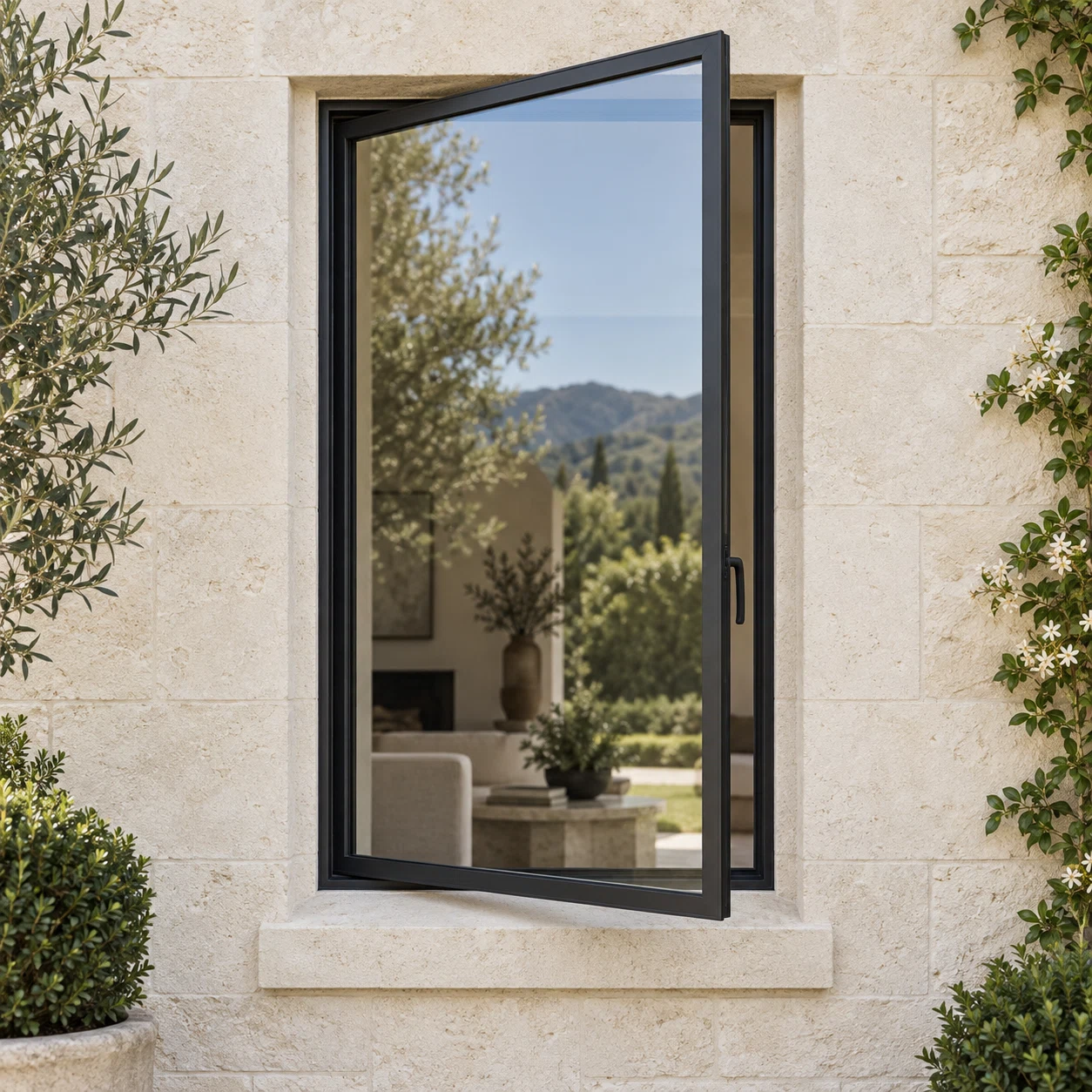
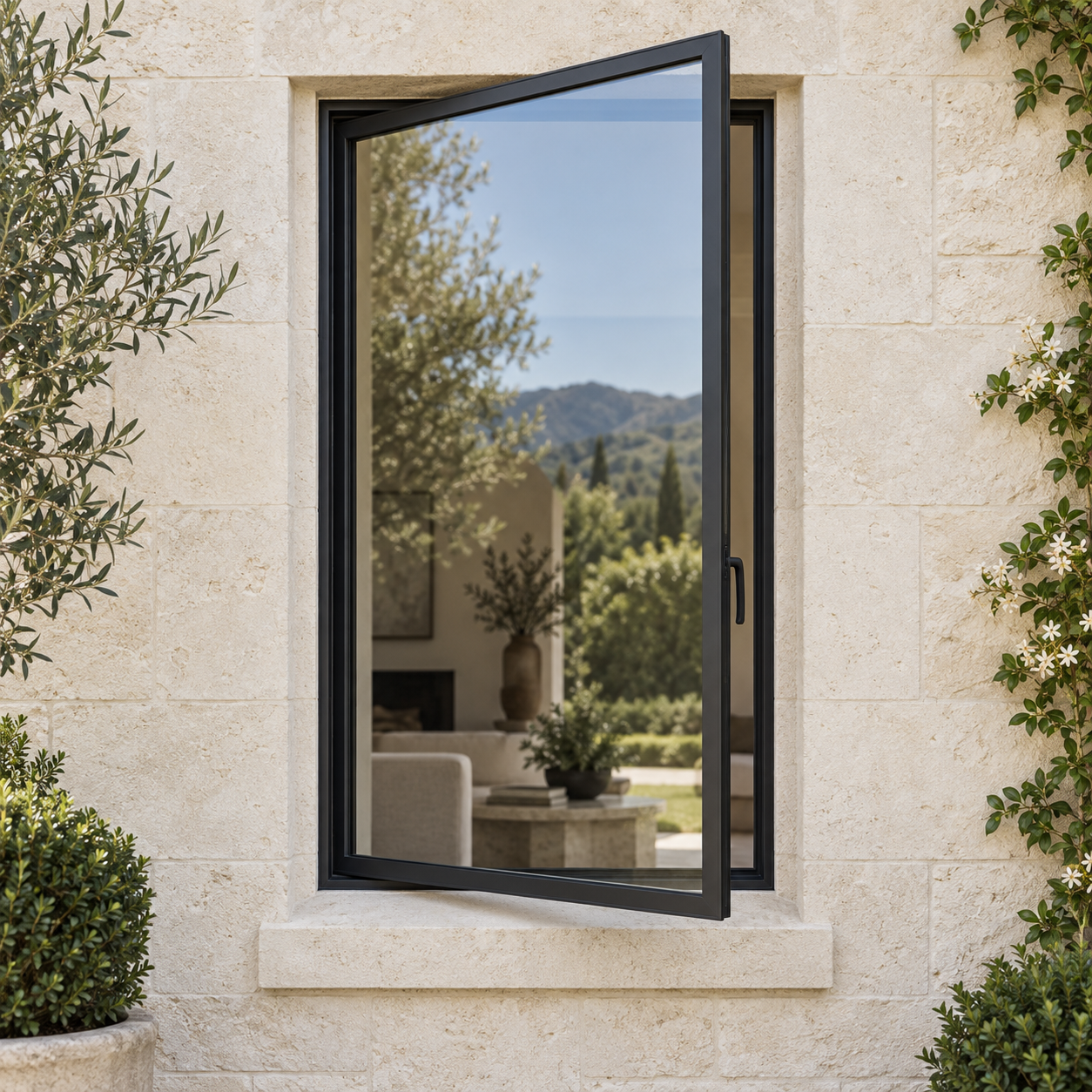
A steel casement window has a side-hinged sash that opens for ventilation. Before choosing one, confirm the opening direction, operating hardware, screens, glass, and installation requirements for the exact model. The frame’s appearance is only one part of the decision.
Explore our steel windows, including single casement and double casement options. Use this guide to prepare your selections and questions before requesting a quote.
Single or double casement: what should you compare?
| Configuration | What to review |
|---|---|
| Single casement | The hinged side, opening direction, sash clearance, handle position, and screen arrangement. |
| Double casement | How both leaves open, the meeting detail, operating sequence, locks, and screen arrangement. |
| Fixed window | A non-opening alternative where ventilation is provided elsewhere. Compare its sightlines with adjacent operable units. |
For a broader comparison, see fixed, casement, awning and push-out window options.
Do not assume all casements open outward or use a crank. Confirm operation on the product drawing. Awning and hopper windows use different hinge arrangements; they should not be substituted without reviewing the intended opening and use.
Check clearance and everyday use
Picture the window fully open as well as closed. Note nearby walkways, exterior fixtures, landscaping, interior counters, blinds, and curtains. Confirm that the selected sash and hardware can operate without interference.
- Handing: Ask which viewing direction the supplier uses to describe left and right.
- Reach: Check whether users can comfortably reach the handle and locks.
- Screens: Confirm whether they are available, included, removable, and compatible with the operating hardware.
- Cleaning: Ask how the glass and frame should be accessed and maintained.
- Project requirements: Have the responsible project professional confirm whether the selected unit suits the intended room and opening.
Measure the opening and approve a drawing
Label each window location and record the opening dimensions, wall depth, and surrounding finishes. Keep rough-opening measurements separate from overall frame dimensions and glass dimensions. Ask the supplier to identify exactly what each quoted measurement means.
Use our steel-window measuring guide and measurement-record table to document each opening, including separate width and height readings, diagonals and wall depth. Label the viewing side on drawings that show hinge position and swing direction.
Your installer should check the opening and the manufacturer’s required installation allowances before the order is finalized. Review the grid pattern, frame dimensions, hinge side, opening direction, hardware, and sill details on the final drawing. A photo or a nominal size is not enough to confirm fit.
Request product-specific performance information
Steel framing alone does not establish an energy, acoustic, security, or weather-performance rating. Ask for documentation covering the exact window and glazing configuration when your project specifies a performance requirement.
Confirm whether the frame is thermally broken, what glass is supplied, and what complete-window performance information is available. Avoid assuming that double glazing or a thermal break guarantees a particular rating, lower energy bills, or condensation-free operation.
Similarly, ask which locks, hinges, and seals are included. Do not infer a security rating or an air- and water-performance result from a photograph or a general claim about steel’s strength. Our residential steel window buying guide provides a broader selection checklist.
Compare a complete quote
For a useful price comparison, request the same size, number of operating leaves, grid layout, glass, finish, and hardware from each supplier. Identify any separate charges for screens, freight, taxes, installation, removal of existing windows, and repairs to adjacent finishes.
Use our black steel window cost guide for product-price examples and budgeting questions. Confirm the current price of your selected configuration rather than treating a starting price as a completed project quote. Ask for current availability and delivery timing; do not schedule installation around a generic lead-time estimate.
Plan installation and care
Before installation, have your installer review support, anchorage, flashing, drainage, sealants, and the connection to the surrounding wall using the manufacturer’s instructions. Confirm delivery access and handling arrangements for the ordered units.
Request the finish specification, cleaning instructions, hardware maintenance guidance, and warranty. Discuss the intended exposure, especially persistent moisture or coastal conditions. Inspect and address finish damage as directed by the manufacturer. Avoid assuming that steel is corrosion-proof, maintenance-free, or guaranteed to last a particular number of years.
Installation guide and project photos
Download the USABD Steel Window Installation Guide (PDF) and review it with your installer before finalizing the opening and installation scope. Confirm any details specific to the selected window and surrounding wall.
See steel window installations by USA Builders Depot for design inspiration. The gallery includes different window configurations and installation stages; photos do not establish the specification or performance of a particular casement model.
Send your casement window quote checklist
To help us understand your project, send:
- Project location and a window schedule, measurements, or drawings.
- Single or double casement selection and preferred opening direction.
- Grid pattern, finish, glass requirements, and screen preferences.
- Any required product documentation.
- Target delivery date and site-access details.
Request a steel casement window quote from USA Builders Depot or call (470) 491-3887. You can also compare our single casement and double casement product pages before contacting us.
Showroom visits are by appointment only. Call or email through our contact page to arrange a visit.
Steel casement window questions
What is the difference between a single and double casement window?
A single casement has one operating sash; a double casement has two. Compare the opening direction, meeting detail, operating sequence, hardware and clearances on the selected product drawing. The number of glass lites describes the glass layout, not necessarily the number of opening sashes.
Do steel casement windows always open outward?
Do not assume the opening direction from the term “casement.” Confirm the exact model’s operation, hinge side and required clearance on the approved drawing before ordering.
Are screens and handles included?
Check the selected listing and written quote. Confirm which operating hardware and screens are supplied, whether any items are separate, and how the screen works with the opening sash.
Which measurements should I send for a quote?
Send a labeled window schedule or drawing with opening dimensions, wall depth, quantity and preferred configuration. Keep rough-opening measurements separate from overall frame dimensions. Have your installer verify fit and the required allowances before approving the order.