
Everything You Need to Know About Fiber Cement Board

Fiber cement board is a cement-based building material reinforced with fibers. It comes in different formats and finishes, so choosing a board starts with its intended use. Exterior cladding, decorative panels, and tile backing should not be treated as interchangeable simply because their names include “cement.”
What Is Fiber Cement Board Made Of?
Fiber cement commonly combines cement, sand, and cellulose fibers, as described in OSHA’s fiber cement board guidance. Formulations, manufacturing methods, thicknesses, and surface treatments vary. Use the selected manufacturer’s technical data and safety data sheet for the material you plan to buy.
The material name alone does not establish structural capacity, fire performance, waterproofing, or suitability for a particular wall. Those questions require documentation for the exact product and installation system.
Choose the Product for the Application
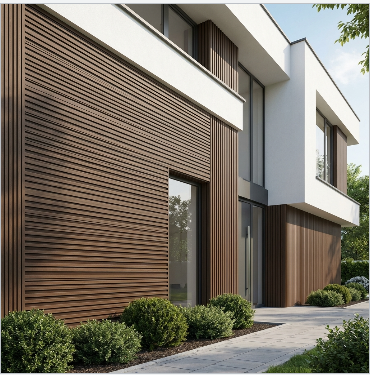
Exterior Cladding and Siding
Confirm that the selected board is intended for the proposed exposure, orientation, and wall construction. Have your designer or installer review the required attachment, joints, flashing, drainage, and clearances. Large sheet panels and overlapping lap-siding planks use different layouts and coverage calculations.
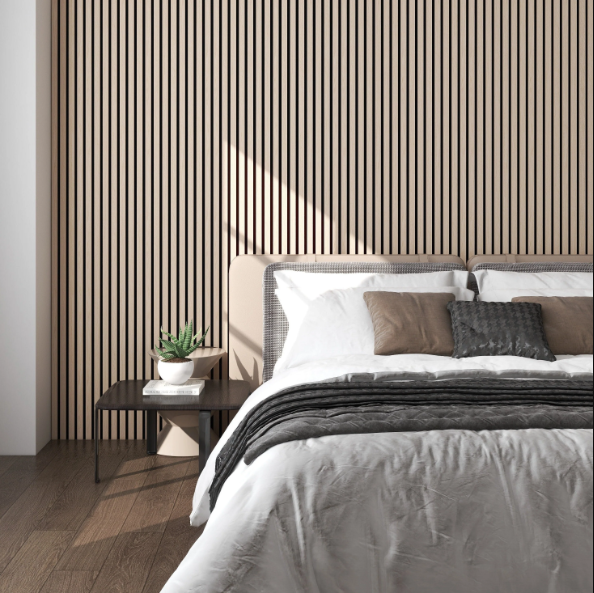
Interior Decorative Surfaces
Check the approved substrate, attachment method, edge treatment, and finish-care requirements. Review samples alongside adjoining materials so the color, texture, and visible joints fit the room. Do not assume exterior instructions cover every interior application.
Tile Backing and Wet Areas
Choose a board expressly documented for the intended tile or wet-area system. A decorative board should not replace a specified backer board without approval. Confirm the complete waterproofing and joint-treatment requirements rather than assuming a cement-based board alone makes an assembly waterproof.
Five Details to Check Before Ordering
- Dimensions and thickness: Check the actual dimensions and the thickness required by the approved design.
- Finish: Confirm whether the surface is finished, primed, or requires additional work. Request approved edge and touch-up instructions.
- Installation: Obtain the current manual for the exact board, including supports, fasteners, joints, and application limits.
- Performance: Request relevant test reports or approvals where the project requires documented fire, moisture, impact, or other performance.
- Care and warranty: Compare board and finish coverage separately, including exclusions and maintenance responsibilities.
Claims such as “maintenance-free,” “fireproof,” or “suitable for every climate” do not replace these checks. Environmental claims should also be supported by product documentation rather than inferred from ingredients.
Plan Quantities and the Full Project Cost
Calculate gross board area from its stated dimensions, then have the installer prepare a layout accounting for cuts, joints, openings, and usable offcuts. Gross area is not automatically installed coverage. A project layout is more useful than an arbitrary waste allowance.
A complete quote should identify boards, delivery and unloading, preparation or repairs, attachment components, trim, finishing, labor, and disposal. See our 4×8 board sizing and coverage guide for planning examples.
Handling, Cutting, and Installation
Follow the product’s storage and handling instructions and arrange suitable lifting assistance. Circular-saw cutting can generate respirable crystalline silica dust. The crew should select controls for its tools and conditions using the product safety information and OSHA’s cutting guidance. A specialty blade or generic dust mask alone is not a complete plan.
Review our installation checkpoints with your installer. Use the exact manufacturer’s instructions for fasteners, spacing, clearances, joint treatment, and finishing.
Explore USABD Fiber Cement Boards
Start with the USABD fiber cement board collection and our large-format fiber cement board listing. Confirm suitability and supporting documents before specifying a board for your project.
Visit our technical resources or contact USA Builders Depot with your intended application, location, measurements, finish preference, and timeline.