


Do Acoustic Wood Slat Panels Soundproof a Room? What They Actually Do

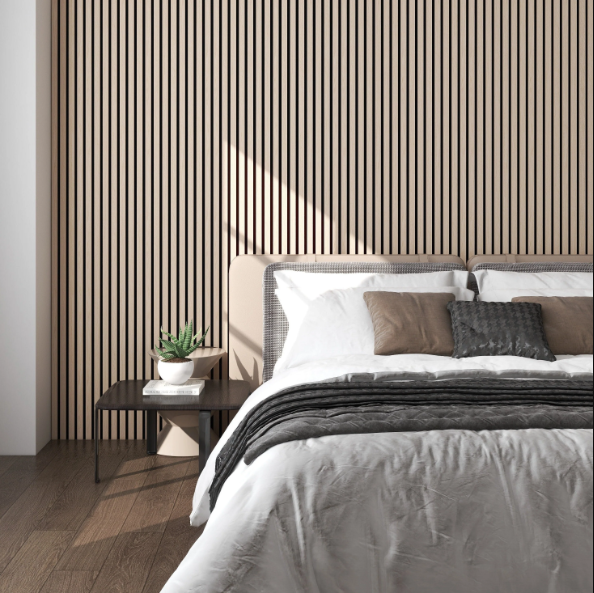
Imagine a contemporary living room finished with modern wood slat wall panels, warm lighting, and elegant furniture. It looks refined—but will it also sound quieter? Many homeowners choose acoustic panels hoping to solve echo, neighbor noise, or both. Do acoustic wood slat panels actually soundproof a room? The short answer is that acoustic treatment and soundproofing are two different objectives. Here's how to tell which solution you need.
Quick Answer: Are Acoustic Wood Slat Panels Soundproof?
No. Acoustic wood slat panels are generally sound-absorbing treatments, not complete soundproofing systems. They can reduce reflected sound, echo, and reverberation within a room. They are not generally designed to prevent substantial sound from passing through walls, ceilings, doors, or floors. The right choice depends on the source of the sound problem.What Is the Difference Between Sound Absorption and Soundproofing?
Sound absorption
Sound absorption reduces the amount of sound that reflects into a room. In a space with glass, stone, wood floors, and bare painted walls, speech and music can reflect repeatedly, making the space sound hollow or harsh. Suitable acoustic treatments help control those reflections.
Soundproofing (sound isolation)
Sound isolation reduces the sound transmitted from one space to another. If you hear a neighbor's television through a shared wall or traffic through a window, that is a transmission problem. A properly designed isolation solution considers the whole construction assembly, gaps, connections, and possible flanking paths—not just the decorative wall finish.
How Do Acoustic Wood Slat Panels Work?
Modern wood slat panels commonly pair a decorative linear wood-finish surface with acoustic backing. Depending on the exact backing, slat geometry, construction, and installation, some sound energy is absorbed instead of reflected back into the room. The result can be a more comfortable acoustic environment alongside an architectural feature wall. Two panels that look alike may not perform alike. Always review testing for the exact product and mounting method rather than assuming all felt-backed panels have an identical rating.
What Noise Problems Can Acoustic Slat Panels Help Solve?
1. Excessive echo
Hard surfaces create reflections. Acoustic treatments can help soften the perceived echo and reduce long reverberation.
2. Poor speech clarity
In reverberant spaces, reflected speech can overlap with direct speech. Appropriate acoustic treatment can support clearer conversations.
3. Harsh-sounding living rooms
Modern finishes such as porcelain, glass, and stone look beautiful but can create lively acoustics. Wood slat treatments can introduce absorption without abandoning the design.
4. Home office reverberation
Appropriate treatment may reduce reflections that interfere with video calls. It does not necessarily stop sounds entering through a doorway or window.
5. Media room reflections
Wall reflections affect dialogue and listening comfort. Serious theater rooms may also need precise treatment placement and low-frequency solutions.
What Acoustic Wood Slat Panels Cannot Do
| Noise problem | Can acoustic slat panels help? |
|---|---|
| Excessive room echo | Often, with suitable product and placement |
| Long reverberation | Potentially |
| Harsh interior reflections | Potentially |
| Conversations through a shared wall | Not a complete isolation solution |
| Footsteps from upstairs | Not a complete isolation solution |
| Traffic noise through windows | Not a complete isolation solution |
| Low-frequency bass through structures | Not a complete isolation solution |
| Sound leaking through a door gap | Not a complete isolation solution |
The key question is where the unwanted sound comes from and how it reaches you.
Can Acoustic Panels Block Noise From Neighbors?
Not reliably by themselves. A decorative slat treatment can improve the acoustics on your side of a shared wall, but noise may continue through the underlying partition or through adjacent ceilings, floors, ducts, outlets, and structural connections. Effective isolation may require acoustic sealing, added mass, insulation within a wall, or decoupled construction. For shared or fire-rated assemblies, consult an appropriately qualified professional before modifications.
NRC vs. STC: Which Rating Matters?
NRC: Noise Reduction Coefficient
NRC summarizes measured sound absorption across selected frequencies. It is commonly derived from laboratory measurements under ASTM C423. It is relevant when assessing how a material absorbs sound inside a room.
STC: Sound Transmission Class
STC rates airborne sound isolation of a building element or assembly, typically based on testing under ASTM E90 and classification under ASTM E413. It is relevant when determining how an assembly resists sound passing between spaces. STC does not comprehensively describe low-frequency or impact-noise behavior.
| Measure | What it tells you |
|---|---|
| NRC | Sound absorption, relevant to echo and reverberation |
| STC | Airborne sound isolation through assemblies |
For more details, read our NRC ratings guide.
Does Acoustic Felt Make a Wall Panel Soundproof?
No. Felt or another acoustic backing may contribute to absorption, but backing material alone does not establish the sound-transmission rating of the complete wall. Thickness, density, material construction, cavity depth, and mounting can all affect performance. Request documentation for the exact product and installation if your project has measured acoustic requirements.
Do You Need to Cover an Entire Wall?
Not necessarily. The right coverage depends on room dimensions, ceiling height, existing furnishings, reflective surfaces, and the desired acoustic outcome. An upholstered room with carpet may need different treatment from a room filled with polished stone and glazing. Begin by identifying the problematic reflective surfaces, then plan the amount and placement of treatment. See our acoustic panel quantity guide before ordering.
Are Acoustic Panels Worth Installing in Bedrooms?
They can add attractive texture behind a headboard and may improve reverberation. If the main concern is a noisy neighbor, footsteps above, or traffic entering through a window, start with investigating the sound transmission path instead. Better room acoustics and quieter transmission from outside are separate goals.
Do Acoustic Wood Slat Panels Work in Home Offices?
Yes, when selected for the right purpose. A desk, monitors, hard flooring, windows, and bare walls can create distracting reflections in a home office. Suitable panels may make calls sound less reverberant. They do not replace good microphone positioning, equipment setup, closing gaps, or isolating external noise.
Are Acoustic Wood Panels Suitable for Home Theaters?
They can be part of a home-theater treatment plan. Sound reflections and low frequencies behave differently, and thin absorptive finishes may have limited low-frequency performance. Carefully plan panel placement around speakers, seating, and room geometry. For demanding projects, consider a professional acoustic design instead of assuming a decorative treatment is sufficient.
Can an Air Gap Improve Acoustic Performance?
Potentially. Some tested systems perform differently when panels are mounted over battens or with a cavity behind the face. The improvement, if any, depends on the product, cavity, additional insulation, and frequencies considered. Do not assign a generic NRC number without a matching report. Read our air gap installation guide and follow the manufacturer's instructions.
What Should You Do If You Need Actual Soundproofing?
Inspect doors and seals
Perimeter seals and undercuts can allow airborne sound leakage.
Check gaps and penetrations
Openings around utilities and junctions can transmit sound. Use methods that comply with applicable building and fire requirements.
Evaluate the complete wall assembly
Isolation improvements may require carefully specified assemblies, insulation, added mass, or decoupling.
Check floors, ceilings, and mechanical systems
Impact noise and mechanical vibration travel differently from airborne speech and may need different treatment.
Get specialized advice when needed
For multifamily, commercial, or performance-critical projects, consult a qualified professional.
How to Choose the Right Acoustic Wood Slat Panels
- Select the finish: Match the oak tone or darker finish to flooring, cabinetry, doors, and lighting.
- Confirm construction: Review dimensions, slat material, backing, and intended application.
- Verify acoustic data: Seek reports for the exact product and installation if performance matters.
- Follow installation instructions: Confirm substrate, approved adhesive, fastening, and any cavity requirements.
- Measure your treatment area: Allow for openings, cuts, installation direction, and package quantities.
- Review project requirements: Fire performance, code, and specification documentation are separate from acoustic absorption claims.
For installation planning, see how to cut acoustic slat wall panels and acoustic panel fire ratings.
USA Builders Depot Acoustic Wood Slat Wall Panels
USA Builders Depot offers decorative acoustic wood slat wall panels for interior residential and commercial design. Options include contemporary oak tones and darker finishes. Because materials, dimensions, backing, and installation requirements vary, confirm the specifications of the exact selection before purchasing. A decorative acoustic backing does not establish a universal NRC or STC rating. Explore the Classic Oak acoustic wall panel, White Oak & Grey Felt panel, and our technical resources.
Frequently Asked Questions
Do acoustic wall panels really reduce noise?
They can reduce reflected sound inside a room, but that is different from preventing transmission between rooms.
Do wood slat panels stop sound traveling through walls?
They should not be expected to provide substantial sound isolation on their own.
Will they make my bedroom quieter?
They may reduce reverberation; noise arriving from other rooms may require isolation measures.
Can they reduce television noise?
They can influence reflections inside the room, not automatically block television sound passing through construction.
Does felt-backed mean better acoustic performance?
It may help with absorption; compare verified test data rather than appearances.
How much wall should I cover?
It depends on room dimensions, surfaces, placement, and desired acoustic outcome.
Can I install panels on a shared wall?
Only where suitable and permitted, but do not assume this will soundproof the partition.
Are they suitable for home theaters?
Potentially as one part of a room-specific acoustic plan.
Do I need an air gap?
Not always. Follow the tested product configuration and installation directions.
Are acoustic panels soundproof insulation?
No. They serve different primary purposes.
Final Thoughts: Choose Acoustic Panels for the Right Reason
Acoustic wood slat panels can bring warmth, visual depth, and useful sound absorption to a room. But they are not a complete soundproofing system. If your goal is to reduce echo or reverberation, an appropriately selected acoustic wall panel can be valuable. If you need to keep noise from traveling between rooms or entering from outdoors, assess the sound-isolation assembly instead. USA Builders Depot offers modern acoustic wood slat finishes for homeowners, builders, architects, and designers. Explore the collection and check the technical resources to find a suitable configuration for your project.