What Is a Steel Dutch Door? A Complete Guide to Modern Split Entry Doors
Quick answer: A steel Dutch door is a horizontally split exterior or interior door with upper and lower leaves that can operate independently. It can provide upper-only ventilation and distinctive architectural character, but proper hardware, horizontal weather sealing and installation are essential.
A front door does more than provide access. It shapes the appearance of a home, brings in light and influences everyday movement between indoor and outdoor spaces.
Most homeowners know traditional single, double, sliding and pivot doors. A steel Dutch door offers another option: open the upper half while keeping the lower half closed, or use suitable connecting hardware to operate both sections together.
Modern versions bring the traditional split-door concept into contemporary architecture with black metal frames, glass lites and custom configurations. This guide explains what to compare before ordering.
What Is a Steel Dutch Door?
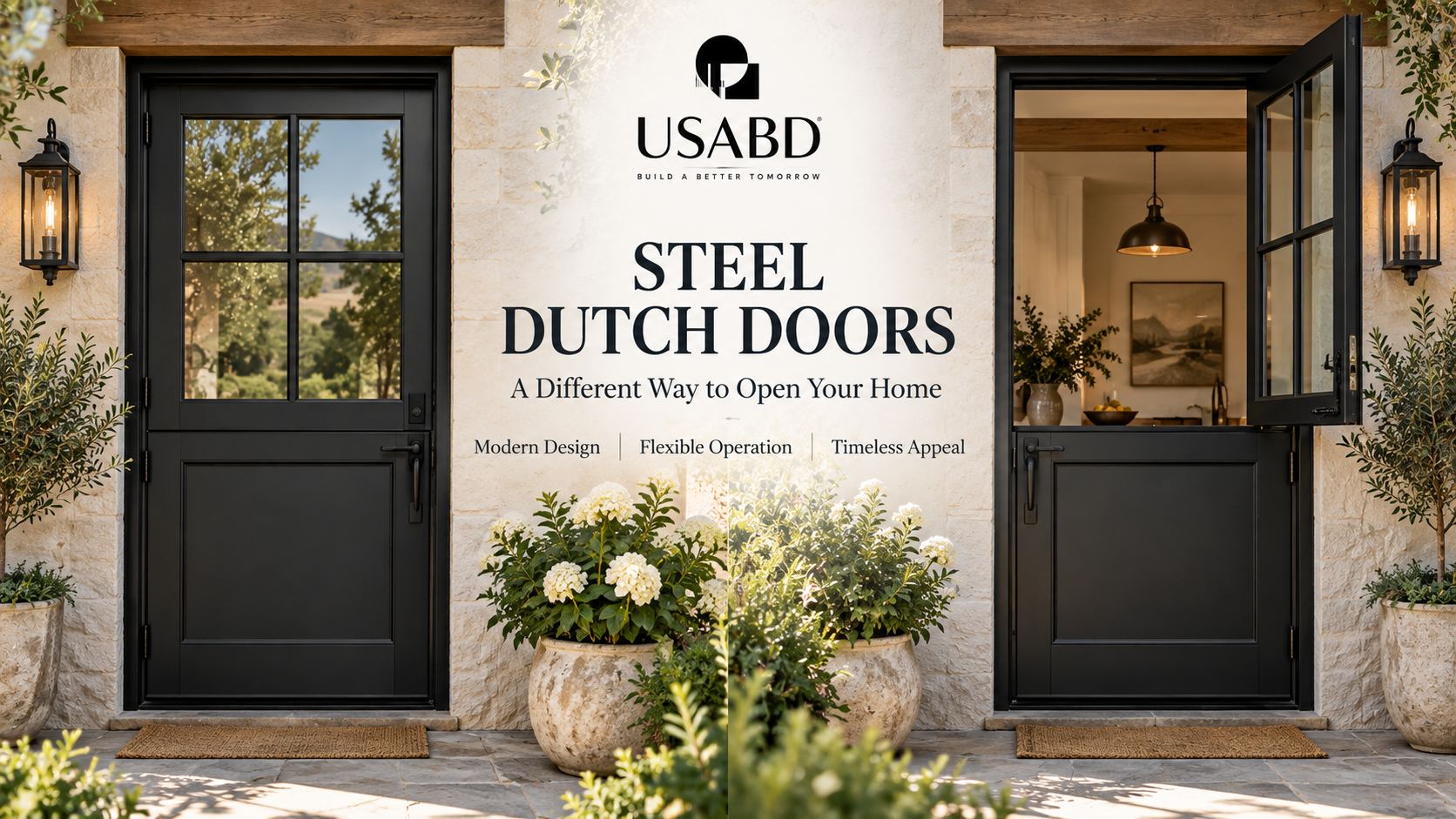
A steel Dutch door is a horizontally divided door with upper and lower sections that can operate independently. The upper portion can open while the lower portion remains closed. With suitable connecting hardware, many designs also let the sections open together. Traditional Dutch doors were commonly wood; modern steel versions can feature black frames, architectural glass and contemporary lite patterns. Verify the exact operating configuration for the chosen model.
How Does a Steel Dutch Door Work?
Each half is supported by an appropriate hinge arrangement. The upper leaf may open independently, while a compatible Dutch door bolt or connecting device can link it with the lower leaf. The manufacturer should confirm how both halves latch, lock and operate. The three typical arrangements are both halves closed, only the upper half open, and both halves open together.
Why Choose a Modern Steel Dutch Door?
The horizontal split creates flexible ventilation and a connection to a patio, courtyard or garden while maintaining a partial barrier at the lower half. Modern designs suit transitional, modern farmhouse, Mediterranean and European-inspired homes. A Dutch door is not a substitute for a dedicated child or pet safety barrier, and an open upper leaf can admit insects and wind-driven rain.
Single vs. Double Steel Dutch Doors
A single steel Dutch door suits kitchens, mudrooms, garden entrances and narrower openings. A double Dutch-door arrangement creates a wider, more dramatic entrance, but increases the complexity of meeting stiles, locks, connecting hardware, weather seals and inactive-leaf operation. Confirm the configuration on the approved fabrication drawing.
Steel vs. Wood Dutch Doors
Wood Dutch doors offer traditional warmth and farmhouse character but may require wood-specific moisture maintenance. Steel Dutch doors can provide crisp geometric glass patterns and black-metal architectural character. Exterior steel requires appropriate corrosion protection, seals and compatible hardware. Neither material automatically performs better without a complete product specification.
Glass Options and Lite Patterns
Steel Dutch doors may offer 2-lite, 4-lite or 8-lite designs depending on the model. Clear glass maximizes views, while selected custom products may offer frosted or privacy-glass options. Lite count does not necessarily indicate how the panes are distributed between the two moving halves. Confirm the approved drawing, safety glazing, insulated-glass makeup and any required performance documentation. Read our steel door glass guide.
Energy Efficiency and Weather Sealing
Steel conducts heat, so the complete thermal design matters. Some systems include insulated cavities, while thermal breaks may reduce direct conductive heat flow. A Dutch door also includes an additional horizontal meeting joint, making weatherstripping, alignment, threshold and perimeter seals especially important. Ask for documentation for the exact assembly rather than assuming it performs the same as a conventional hinged door. A covered porch and an exposed coastal entrance may have very different requirements.
Why the Horizontal Meeting Seal Matters
The horizontal division must allow independent movement and still close securely. Depending on the design, the joint may use overlapping profiles, gaskets, dedicated weatherstripping and alignment features. A poorly coordinated joint can lead to drafts or water entry. Request details for the actual sealing arrangement and the intended exterior exposure.
Dutch Door Locks, Hinges and Hardware
Because a Dutch door operates in two parts, hardware selection should happen before fabrication. Confirm the hinge quantity and load capacity, upper and lower latching, Dutch door connecting bolt, lockset, strike locations and the way the leaves operate together. Mortise and cylindrical locks need different preparations. A smart lock requires the exact manufacturer’s bore, backset, thickness and clearance template; compatibility with a split door must be verified. Learn about mortise and cylindrical lock preparation.
Inswing, Outswing and Handing
Confirm the swing direction using a plan view rather than relying on a photograph. Inswing opens toward the home; outswing opens toward the exterior. For a Dutch door, both leaves and any connecting hardware must clear nearby walls, furniture, steps, lighting and landscaping. The final handing and swing should match an approved fabrication drawing. See our steel-door handing guide.
Where Steel Dutch Doors Work Best
Modern farmhouse entrances can pair black metal with white siding and wood details. Transitional projects often favor restrained glass divisions. Mediterranean and European-inspired homes can pair a Dutch door with stucco, stone and landscaped courtyards. Kitchen, garden, mudroom and covered-patio entrances may especially benefit from upper-only ventilation.
Sizes, Rough Openings and Installation
Never assume the catalog door size equals the framed rough opening. Verify overall manufactured frame dimensions, clearances, jamb depth, threshold, finished-floor elevation, swing, hardware locations and the applicable anchorage and flashing details. Existing door trim is not a reliable measurement of the structural opening. Review the rough-opening guide. Install in accordance with the manufacturer’s instructions and local project requirements.
Customization and Lead Times
Selected USA Builders Depot single and double Dutch-door models can be custom crafted, subject to the actual product’s listed options. Some selected custom-crafted models list estimated lead times of 8–12 weeks; always confirm the current estimate, specification and freight transit separately before ordering. Custom sizing, glass, finish and lock preparation must be approved before manufacture.
Security and Building-Code Considerations
The word steel does not establish a particular security rating. Consider both leaves, connecting hardware, locks, hinges, glazing, frame anchorage and installation. Specific projects may require documented energy, wind, impact, fire, egress or accessibility performance. An ordinary decorative Dutch door should never be assumed suitable for a rated opening, such as certain garage-to-house separations.
What Does a Steel Dutch Door Cost?
Price varies with single or double construction, dimensions, steel profiles, glass, hardware, finish, custom fabrication, freight and installation. Double arrangements may add hardware and fabrication complexity. Compare complete quotations, including what is excluded, rather than comparing prices from photographs alone.
Common Mistakes to Avoid
Avoid ordering solely from photos, ignoring the horizontal seal, assuming locks are included, using nominal size as rough opening, assuming all steel doors have identical thermal performance, or approving fabrication before final smart-lock and hardware templates. Verify exterior exposure and any required certification for the exact configuration.
Steel Dutch Door Buying Checklist
Before ordering, confirm: single or double configuration; actual frame size; rough opening; swing and handing; glass and lite pattern; upper/lower meeting seal; hinges, connecting bolt and locks; smart-lock template; jamb depth; threshold; coating system; required performance documentation; lead time; freight; installation instructions and approved shop drawing.
Frequently Asked Questions
What is the difference between a Dutch door and a regular door?
A Dutch door has upper and lower operating sections; a regular hinged door generally opens as one full-height leaf.
Can you open only the top?
Yes, on a conventional Dutch-door arrangement, subject to its actual hardware.
Can both halves open together?
Many designs include connecting hardware allowing coordinated operation.
Are Dutch doors only for farmhouse homes?
No. Steel Dutch doors can work with contemporary, transitional and Mediterranean designs.
Can they have privacy glass?
Some custom configurations may offer privacy options; confirm availability and glazing requirements.
Are steel Dutch doors energy efficient?
Performance depends on frame construction, glass, the horizontal joint and the complete assembly. Request applicable documentation.
Can they use smart locks?
Sometimes, but the specific hardware and split-leaf operation must be verified before drilling.
Are double Dutch doors available?
Yes, selected models use double configurations with additional hardware considerations.
Do they require special hardware?
Typically, a suitable connecting and latching arrangement is needed for split operation.
Can I order custom dimensions?
Selected products permit custom configurations subject to manufacturer approval.
Can a Dutch door be a front entrance?
Yes, when designed for the intended exposure and applicable project requirements.
Final Thoughts: Is a Steel Dutch Door Right for Your Home?
A steel Dutch door offers a distinctive combination of split-door operation and architectural character. The most successful installations coordinate the horizontal joint, hardware, glazing, frame, threshold and opening details before production. Explore USA Builders Depot’s Steel Dutch Doors, including selected single and double styles, or contact the team to discuss a project-specific configuration.
USA BUILDERS DEPOT — Build a Better Tomorrow.